
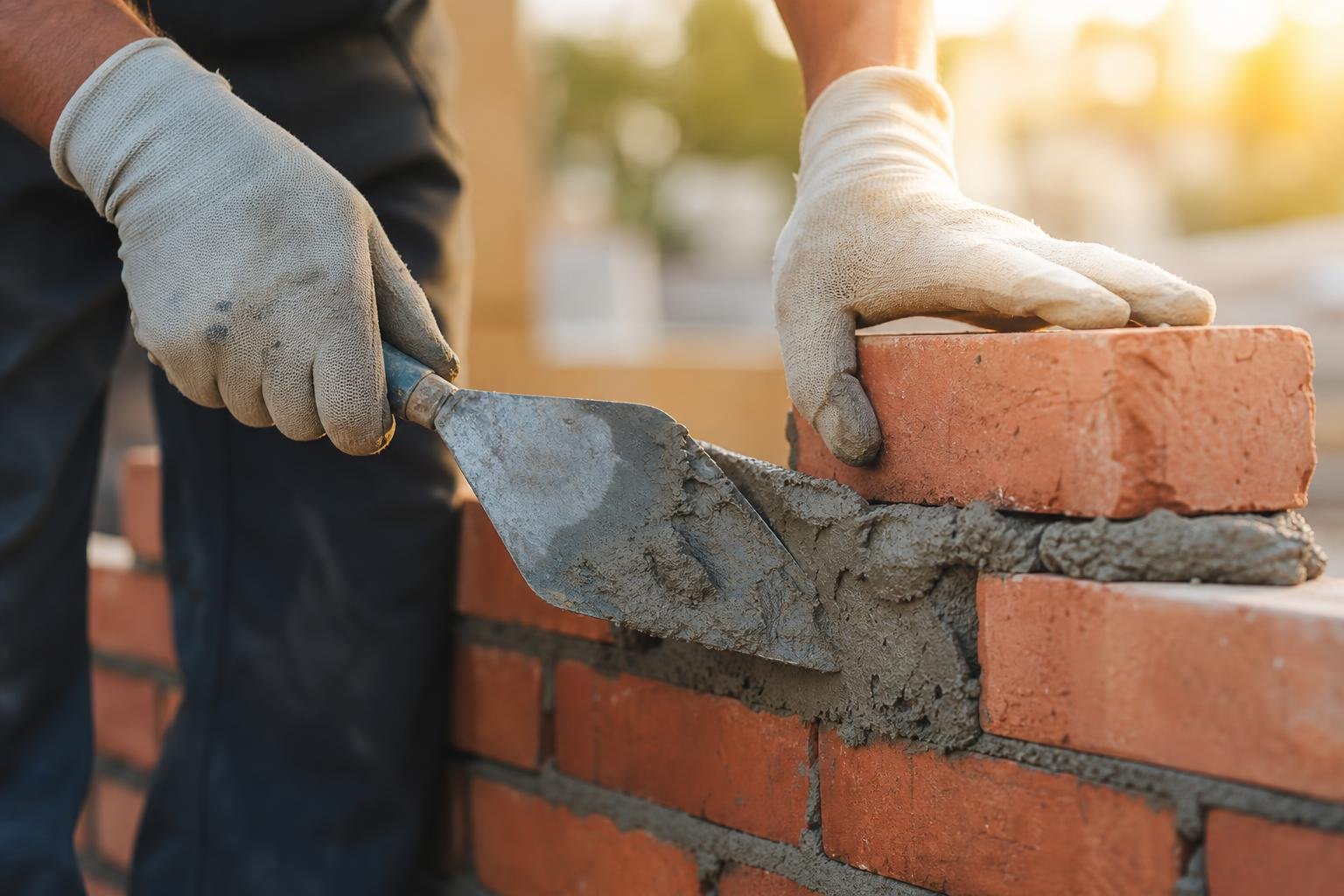
Quick AnswerThe best time for masonry chimney repair in Northeast Ohio is April through October, when ambient temperatures reliably stay above 40°F. At 40°F and below, the masonry standard referenced by the International Building Code requires cold-weather procedures — heated sand and water, windbreaks or enclosures, and 24 to 48 hours of protection after laying. Sweeping and inspection, which are dry interior work, can be done in any month.
Most answers to this question are seasonal marketing: book in autumn, before the rush. The real constraint is not the calendar, it is a temperature threshold written into masonry practice, and once you know the number you can plan around it properly.
Why Does 40°F Decide the Masonry Repair Window?
Because mortar cures by hydration, and hydration effectively stops as it approaches freezing. Water in fresh mortar that freezes before the cement has set expands and destroys the bond, so you get a joint that looks finished and fails within a season or two. To prevent that, cold-weather construction procedures become mandatory once the ambient air temperature is 40°F and below.
The requirements escalate as it gets colder, which is why a January repointing job costs considerably more than the same job in June — you are paying for heat and enclosure, not just labour.
| Ambient air temperature | Required procedure |
|---|---|
| 40°F and below | Cold-weather procedures become mandatory |
| 40°F to 32°F | Heat sand or water; mortar between 40°F and 120°F |
| 32°F to 25°F | Heat both sand and water; masonry surfaces at least 40°F |
| 25°F and below | Windbreaks or enclosures required |
| Below 20°F | Heated enclosure mandatory |
| Units at 20°F or less, or with visible ice or snow | Must not be laid at all |
After laying, protection has to be maintained: 24 hours for ungrouted masonry, 24 hours for grouted masonry using Type III cement, and 48 hours for grouted masonry using other cement types. On a chimney, that means tenting and heating a rooftop structure for one to two days.
When Does That Window Open and Close in Greater Cleveland?
April to October, on the National Weather Service’s own 30-year normals for Cleveland. The average April low is 40.8°F and the average October low is 46.5°F — both above the threshold. March averages a 30.7°F low and November a 36.7°F low, so in those months you are working below 40°F for part of most days even when the afternoon feels mild.
That is the practical answer to “can we do it now?” in late autumn. Often the honest reply is that the afternoon is fine and the morning is not, which means a shortened working day and a job that stretches across more visits.
Why Is Autumn the Worst Time to Book and Spring the Best?
Because everyone books in autumn. Our own keyword analysis of US chimney search demand shows a trough in May and a peak in November roughly five times higher, with September to December accounting for about half the year’s searches. Every chimney company in Cuyahoga County faces that same curve.
The consequence is straightforward. In October you are competing for a narrowing weather window and a full schedule at the same time. In May you have six clear months of masonry weather ahead and a trade with capacity. If a repair is not urgent, spring is where the leverage is.
What Can Still Be Done in a Northeast Ohio Winter?
More than people expect, because most chimney work is not wet masonry. Sweeping, creosote removal, Level 1 and Level 2 inspections, video scanning, cap and chase-cover installation, damper repair, stainless liner installation and gas fireplace service are all dry or interior tasks with no temperature threshold.
What genuinely waits for warmer weather is mortar-dependent: tuckpointing, crown rebuilds, parging, full rebuilds, and waterproofing, which needs dry masonry and a minimum application temperature. If your problem is creosote or a draft complaint, winter is not an obstacle at all.
Which Repairs Should Not Wait for Spring?
Anything that makes the flue unsafe or lets water in. A cracked or separated flue liner is a carbon monoxide and fire-spread risk and should take the chimney out of service until it is resolved. A breached crown or failed flashing admits water that then goes through every freeze-thaw cycle between now and April, turning a repointing job into a rebuild.
The Chimney Safety Institute of America puts it bluntly: “water causes more damage to masonry chimneys than fire,” listing broken brickwork, rusted dampers, rotted wood, ruined wall coverings and cracked flue liners among the results. Where the fix cannot be done properly in the cold, the right move is to stabilise — a temporary cover, a cap, a stop-gap seal — and schedule the permanent repair for the open window.
How Should You Use the Off-Season?
Get the inspection done in winter and the masonry done in spring. An inspection in January costs the same as one in June, and it gives you a documented scope, a written estimate and a place in the spring schedule before the trade fills up. It also means that if something urgent is found, you find it while you are still using the fireplace daily rather than in October when you next light it.
If you are in Cleveland, Lakewood, Parma, Shaker Heights or anywhere across Northeast Ohio and unsure which category your chimney falls into, that is exactly what an inspection settles.
FAQs
It can, but only under cold-weather procedures once the ambient temperature is 40 degrees Fahrenheit or below, and not at all with units at 20 degrees or less or carrying visible ice or snow. Those procedures mean heated sand and water, windbreaks or enclosures, and 24 to 48 hours of protection after laying, which adds cost and time.
Late spring through midsummer, for two reasons. The weather allows normal masonry practice without heating or enclosures, and demand is at its annual low. US search demand for chimney services runs roughly five times higher in November than in May, and pricing and lead times follow that curve.
Yes. Sweeping and inspection are interior, dry-work tasks with no temperature constraint, so they run all year. It is only wet masonry work - mortar, parging, crown pours, rebuilds - that the 40 degree threshold governs.
Not if the flue is unsafe or water is actively getting in. A cracked liner or a breached crown gets worse every freeze-thaw cycle, and a compromised flue is a carbon monoxide and fire risk. Get it inspected now, stabilise what must be stabilised, and schedule the masonry for the spring window.
Typically April, and it stays reliably open through October. National Weather Service normals for Cleveland put the average April low at 40.8 degrees and the October low at 46.5 degrees, while March averages a 30.7 degree low and November 36.7 - both below the threshold for normal mortar work.
Sources
- International Masonry Institute — cold weather masonry construction (temperature thresholds and protection periods, per the masonry standard referenced by the IBC)
- International Code Council — International Residential Code
- National Weather Service Cleveland — climate normals (monthly temperature normals)
- Chimney Safety Institute of America — water and the masonry chimney
- Chimney Safety Institute of America — homeowner resources