
Quick AnswerHomeowners insurance generally covers chimney damage from a sudden, accidental event — a chimney fire, a lightning strike, a windstorm, a falling tree, a vehicle impact. It generally excludes damage that built up over time. The standard homeowners form published by the Insurance Information Institute excludes “wear and tear, marring, deterioration,” and that one phrase is what denies most Minnesota chimney claims, because freeze-thaw spalling and failed mortar joints are gradual by nature.
This is the question Twin Cities homeowners ask first, and it is the question the search results answer worst. Most pages say coverage “depends on your policy” and stop there. The distinction is actually quite specific, and it is written down.
Key Takeaways
- Coverage turns on cause, not on cost or severity.
- Sudden and accidental is covered. Gradual deterioration is excluded.
- The Twin Cities average 55 to 60 freeze-thaw cycles per snow season, which makes gradual masonry damage the local default.
- A dated written inspection is the document that decides borderline claims.
What Does Homeowners Insurance Actually Cover on a Chimney?
A standard homeowners policy insures the dwelling against “risk of direct physical loss,” then takes specific causes back out through exclusions. Your chimney is part of the dwelling, so it inherits that structure. In practice, that means a discrete, datable event that damages the chimney is a covered loss, while the slow consequences of weather and age are not.
The events that most often produce a paid chimney claim are a chimney fire, a lightning strike, a windstorm or tornado, a falling tree or limb, a vehicle impact, and an explosion. In each case there is a moment the damage happened, and usually a way to evidence it — a fire department report, a storm date, photographs.
Why Are Freeze-Thaw and Spalling Claims Usually Denied?
Because the policy language excludes them directly. The sample homeowners form hosted by the Insurance Information Institute (form HO 00 03 10 00) excludes “wear and tear, marring, deterioration.” It separately excludes “settling, shrinking, bulging or expansion, including resultant cracking, of bulkheads, pavements, patios, footings, foundations, walls, floors, roofs or ceilings.”
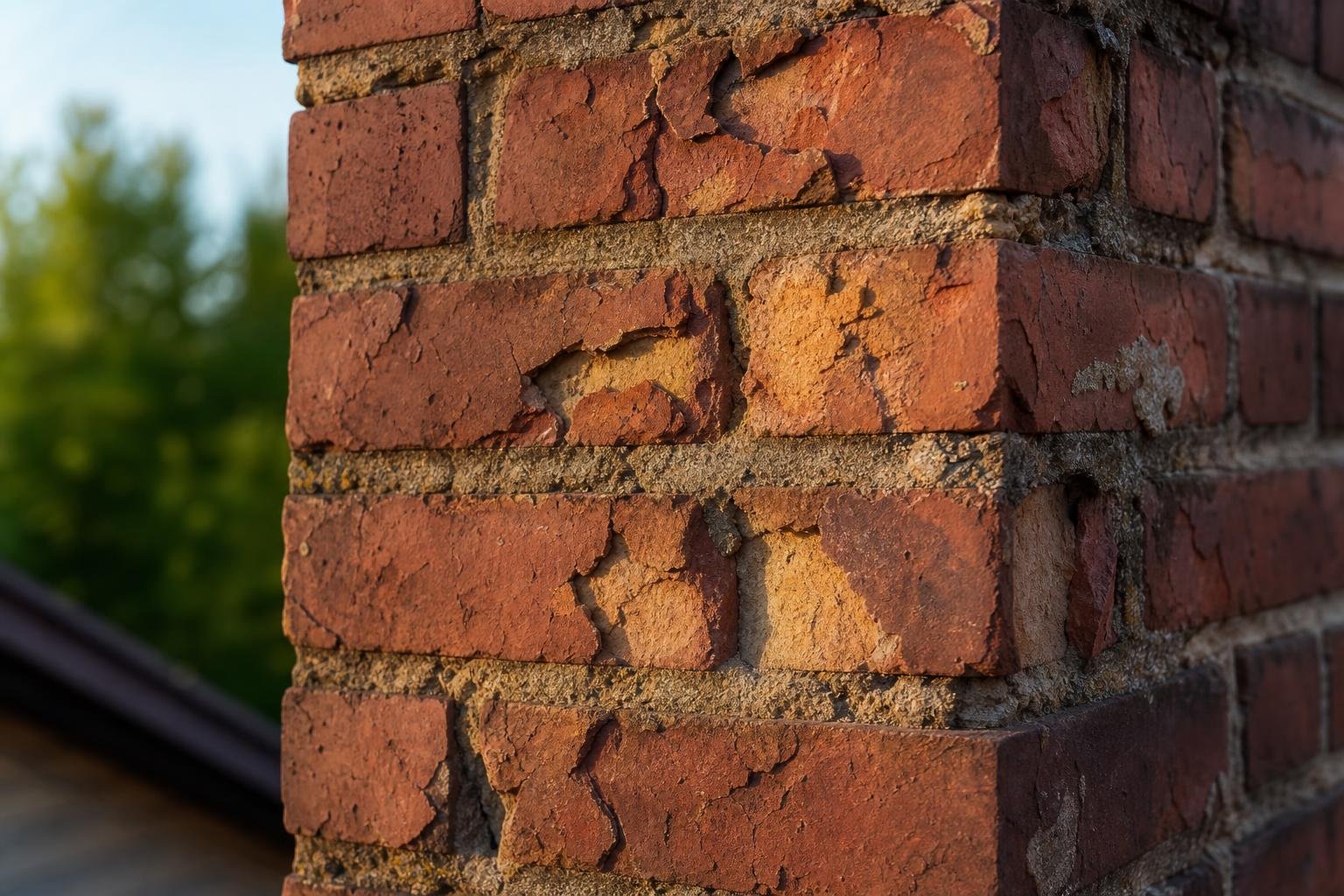
Spalling brick, crumbling mortar joints, a crown that has cracked over several winters and a flue tile that has degraded all read as deterioration to an adjuster, because that is what they are. The damage is real and often expensive, but it accumulated. Note the distinction carefully: the form's explicit freezing and thawing exclusion is written for listed items such as fences, patios, footings and supporting walls, so a chimney claim is more often declined under the broader deterioration wording than under the freeze-thaw clause itself.
How Many Freeze-Thaw Cycles Does the Twin Cities Get?
Between 55 and 60 per snow season, on average. The University of Minnesota Extension’s climatology of the Twin Cities defines a freeze-thaw cycle as a day when the temperature “oscillates above and below the freezing mark (32°F) during the 24-hr day,” and records a historical range from about 39 cycles to more than 95 — the highest in the 1960–61 and 1989–90 seasons. The same record shows 60 to 70 days each season when the maximum temperature never reaches 32°F.
Each cycle is one round of water entering the masonry, freezing, expanding roughly nine per cent, and pushing the brick face apart from inside. Fifty-odd rounds a year is why Minnesota chimneys fail from the outside in, and why so much local chimney damage lands squarely in the excluded category.
Housing age compounds it. The City of Saint Paul’s housing assessment found “nearly 50% of the units being built prior to 1940 and 90% built prior to 1980,” with 57 per cent of single-family, duplex and triplex structures built before 1930. Pre-war brick is softer and more absorbent than modern brick, and the original mortar was deliberately softer still.
What Chimney Damage Is Most Likely to Be Covered in Minnesota?
| Cause of damage | Typically covered | Why |
|---|---|---|
| Chimney fire | Yes | Sudden, accidental, and usually documented by the fire department |
| Lightning strike | Yes | A named, datable event |
| Windstorm or falling tree | Yes | Sudden physical force from outside |
| Vehicle impact | Yes | Sudden, accidental, third-party cause |
| Freeze-thaw spalling | No | Excluded as wear and tear, marring, deterioration |
| Failed mortar joints | No | Gradual; treated as deferred maintenance |
| Long-term water seepage | Usually not | Resulting interior damage may be covered; the chimney repair is not |
The pattern is consistent: if you can name the day, you probably have a claim. If the honest answer is “it has been getting worse for a few winters,” you probably have a repair bill.
What Should You Do Before You File a Chimney Claim?
Get the cause documented before you call the insurer. An adjuster is deciding a question of fact — what caused this — and they are rarely a masonry specialist. A dated written inspection report that describes the condition and its likely cause is the most useful thing you can hand them, and a Level 2 video inspection is what produces evidence rather than opinion for anything involving the flue.
Three practical points. Photograph the damage before any repair, including wide shots that establish location. Keep receipts for prior maintenance, because a documented sweeping and inspection history undercuts a deferred-maintenance argument. And if the trigger was a storm, note the date, because insurers cross-reference local weather records.
What Does Chimney Repair Cost If Insurance Says No?
Worth knowing before you decide whether a claim is even worth filing. The figures below are published national ranges from HomeGuide, updated 9 February 2026, not our quotes — local pricing depends on height, access, scaffolding needs and how far the deterioration has travelled.
| Repair | Published range (USD) | What drives the spread |
|---|---|---|
| Minor masonry repair | $200 to $700 | Extent and roof access |
| Tuckpointing, per square foot | $8 to $30 | Joint condition and mortar match |
| Tuckpointing, typical total | $500 to $2,500 | Chimney size and height |
| Rebuild above the roofline | $1,000 to $3,500 | Course count and scaffolding |
| Full chimney replacement | $4,000 to $15,000 | Full height, interior work, liner |
Two things follow. A minor repointing job may sit below a typical deductible, so filing achieves nothing except a claims-history entry. And the gap between repointing early and rebuilding later is roughly an order of magnitude, which is the strongest financial argument for catching mortar failure in its first season rather than its fifth.
When to Stop Guessing and Get It Looked At
If you can see daylight in a mortar joint, find brick fragments in the garden, or have a stain spreading on a ceiling near the chimney chase, the cause question is already answerable and worth answering while the repair is still small. Our $199 flat-fee sweep includes a full inspection, which gives you the written record either way — for an insurer, or for a decision about repointing before another 55 freeze-thaw cycles go through the brick.
One caveat worth stating plainly. This article explains how standard policy language generally works. It is not a coverage determination and not legal or insurance advice. Your own policy, its endorsements and your adjuster govern your claim — read your declarations page, and ask your agent about your specific situation.
FAQs
Usually only if the crack came from a covered event such as a chimney fire, lightning strike or falling tree. A crown that cracked gradually from repeated freezing and thawing is normally denied under the policy's wear and tear, marring, deterioration exclusion, because the insurer treats it as maintenance rather than a sudden loss.
A liner cracked by a chimney fire is generally covered, and insurers often pay for relining because an unlined or cracked flue is unsafe to use. A liner that simply aged out, or clay tiles that spalled over decades, is generally excluded. A Level 2 video inspection is what documents which of the two you have.
File when a specific event caused the damage and the repair clearly exceeds your deductible. If the cause is gradual deterioration, a denied claim still becomes part of your claims history, so it is worth getting a written inspection first to establish whether there is a covered cause at all.
Insurance usually covers the resulting interior damage from a sudden leak, such as a storm-driven breach, but not the chimney repair that stopped the water getting in. Long-term seepage through failed mortar joints is excluded, even though the Chimney Safety Institute of America notes that water causes more damage to masonry chimneys than fire.
Your insurer's adjuster does, based on your specific policy wording and their assessment of cause. A chimney professional does not determine coverage, but a dated written inspection report describing the damage and its likely cause is the single most useful document you can give an adjuster.
Sources
- Insurance Information Institute — sample homeowners policy, form HO 00 03 10 00 (exclusion wording)
- University of Minnesota Extension — Twin Cities climatology of days below freezing and freeze-thaw cycles, February 2026
- City of Saint Paul — Housing Assessment (housing stock age)
- Chimney Safety Institute of America — homeowner resources (inspection and sweeping guidance)
- HomeGuide — repointing and tuckpointing cost, updated 9 February 2026