
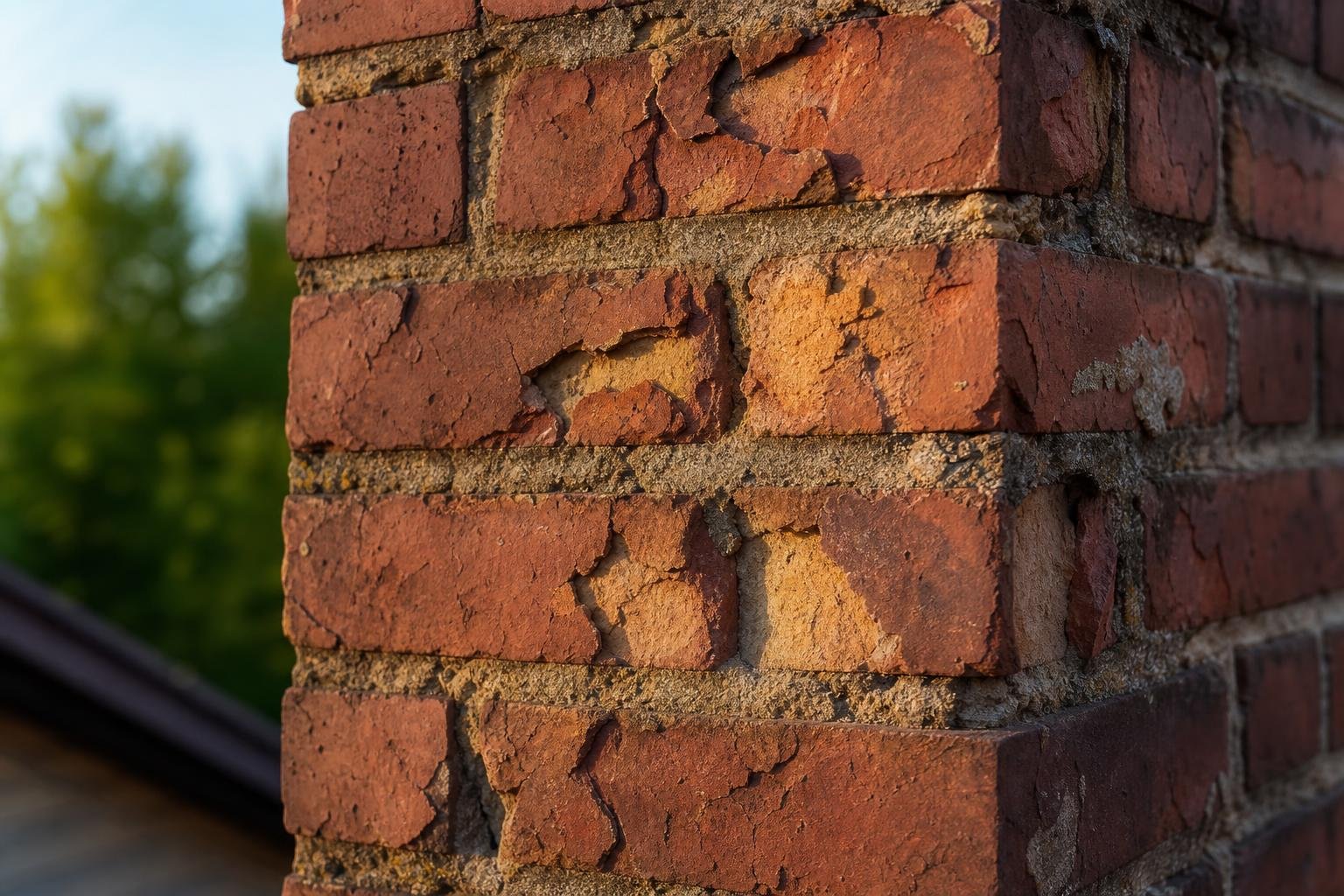
Quick AnswerSpalling brick almost always means water has soaked into the masonry and expanded when it froze, popping the face off the brick. It won’t heal on its own and it accelerates each winter, so get a mason to assess it before another freeze-thaw season passes.
Likely Causes
- Freeze-thaw cycling — brick absorbs water like a sponge, and each time it freezes the water expands and pushes the face off from the inside out.
- Wrong mortar in a past repair — modern high-strength mortar is often harder than old brick, so it forces movement and moisture to break the brick instead of the joint.
- Damaged or missing chimney cap or crown — without a working cap, rain pours directly into the stack and saturates the brick from the top down.
- Poor original construction — low-quality or improperly fired brick absorbs more water than it should and spalls sooner than a properly built stack.
- Age — masonry that’s gone decades without waterproofing or repointing naturally loses its resistance to water over time.
How Urgent Is This?
Spalling brick is a medium-urgency problem: it’s not an immediate safety emergency the way a fire hazard is, but it is actively progressive damage. Every freeze-thaw cycle you skip past turns a few damaged bricks into a wider patch, and once enough face brick is gone, water reaches the mortar joints and the structural core of the stack faster. Left alone for several winters, spot repairs can turn into a full rebuild.
What to Do Right Now
- Look from the ground for a cracked or missing crown and cap — the most common water entry point
- Don’t paint, seal, or patch over spalling brick yourself — it traps moisture and hides the real damage
- Schedule a masonry inspection before the next hard freeze to stop the damage from spreading
- Clear any loose or fallen brick fragments from the roofline and ground for safety
Cracked or Spalling Brick in Nashville, TN: What Nashville-Area Homeowners Should Know
Humid Middle Tennessee summers, heavy spring storms and the occasional hard freeze keep masonry and metal chimney parts working year-round across the Nashville area. Water that soaks into brick and then freezes is the main cause of spalling here, which is why damage often appears after a hard winter.
The Chimney Sweeper’s Nashville team serves Nashville, plus Franklin, Brentwood, Murfreesboro, Hendersonville, Mt. Juliet, Smyrna, Gallatin, Spring Hill and Lebanon. Call (615) 866-0812 for a free visual inspection and a written flat-fee estimate. You can also see our Nashville service area.
FAQs
No. Paint and standard sealers trap moisture that’s already inside the brick, which usually makes spalling worse, not better. The damaged brick needs to be repaired or rebuilt first, then a breathable masonry water repellent applied to keep new water out.
It starts cosmetic but doesn’t stay that way. Once the face of the brick is gone, water reaches the softer interior and mortar joints faster each winter, and left unaddressed for multiple seasons it can compromise the structural stability of the chimney stack.
A handful of spalling bricks scattered across the stack is usually a spot repair. Widespread spalling, especially combined with leaning, bulging, or missing mortar over a large area, typically means a partial or full rebuild is more cost-effective than patching individual bricks.
Yes. The Chimney Sweeper’s Nashville team serves Nashville, plus Franklin, Brentwood, Murfreesboro, Hendersonville, Mt. Juliet, Smyrna, Gallatin, Spring Hill and Lebanon. Every visit starts with a free visual inspection and a written flat-fee estimate before any repair work is approved. Call (615) 866-0812 to book.
Nashville-area homes see the most trouble from October through March, so the best time to act is before then. Repair loose or flaking brick and open mortar joints before the next freeze, because trapped water makes the damage worse each winter.