
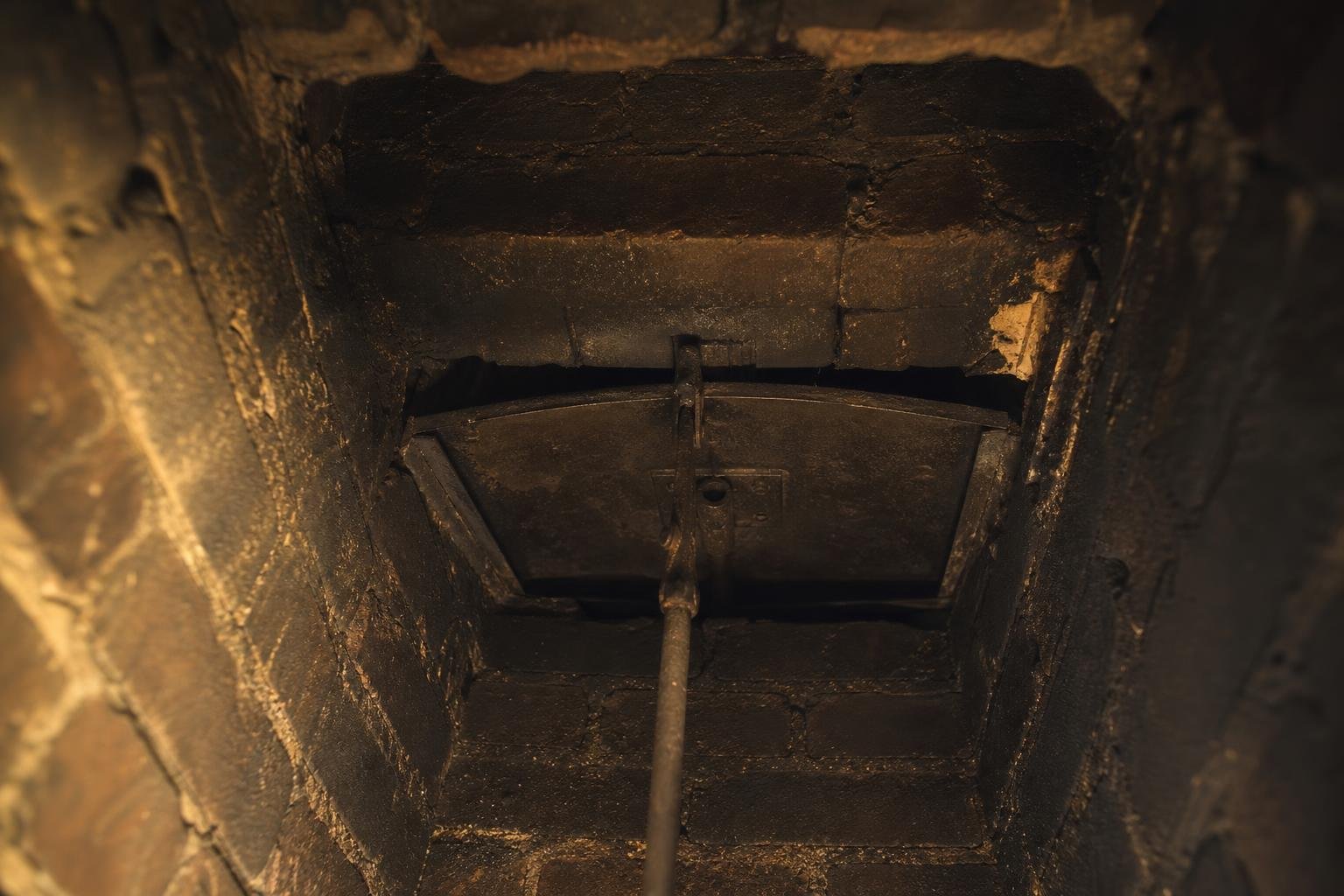
Quick AnswerA weak draft is most often a cold flue that hasn’t warmed up yet or something physically narrowing the passage, like creosote or a nest. Warm the flue with a rolled, lit newspaper before building your fire, and if that doesn’t help, have the flue checked for a blockage.
Likely Causes
- Flue too short for the roofline — a chimney that doesn’t clear the roof peak or nearby obstructions sits in a zone of wind turbulence that pushes air back down.
- Flue sized wrong for the firebox — too large cools rising exhaust and slows the draft, while too small restricts airflow outright.
- A cold flue — on a first fire of the season or a cold day, air inside the flue can be heavier than room air until it’s warmed.
- Obstructions in the flue — creosote buildup, leaves, or an animal nest can narrow the passage enough to choke off airflow.
- Competing exhaust fans and HVAC — bathroom fans, range hoods, and dryers can depressurize a tightly sealed house and pull air back down the chimney.
- Nearby trees or structures — tall trees or an adjacent roofline can block prevailing wind and disrupt the airflow across the chimney top.
How Urgent Is This?
A weak draft is medium urgency — it’s primarily a comfort and usability problem, not usually an immediate structural threat. But it’s worth taking seriously because a struggling draft often means smoke and combustion byproducts, including carbon monoxide, aren’t being carried out of the house reliably. If it’s new or worsening rather than a longstanding design quirk, it can also signal a growing blockage that keeps getting worse the longer it’s ignored.
What to Do Right Now
- Warm a cold flue with a rolled, lit newspaper held near the open damper before lighting
- Crack a nearby window if exhaust fans or the dryer seem to be pulling air back down
- Have the flue inspected for creosote, debris, or a nest if the draft has gotten worse recently
- Ask about a chimney height extension or liner change if the problem has always been there
Weak Chimney Draft in Nashville, TN: What Nashville-Area Homeowners Should Know
Humid Middle Tennessee summers, heavy spring storms and the occasional hard freeze keep masonry and metal chimney parts working year-round across the Nashville area. Cold outdoor air, tall trees nearby and tighter modern homes all affect how well a chimney pulls, especially when you first light a fire.
The Chimney Sweeper’s Nashville team serves Nashville, plus Franklin, Brentwood, Murfreesboro, Hendersonville, Mt. Juliet, Smyrna, Gallatin, Spring Hill and Lebanon. Call (615) 866-0812 for a free visual inspection and a written flat-fee estimate. You can also see our Nashville service area.
FAQs
If the damper checks out, the next most common culprits are a cold flue that hasn’t warmed up yet, an obstruction like creosote or a nest narrowing the passage, or negative pressure from exhaust fans pulling air back down the chimney. A flue-to-firebox size mismatch or a chimney that’s too short relative to the roofline can also cause a chronically weak draft.
Yes. Exhaust fans, range hoods, and clothes dryers all pull air out of the house, and in a tightly sealed home that can create enough negative pressure to pull air back down the chimney instead of letting smoke rise up it. Cracking a nearby window while the fire gets established usually solves this.
Most weak-draft cases are fixable without rebuilding anything — clearing an obstruction, warming the flue before lighting, or adjusting for house pressure solves the majority of cases. Only structural issues like a chimney that’s genuinely too short or badly mismatched to the firebox require a physical modification such as a height extension or liner change.
Yes. The Chimney Sweeper’s Nashville team serves Nashville, plus Franklin, Brentwood, Murfreesboro, Hendersonville, Mt. Juliet, Smyrna, Gallatin, Spring Hill and Lebanon. Every visit starts with a free visual inspection and a written flat-fee estimate before any repair work is approved. Call (615) 866-0812 to book.
Nashville-area homes see the most trouble from October through March, so the best time to act is before then. Have the flue and cap checked before the first fire of the season, and prime the flue by warming it before lighting if it pulls poorly.