
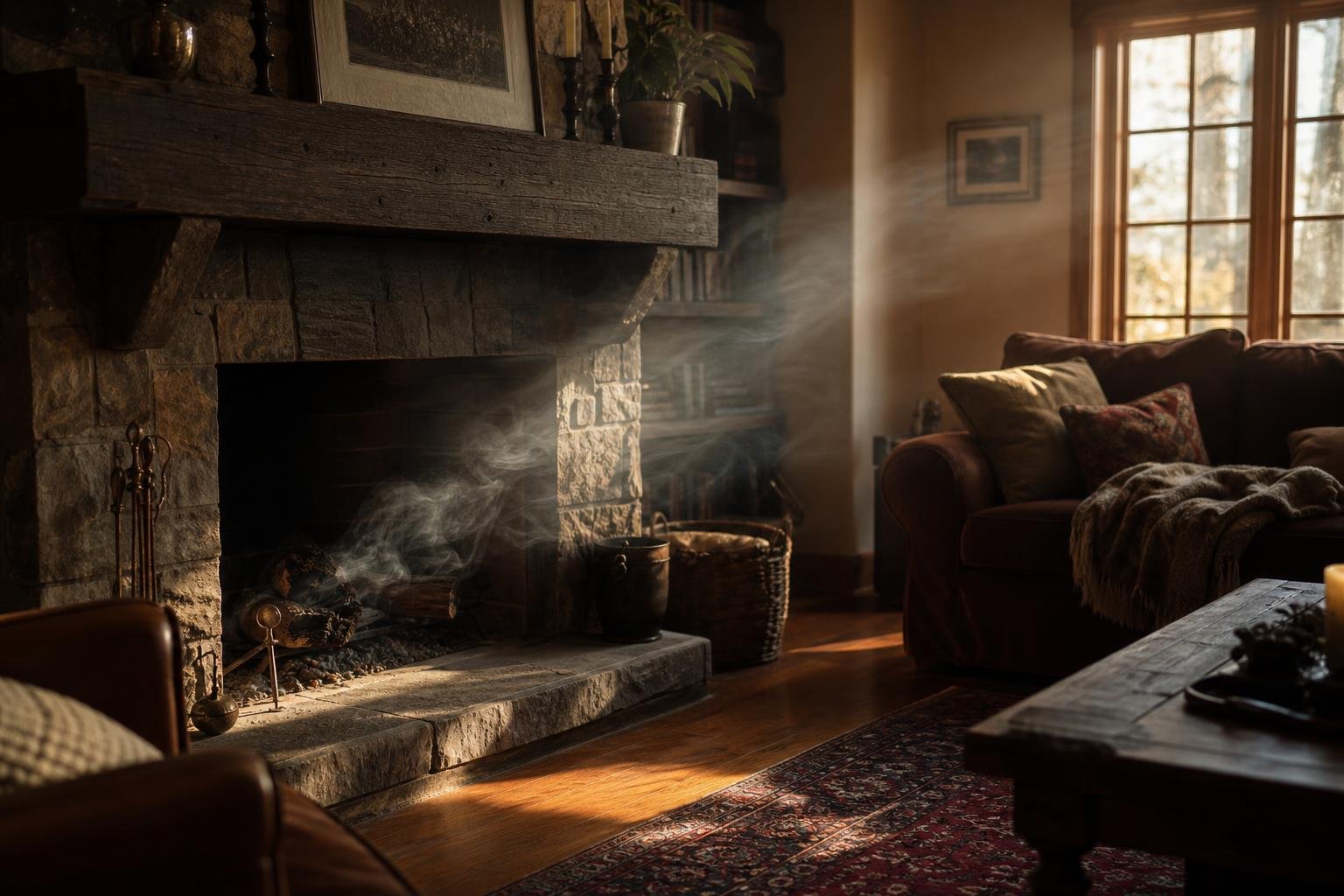
Quick AnswerThe two most common causes are a damper that isn’t fully open and a cold flue that hasn’t started drawing yet. Reach up and confirm the damper is all the way open, then warm the flue with a rolled, lit newspaper before building your fire — if smoke keeps coming in after that, stop and get it inspected.
Likely Causes
- Cold flue that hasn’t started drafting — the air column inside is heavier than room air until it warms, so smoke rolls back instead of rising.
- Closed or partly closed damper — the single most common cause, and the first thing worth checking every time.
- Negative pressure from a tightly sealed home — exhaust fans, a dryer, or a furnace blower can pull air back down the chimney, carrying smoke with it.
- Creosote buildup narrowing the flue — a season of residue can restrict airflow enough to noticeably weaken the draft.
- Flue that’s the wrong size for the firebox — too large cools rising exhaust too fast, too small restricts it outright.
- Burning unseasoned, wet wood — produces more smoke and steam, cools the flue gases, and weakens the draft further.
How Urgent Is This?
Occasional smoking from a cold first fire of the season isn’t a red flag, but smoke that fills the room regularly is a medium-urgency issue: it means combustion byproducts, including carbon monoxide, are venting into your living space instead of outside. If it happens every time you light a fire, or has started happening suddenly after years of working fine, that points to a physical blockage or damage that will only get worse the more you burn.
What to Do Right Now
- Check that the damper is open all the way before doing anything else
- Extinguish the fire and ventilate the room if smoke is heavy or lingering
- Crack a nearby window to relieve negative pressure while the fire gets established
- Stop using the fireplace and schedule an inspection if smoking persists with the damper fully open
FAQs
Yes, treat it as more than an annoyance. Wood smoke indoors carries carbon monoxide and fine particulates, so if smoke is filling the room, put the fire out, ventilate by opening windows and doors, and don’t relight until you know why it happened.
Something has physically changed inside the flue. The usual suspects are a season’s worth of creosote narrowing the passage, a bird’s nest or debris blocking airflow, or a cracked flue liner or damaged cap letting the draft escape. A sudden change is exactly the kind of thing an inspection is built to find.
It can help in the moment. Cracking a window near the fireplace equalizes air pressure in a tightly sealed house, giving the chimney less competition for airflow. It’s a useful quick fix while you build the fire, but it doesn’t address an underlying blockage or damper problem.