
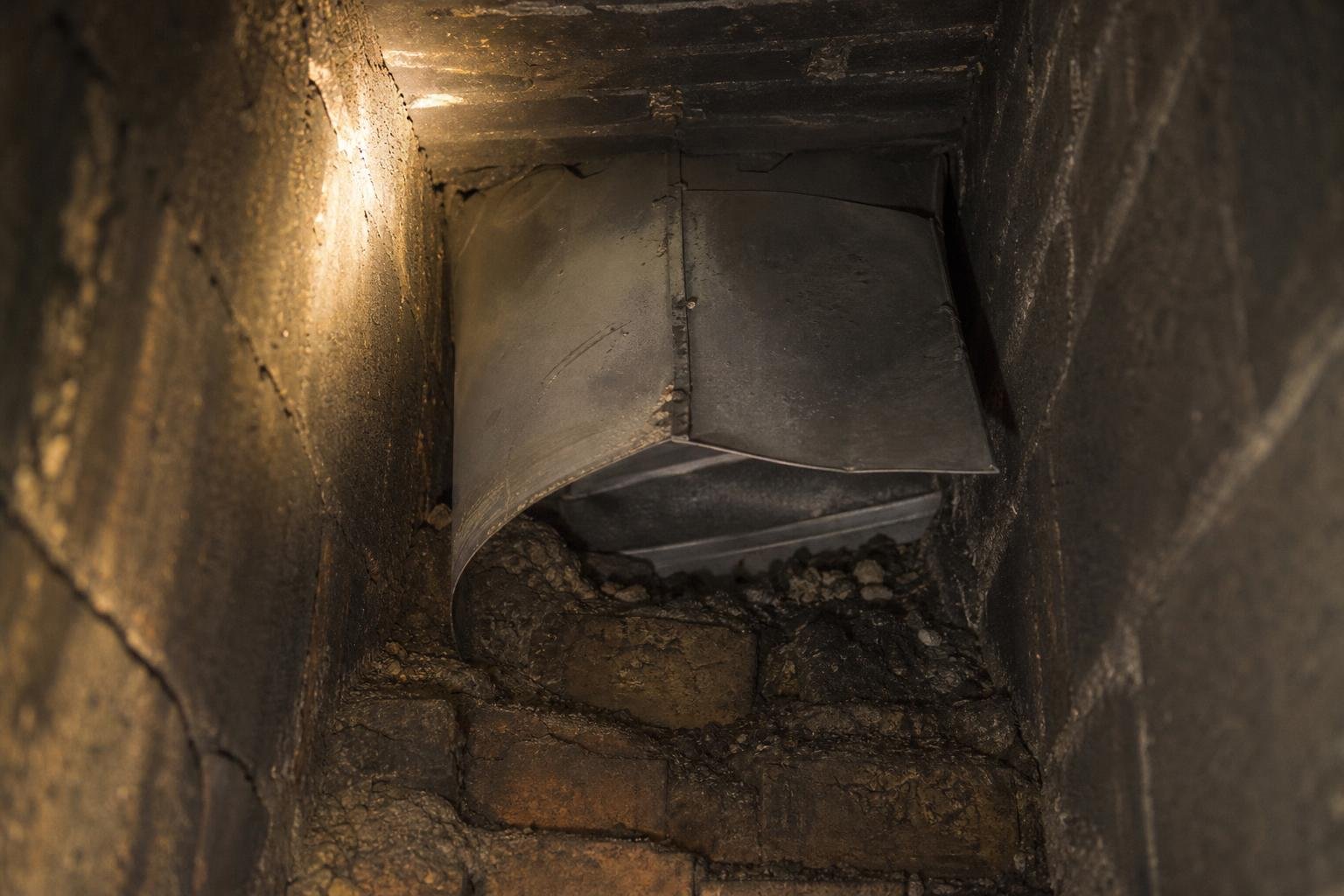
Montgomery homeowners get the same standard annual Level 1 inspection almost everyone else in Greater Cincinnati gets — a visual and physical check of the flue, firebox, damper, and exterior masonry. What’s different here is where our technician spends the extra time. Montgomery’s tree-lined streets and wooded lots mean the mature canopy overhead is doing a lot more to a chimney than most homeowners realize, and that’s exactly the condition that lets animal entry and debris buildup take hold before anyone notices anything from inside the house.
That’s why a Level 1 inspection in Montgomery leans harder on the parts of the checklist that catch tree-related issues early: the condition and fit of the cap and spark arrestor screen, any nesting material or scratch marks that point to current or past animal activity, and the amount of leaf litter or organic debris that’s collected in the smoke chamber since the last visit. None of that requires bumping up to a Level 2 inspection on its own — it’s still a routine annual visit — but it does mean we’re looking harder at tree-driven wear than we would be inspecting a comparable chimney on an open lot.
We also check for the freeze-thaw masonry wear common to Montgomery’s older homes — cracked crowns, deteriorating mortar, and flashing gaps — since Ohio Valley winters affect established brick chimneys here the same way they do elsewhere in Cincinnati. Every visit ends with a written report of exactly what we found, plus a flat-fee estimate for anything that needs attention.
What We Check
- Cap & spark arrestor condition — checking fit and screen integrity against animal entry.
- Signs of current or past animal activity — nesting material, scratch marks, hair, or droppings.
- Debris buildup in the smoke chamber — leaves, twigs, and seed pods from overhanging trees.
- Mortar & flashing condition — checking for freeze-thaw wear on established masonry.
FAQs
The inspection level is usually the same standard annual Level 1 most homeowners need, but we pay closer attention to cap condition, spark arrestor screens, and any signs of animal activity during that visit because of how much tree cover surrounds most Montgomery homes.
We look for nesting material in the smoke chamber, scratch marks or gaps around the cap, and hair or droppings near the flue opening. None of these mean an animal is currently present, but they tell us a cap upgrade is worth recommending to prevent it from happening again.