
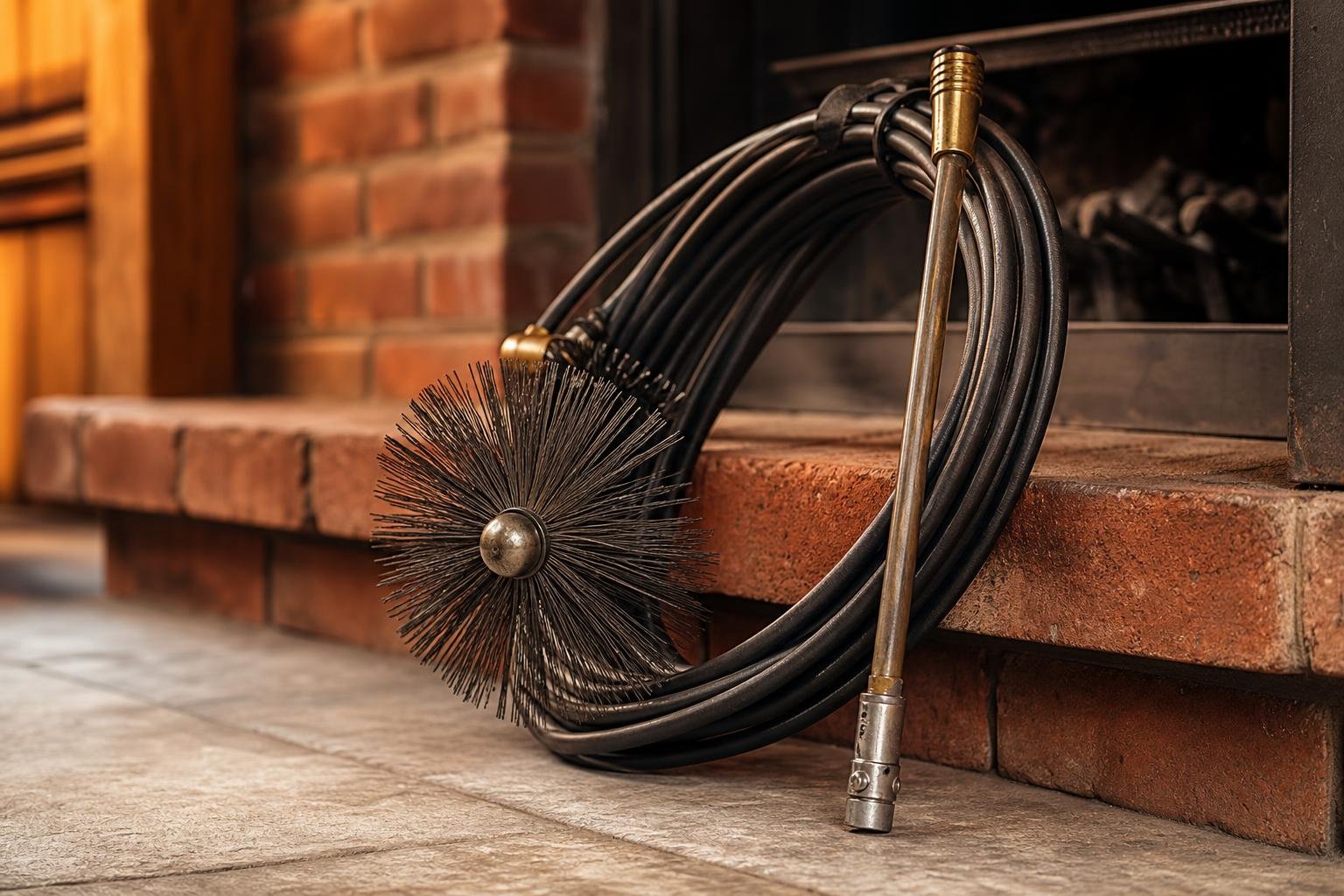
A lot of the wood-burning fireplaces we sweep in Blue Ash are original to the home — brick masonry fireplaces built in the 1950s and 60s that have been in steady use through generations of owners. Those fireplaces earn their keep every winter, and that regular use means real creosote buildup that needs a proper rotary sweep on the industry's recommended annual schedule, not a quick once-over.
The newer infill homes going up around Blue Ash tend to run gas fireplace inserts or high-efficiency wood stoves instead, and those produce far less residue. A sweep on one of these systems is usually quicker and lighter, but it's still worth doing every year — we've found disconnected sections, blocked factory-built flues, and the occasional animal nest in flues that don't see much use, all things a routine visit catches before they become a bigger problem.
Whichever type of fireplace you have, every sweep includes the same protections: drop cloths and HEPA-contained dust control to keep soot out of your living space, a full flue and firebox cleaning, and a visual check so you know exactly what we found. If we spot anything that needs a closer look — a hairline crack in an old clay tile liner, for instance — we'll show you before recommending next steps.
What's Included
- Full flue, smoke chamber & firebox cleaning — sized to the buildup we actually find, heavier for well-used masonry fireplaces.
- HEPA-contained dust control — drop cloths and containment to keep soot out of your home.
- Camera check of the liner — important on original 1950s and 60s clay tile flues we haven't serviced before.
- Blockage & nesting check — a quick look for animal entry in flues that don't see regular use.
FAQs
Generally yes. A wood-burning masonry fireplace in one of Blue Ash’s original ranch homes builds creosote every time it’s used, so the industry’s annual sweep guidance matters most there. Gas inserts in newer infill homes produce far less residue, though we still recommend an annual check to confirm venting and connections are in good shape.
Our technicians use rotary sweeping equipment sized and pressure-adjusted for the flue we’re working in, and we inspect the liner with a camera before we start so we know its condition going in. If we find a liner that’s already cracked or deteriorating, we’ll flag it and explain your options rather than risk further wear during the sweep.