
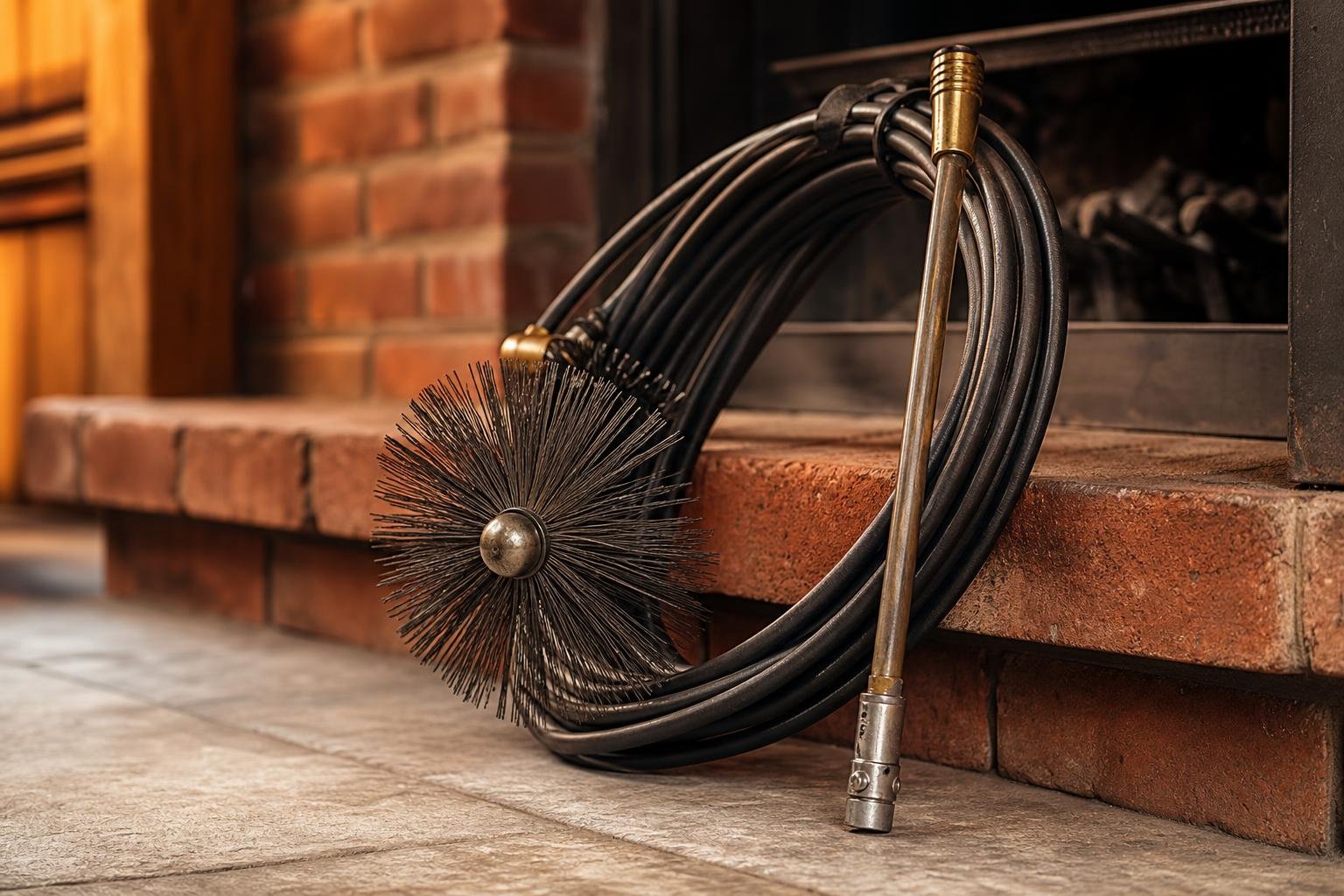
Age matters when it comes to creosote, and Cincinnati is a great example of why. In Over-the-Rhine and Clifton, many original masonry chimneys have been in near-continuous use for over a century. Every one of those winters left behind a little more creosote clinging to the flue walls, and even with a conscientious owner sweeping annually, older masonry tends to hold onto buildup more stubbornly than a newer, smoother flue liner does. Rough, slightly porous 1890s brick and terra cotta liners give creosote more surface to grip, so what looks like a routine annual sweep on paper can turn out to be a heavier job once we’re actually inside the flue.
Compare that to a chimney in Hyde Park or Mount Lookout built in the 1990s or 2000s. Even with regular wood-burning use, a newer flue liner is smoother and the chimney simply hasn’t had as many decades to accumulate glazed, hardened deposits. We still sweep it with the same care, but it’s much more likely to be a straightforward, faster visit. That difference is exactly why we don’t treat every Cincinnati sweep as an identical, one-size job: a century-old Over-the-Rhine flue on an annual schedule often gets a longer, more thorough pass — sometimes with mechanical loosening for stubborn glazed sections — while a newer flue gets a standard brush-and-vacuum sweep.
Either way, every visit starts with a visual check so we can tell you what kind of buildup we’re dealing with before we start, and every sweep uses HEPA-filtered containment so original hardwood floors and older plaster walls don’t end up dusted in soot.
What's Included
- Full flue, smoke chamber & firebox cleaning — with extra time built in for century-old flues carrying heavier, older creosote deposits.
- HEPA-contained dust control — negative-air containment protects original hardwood and plaster in older Cincinnati homes.
- Visual check before and during the sweep — so we can tell you upfront whether you’re looking at a standard sweep or a heavier one.
- Mechanical loosening for glazed buildup — available when a decades-old flue needs more than a routine brush pass.
FAQs
Often, yes. Homes in Over-the-Rhine and Clifton have frequently been burning wood for a century or more, and older masonry flues tend to hold onto creosote more stubbornly than a newer flue liner. Even on an annual schedule, we sometimes find heavier buildup than you’d see in a Hyde Park home of the same age of use.
Once a year is the standard industry recommendation for a regularly used wood-burning fireplace, timed before burning season starts in the fall. Older, century-plus chimneys with heavy prior use, or households that burn frequently, sometimes benefit from a mid-season check as well.