
A Montgomery sweep call often starts with the same observation: “we live under a lot of trees, and I’m not sure what’s up there.” It’s a fair question. Mature tree canopy drops far more organic debris into an open or poorly capped flue than a chimney sitting in a wide-open backyard would ever see — leaves, small twigs, seed pods, and bark all work their way down and collect in the smoke chamber a season at a time. On a chimney with no cap, or a cap that’s aged out and lost its screen, that buildup can be substantial even after a single year.
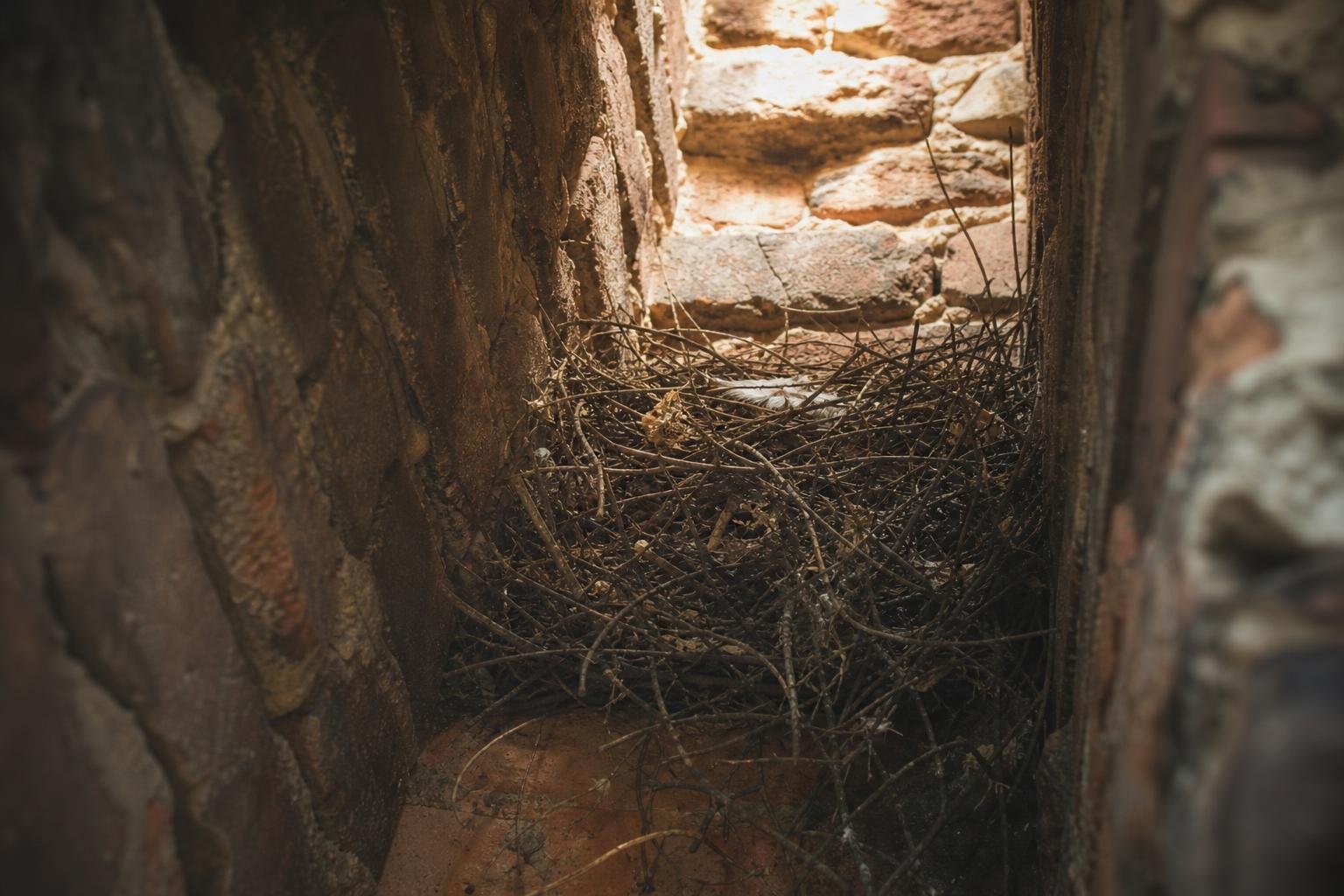
The same tree cover that brings the debris also brings wildlife. Squirrels and raccoons regularly use overhanging branches as a direct path to an uncapped flue, and it’s common for us to find old nesting material even after the animal itself has moved on. Whenever we find nesting material during a sweep, we treat it carefully — confirming the flue is vacant before we do any additional work, since animals occasionally return to a den site.
Montgomery’s older, established homes also bring the standard masonry maintenance a heavily used wood-burning fireplace needs, so a lot of our visits combine a genuine creosote sweep with debris and nesting removal in the same trip. Every visit ends with a written estimate for anything beyond the standard sweep before we do additional work.
What’s Included
- Full flue, smoke chamber & firebox cleaning — including leaf litter, twigs, and seed pod debris.
- Nesting material removal — cleared by hand once we confirm the flue is vacant.
- HEPA-contained dust control — keeps soot and debris out of your living space during the sweep.
- Cap recommendation if needed — a properly fitted cap prevents both debris and animal entry.
FAQs
Mature tree canopy is the main reason. Overhanging branches drop leaves, twigs, and seed pods directly onto and into a chimney, and that organic material collects in the smoke chamber far faster than it would on a chimney with a clear, open sky above it.
We stop and assess before continuing. If an animal or nesting material is present, we confirm the chimney is vacant, remove the nesting material by hand, and recommend a properly fitted cap so it doesn’t happen again — all before finishing the sweep.