
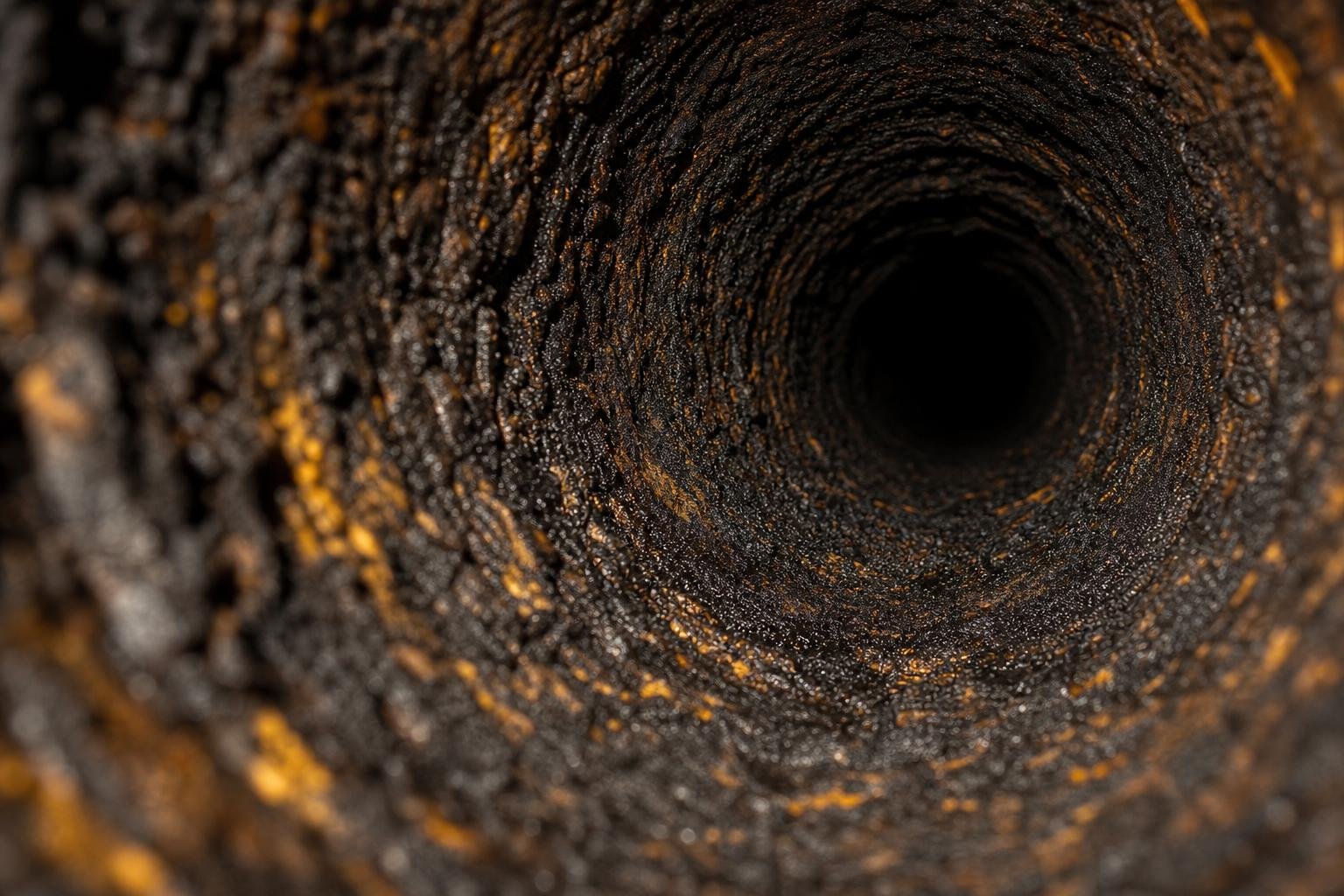
Quick AnswerCreosote is a flammable residue that condenses on flue walls every time you burn wood. It builds up in three stages, from flaky soot to a thick, shiny glaze, and that glazed final stage is highly combustible and cited by NFPA as a leading cause of chimney fires. Annual sweeping removes it before it reaches that point.
What Creosote Actually Is
When wood burns, it releases smoke, water vapor, and unburned particles along with the visible flame. As that mixture travels up a relatively cool flue, some of it condenses on the flue walls, the same way steam condenses on a cold window. The residue left behind is creosote — a combination of tar-like compounds and carbon that’s highly flammable by nature, since it’s essentially unburned wood fuel. Every wood-burning fireplace or stove produces some creosote; the question is how much accumulates and how often it gets removed.
The Three Stages of Creosote
Chimney professionals generally describe creosote buildup in three stages, each progressively harder to remove and more dangerous to leave in place.
Stage 1: Flaky Soot
This is the earliest and mildest form — a light, flaky, soot-like layer that brushes away fairly easily during a routine sweep. It forms from relatively efficient, hot-burning fires and is the easiest stage to keep on top of with regular maintenance.
Stage 2: Hardened, Tar-Like Creosote
With more buildup or less efficient burns, Stage 1 soot can harden into a tougher, tar-like layer that clings to the flue walls. It takes more effort and the right tools to remove, and it's a sign that the fires being burned aren't as hot or clean as they should be.
Stage 3: Thick, Shiny Glaze
This is the stage that matters most for fire safety. Stage 3 creosote is a thick, shiny, tar-like glaze that has essentially cooked onto the flue surface. It's highly flammable, difficult to remove with standard brushing, and often requires specialized chemical treatment or professional removal methods. A flue with significant Stage 3 buildup is one spark away from a serious problem.
What Speeds Up Creosote Buildup
Several everyday habits accelerate how fast creosote accumulates:
- Burning unseasoned or wet firewood, which smolders and produces more condensable smoke
- Restricting airflow with a partially closed damper, which cools and slows combustion
- Low, slow, smoldering fires instead of hotter, more complete burns
- An oversized flue that cools exhaust gases too quickly on the way up
Each of these has the same underlying effect: cooler, less complete combustion, which leaves more unburned residue to condense on the flue walls instead of exiting harmlessly through the chimney top.
If it’s been a while since your last sweep, a professional inspection will tell you exactly how much creosote has built up and what stage it’s at.
Why Annual Inspection Matters So Much
The National Fire Protection Association recommends at least one professional chimney inspection per year for active fireplaces, and creosote is a central reason why. Because buildup happens gradually and mostly out of sight, it’s easy for a flue to progress from Stage 1 to Stage 3 over one or two burning seasons without a homeowner ever knowing. Annual inspection catches that progression early, before it reaches the highly flammable glazed stage, and it’s the reason creosote-related chimney fires are largely preventable with routine maintenance.
Warning Signs You Might Already Have a Risk
A few signs suggest your chimney may already have dangerous creosote buildup or has experienced a small fire without your knowledge:
- Loud cracking or popping sounds coming from the chimney during a fire
- Dense, dark smoke pouring from the top of the chimney
- Warped damper metal or cracked flue tiles found during a sweep, evidence of a past chimney fire
If you notice any of these, it’s worth having the chimney professionally inspected before lighting another fire, since a past fire can leave hidden damage that makes future use riskier even after the visible flames are long gone.
FAQs
Light, flaky Stage 1 soot can sometimes be reduced with a homeowner-grade chimney brush, though most homeowners still prefer to leave it to a professional sweep. Stage 2 and Stage 3 creosote are hardened or glazed onto the flue walls and generally require professional tools, and Stage 3 in particular often needs specialized chemical treatment that isn’t a DIY job.
Signs of a past chimney fire include warped or discolored damper metal, cracked or collapsed flue tiles, creosote that looks puffy or honeycombed, and roofing material or debris near the chimney with scorch marks. If you notice any of these, or you recall hearing loud popping sounds or a roaring noise during a past fire, it’s worth having a professional inspect the flue before you use the fireplace again.
No, creosote is a byproduct of burning wood specifically. Gas fireplaces and inserts don’t produce creosote, though their venting still needs periodic inspection for other issues like blockage or corrosion.