
Quick AnswerMinnesota winters build ice dams at the roof edge that force meltwater back up under the shingles and flashing, and repeated freeze-thaw swings crack apart any masonry that’s already absorbed moisture — and St. Paul’s older housing stock, much of it 60 to 140 years old, has had a long time for both cycles to do damage. The result is more flashing leaks, spalling brick, and cracked crowns here than you’d see in a milder or drier climate.
Minnesota Winters Are Hard on Masonry — and on Roofs
St. Paul gets genuinely cold, but the chimney damage we see usually isn’t caused by the cold itself. It’s caused by what happens at the edges of winter, when snow melts and refreezes over and over:
- Ice dams force water backward. Heat escaping through the attic melts snow on the upper roof, which runs down and refreezes at the colder eaves. The resulting ice dam backs meltwater up under the shingles and flashing — and the joint where a chimney meets the roofline is one of the easiest places for that water to get in.
- Freeze-thaw cycles do the rest. Any moisture that gets into brick or mortar expands when it freezes and contracts when it thaws — and between fall cold snaps, midwinter thaws, and the spring melt, St. Paul masonry goes through more of these cycles each year than most homeowners realize.
- It shows up as cracking and leaks, not collapsing. Spalling brick faces, hairline crown cracks, and a ceiling stain that appears every spring are the visible early signs — small on their own, but they compound if left unaddressed.
St. Paul's Older Homes Bring Their Own Chimney Risks
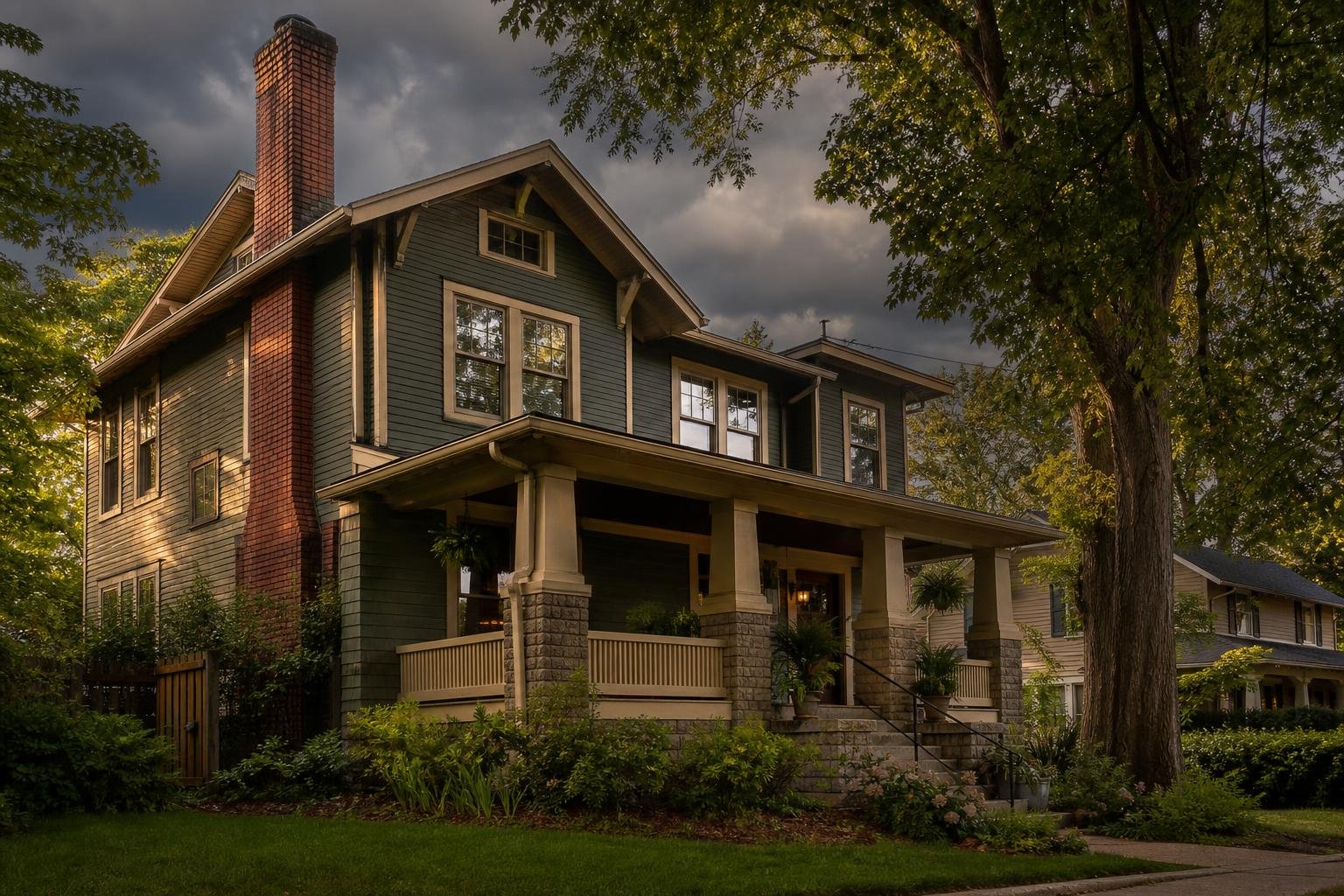
On top of the climate, a large share of St. Paul’s housing stock is old enough that the chimney itself is a liability by age alone. Historic neighborhoods like Cathedral Hill, Summit Avenue, and Crocus Hill have plenty of homes built well before modern liner and flashing standards existed, while newer construction at Highland Bridge and other recent infill generally has younger masonry with fewer inherited problems — though it’s not immune if it skips regular sweeps.
An older chimney built decades ago was often built to the codes and materials of its time, which means it may have a thinner liner, no cap at all, or mortar that’s simply reached the end of its usable life. None of that is a crisis by itself, but it means an older St. Paul chimney has less margin to absorb the ice-dam and freeze-thaw stress a Minnesota winter puts on it every single year.
The Most Common Weather-Driven Problems We See in St. Paul
- Ice-dam flashing leaks. Water forced backward under the shingles at the chimney-roofline joint, often not noticed until a stain appears on the ceiling below.
- Cracked or spalling brick. Brick faces popping off or crumbling is freeze-thaw damage in progress, not just cosmetic wear.
- Heavier creosote buildup. A long, cold burning season means more hours of use, and more hours of use means creosote accumulates faster than it would in a milder climate.
How to Protect an Older Chimney From St. Paul Winters
The fixes here are inexpensive relative to the damage they prevent. Properly sealed flashing keeps ice-dam meltwater out of the roofline entirely. A sealed, crack-free crown keeps water from soaking into the masonry in the first place. And an annual inspection before burning season catches spalling, a failing flashing seal, or a hairline crack while it’s still a quick repair, well before it turns into a full rebuild or an interior leak. For a chimney that’s already 60, 100, or 140 years old, staying ahead of the winter is a lot cheaper than catching up to it in the spring.
FAQs
Yes. When snow on the roof melts from escaping heat and refreezes at the colder eaves, the resulting ice dam can force meltwater backward under the shingles and flashing, and the flashing where a chimney meets the roofline is one of the most common places that water finds its way in.
We see the most repair calls on chimneys 60 to 140 years old, common in neighborhoods like Cathedral Hill, Summit Avenue, and Crocus Hill, though even newer chimneys can develop issues without regular sweeps and inspections.
Industry guidelines recommend an annual inspection for any chimney in regular use, and we’d say that’s the floor, not the ceiling, for a St. Paul home built before the 1980s — older masonry and older liners have less margin for the freeze-thaw and ice-dam stress a Minnesota winter puts on them.