
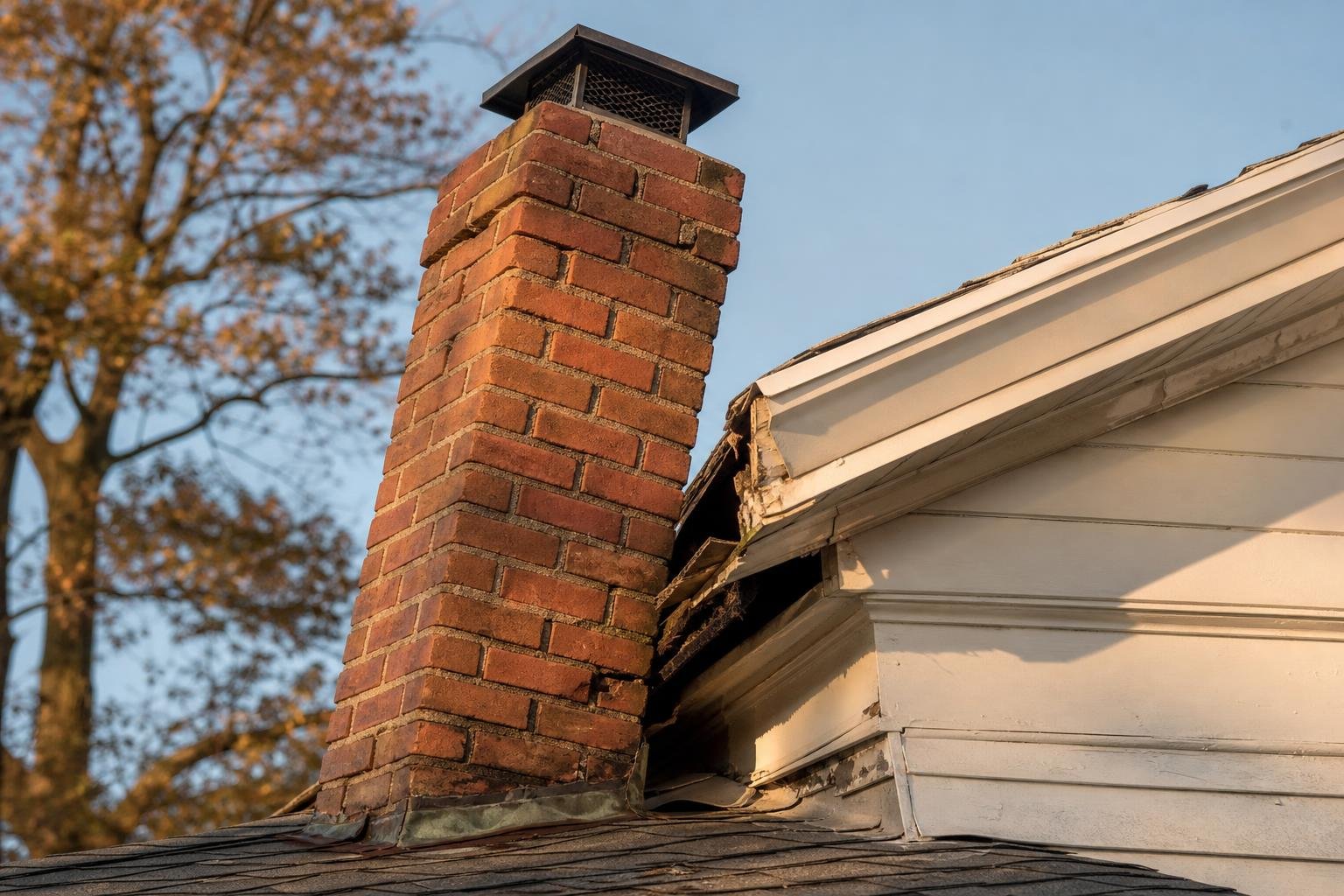
Quick AnswerMost leaning or separating chimneys come down to settling: chimneys often sit on a separate, shallower footing than the house and settle at a different rate over the decades. Stay clear of the area and get a structural assessment before using the fireplace again.
Likely Causes
- Chimney settling on its own footing — chimneys often have a separate, shallower foundation than the house and settle at a different rate over time.
- Water-saturated soil expanding and contracting — seasonal wet-dry cycles shift the ground beneath the footing, especially in Middle Tennessee’s clay-heavy soil.
- Deteriorated mortar losing its structural bond — decades of freeze-thaw cycles weaken the joints holding the masonry together, allowing movement.
- Inadequate original footing depth — some older or budget-built chimneys were never poured deep enough to resist frost heave.
- Tree roots or poor drainage undermining the base — roots seeking moisture or water pooling against the foundation erode the soil supporting the chimney.
How Urgent Is This?
A leaning or separating chimney is a structural issue, not a cosmetic one, and it’s treated as high urgency. Masonry chimneys are extremely heavy, and once a footing has shifted enough to create a visible tilt or gap, the structure can continue moving — sometimes slowly, sometimes suddenly enough to become a falling hazard. The longer it goes unaddressed, the more the separation tends to widen and the more expensive the eventual repair becomes.
What to Do Right Now
- Stay clear of the area beneath and around the chimney until it’s been assessed
- Don’t use the fireplace until a professional has confirmed the chimney is structurally sound
- Take dated photos from the same spot to track whether the gap or lean is getting worse
- Get a structural assessment — severe cases may need input from both a chimney specialist and a structural engineer
FAQs
It can, though most leaning chimneys move slowly over years rather than collapsing suddenly. The real danger is that masonry chimneys are heavy, and once separation has progressed far enough, large sections can shift or come loose with little warning — which is why an assessment shouldn’t be put off.
Sometimes. If the lean is caught early and the footing is stabilized, repairs may be limited to the affected masonry. Once separation has been happening unaddressed for years, a partial or full rebuild is often the only way to restore a safe, solid structure.
It varies widely depending on the soil, drainage, and how much the footing has already settled. Some chimneys shift a small amount over a decade; others move noticeably within a year or two, especially after a wet season saturates the soil beneath the footing. Photos taken over time are the best way to track your specific chimney’s rate of change.