
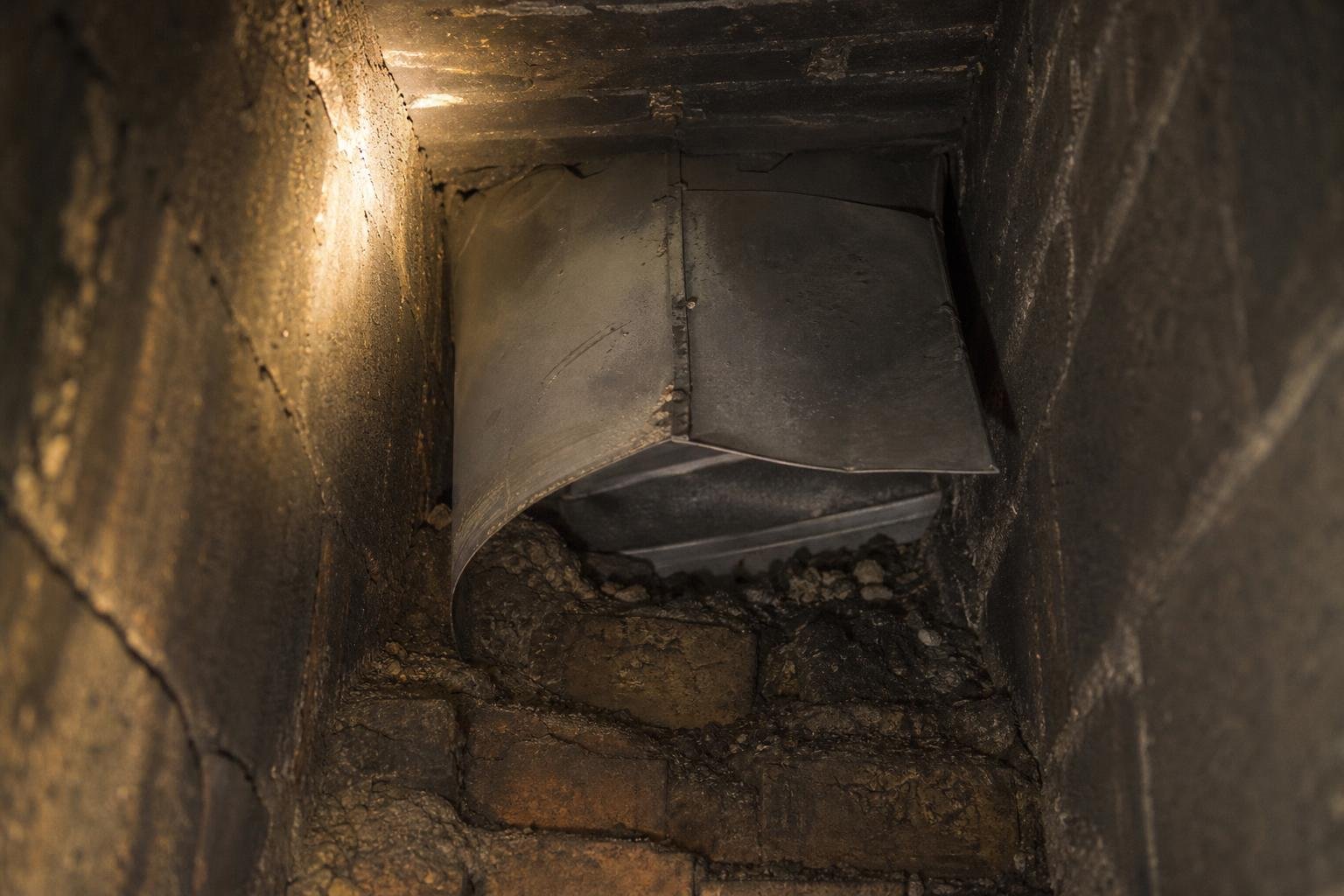
Quick AnswerThe most common cause of chimney noise is a bird or squirrel that's found its way into the flue. Don't light a fire until you know what's making the sound — especially scratching or chirping — and have a technician confirm whether it's an animal or just loose flashing.
Likely Causes
- Birds or squirrels in the flue — scratching, chirping, or fluttering usually means an animal got in through an uncapped or damaged opening; see our Animal in the Chimney page for details.
- Loose or damaged flashing — the metal seal at the roofline can rattle or tick against the chimney whenever it's windy.
- A loose or bent chimney cap — vibrates or clangs in the wind once it's no longer sitting flush on top of the flue.
- Debris shifting inside the flue — sticks, leaves, or nesting material can settle and move, creating faint knocking or rustling sounds.
- Creosote flakes falling inside the flue — temperature changes can loosen built-up creosote, which drops and lands with a soft thud.
How Urgent Is This?
Noise in the chimney is medium urgency — rarely a same-day emergency, but not something to dismiss as just the wind. A trapped animal can die in the flue, block airflow, or chew through components, and lighting a fire before you know the cause risks smoke backup or harming it. Loose flashing or a bent cap also tends to worsen with continued wind exposure, so it's worth fixing before the next storm.
What to Do Right Now
- Don't assume it's "just the wind" without checking first
- Avoid lighting a fire until you know the source, especially if an animal might be present
- Have a technician inspect with a camera to identify the exact cause
- Get a loose cap or flashing secured promptly, since it typically worsens with more wind exposure
FAQs
Not until you know the source. If an animal is in the flue, lighting a fire can trap or injure it and push smoke back into your home if a nest is blocking the flue. It's best to hold off and have the chimney checked first.
Animal noises tend to be irregular and organic — scratching, chirping, fluttering, or scurrying, often more active at dawn or dusk. Loose flashing or a bent cap tends to make a more mechanical rattling or ticking sound that follows the wind, picking up during gusts and going quiet when it's calm.
Wind is the most common trigger for noise from loose flashing, a bent or loose cap, or debris shifting inside the flue. If the noise reliably tracks with wind speed rather than time of day, a hardware issue is more likely than an animal, but it's still worth a camera inspection to confirm.