
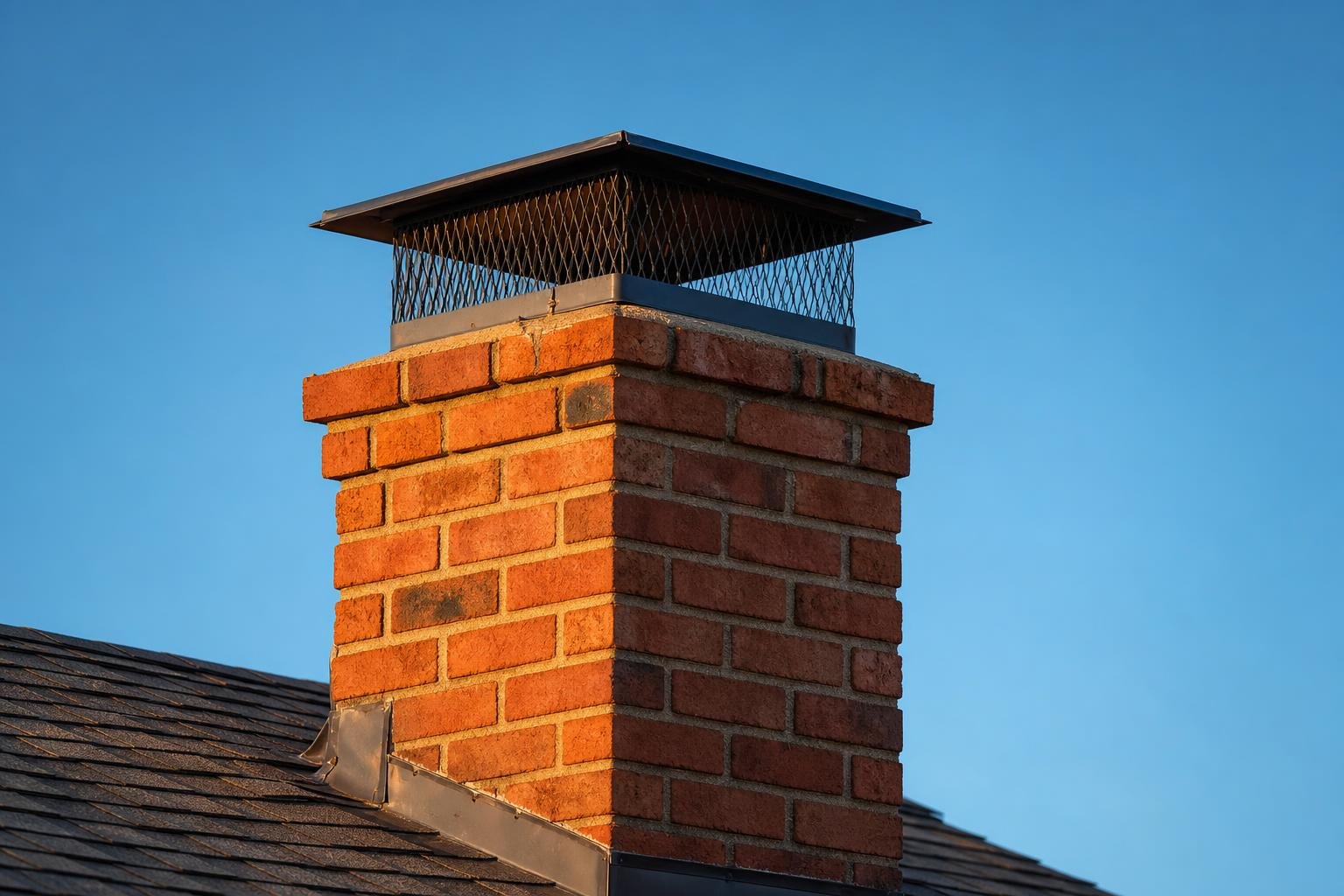
An open flue is an open invitation — to rain, to squirrels and raccoons looking for a dry place to nest, and to downdrafts that push smoke back into the living room on a windy night. A chimney cap solves all three problems at once, and dollar for dollar it's one of the best upgrades a chimney can get. Most caps cost far less than the water damage or animal-removal call they prevent, which is why we tell every customer with a bare flue that a cap should be near the top of the list.
We install caps on everything from century-old brick chimneys in Germantown to newer builds out in Mt. Juliet and Spring Hill, and the job is the same everywhere: measure the flue or crown precisely, fabricate or select a stainless steel cap to those exact dimensions, and secure it so it can handle Middle Tennessee's mix of summer storms and winter wind without budging.
The reason we don't recommend a hardware-store cap off the shelf is simple — those come in a handful of generic sizes, and very few Nashville flues match one exactly. A cap that's even a little loose won't seal properly against wind-driven rain, and a cap that's too small can slide or blow off entirely. A custom fit is what actually keeps the weather out.
What's Included
- On-site measurement. Precise measurement of your flue or crown so the cap fits snugly rather than approximately.
- Stainless steel construction. Rust-resistant material built for Nashville's humidity and freeze-thaw winters, not a coated steel cap that corrodes in a few seasons.
- Mesh spark-arrestor sides. Screened sides that block animal entry and embers while still letting smoke draft freely.
- Secure mounting. Fastened to withstand wind and storms, with a written estimate before we start and a walkthrough of the finished install.
Plain Cap or Mesh Spark-Arrestor Style?
A plain cap has a solid top and screened sides — enough to stop rain and keep animals out. A mesh spark-arrestor cap adds fine screening across the top opening as well, so embers from the fire can't escape the flue and land on a roof or in nearby dry brush. The extra cost is usually small, and it's the style we recommend for most Nashville homes, especially anywhere near mature trees or during dry summer stretches. If you already have a damper that needs attention, it's worth handling both at once — see our full cap & damper installation service for the combined options.
Get a Free Cap Installation Estimate
FAQs
Yes, and it's one of the cheapest ways to protect a chimney. Without a cap, rain runs straight down the flue and damages the liner and firebox, and the open flue becomes an easy way in for squirrels, raccoons, and birds looking for a nesting spot. A cap also helps block downdrafts that can push smoke back into the house.
You can, but off-the-shelf caps are sized to a handful of standard flue dimensions, and most Nashville chimneys don't match one exactly. A cap that's even slightly loose will rattle, let wind-driven rain past the edges, or simply blow off in a storm. We measure your flue or crown on-site and fit a cap to the exact dimensions, so it seals properly and stays put.
A plain cap is a solid top with mesh sides that keeps out rain and animals. A spark arrestor cap adds fine mesh across the top opening as well, which stops embers from escaping the flue and landing on a roof or dry vegetation nearby. Most homeowners choose the mesh spark-arrestor style since it adds fire protection for very little extra cost.