
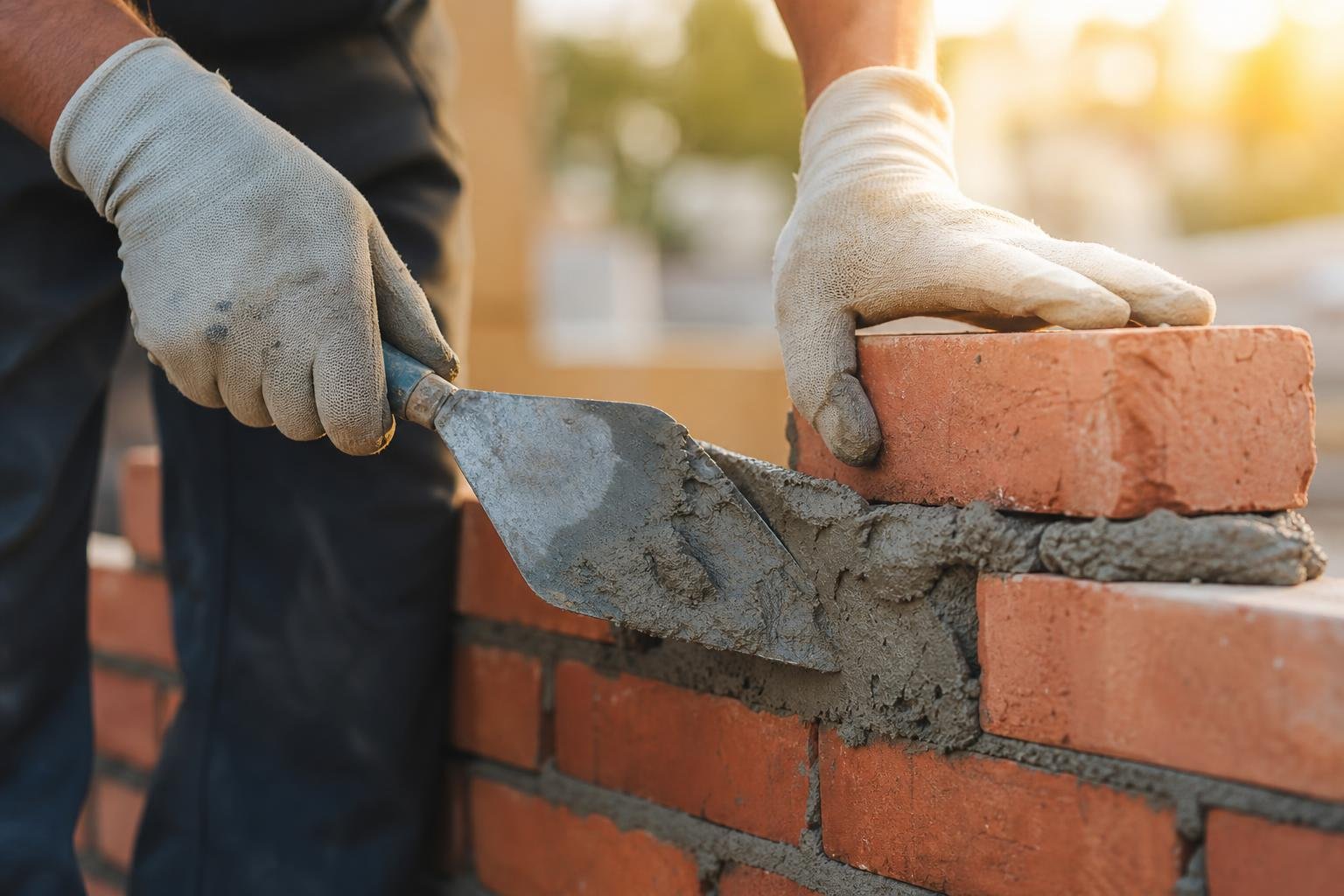
Mortar joints are the weakest link in any masonry chimney. Brick itself can last a century or more, but the mortar between the bricks is softer by design, and in Nashville's freeze-thaw winters and humid summers, it wears out well before the brick does. Tuckpointing is how we fix that: grinding out the failed mortar to a consistent depth along the joint and repacking it with fresh mortar, matched in color so the repair blends into the rest of the chimney instead of standing out as a patch.
It's important to be clear about what tuckpointing is and isn't. It's a spot repair for the joints, not a full rebuild of the chimney. If the brick behind those joints is still structurally sound, tuckpointing the failing mortar is usually all that's needed to stop water from working its way into the chimney and the surrounding structure. Left alone, failing mortar joints let water behind the brick face, where it freezes, expands, and does far more damage over a single Middle Tennessee winter than most homeowners expect.
We see this most often on older homes in neighborhoods like East Nashville, Germantown, and Belmont-Hillsboro, where original lime-based mortar has simply reached the end of its service life, but it shows up on newer construction too whenever the original mortar mix wasn't right for the climate.
What's Included in a Tuckpointing Repair
- On-site evaluation. Identifying exactly which joints have failed and confirming the brick itself hasn't deteriorated behind them.
- Mortar removal. Grinding out the old, failing mortar to a consistent, even depth without damaging surrounding brick.
- Repacking with fresh mortar. Color-matched mortar packed into the joint and finished to match the existing tooling style.
- Written flat-fee estimate. A clear price before any work begins, based on the actual extent of the damage on site.
Tuckpointing vs. a Full Masonry Rebuild
The honest answer to "will tuckpointing fix my chimney" depends entirely on how far the damage has spread. If the mortar has failed in a few isolated joints and the brick underneath is intact, tuckpointing is the right, cost-effective repair. But if deterioration has spread across most of the stack, if entire bricks are cracked or spalling, or if the chimney shows signs of leaning or structural movement, a spot repair won't hold and a full masonry rebuild is the safer, longer-term fix. We'll always tell you honestly which category your chimney falls into before we recommend either one.
Get a Free Tuckpointing Estimate
FAQs
Tuckpointing is a mortar-joint repair where we grind out failed, cracked, or crumbling mortar to a consistent depth between the bricks and repack the joints with fresh mortar, often color-matched to blend with the existing brick. It's a spot repair aimed at the joints themselves, not the bricks or the whole structure.
Tuckpointing repairs the mortar joints while the brick itself is still sound. A full masonry rebuild is a much larger job reserved for chimneys where the brick has deteriorated, the structure is leaning, or the damage has spread too far for joint-level repair to fix safely. We'll always tell you honestly which one your chimney actually needs.
Common signs include mortar joints that look recessed, crumbly, or powdery, small pieces of mortar in the gutter or on the roof, or visible water staining on the interior chimney chase. If you can scratch out mortar with a key or screwdriver, that joint has likely failed and is letting water in.