
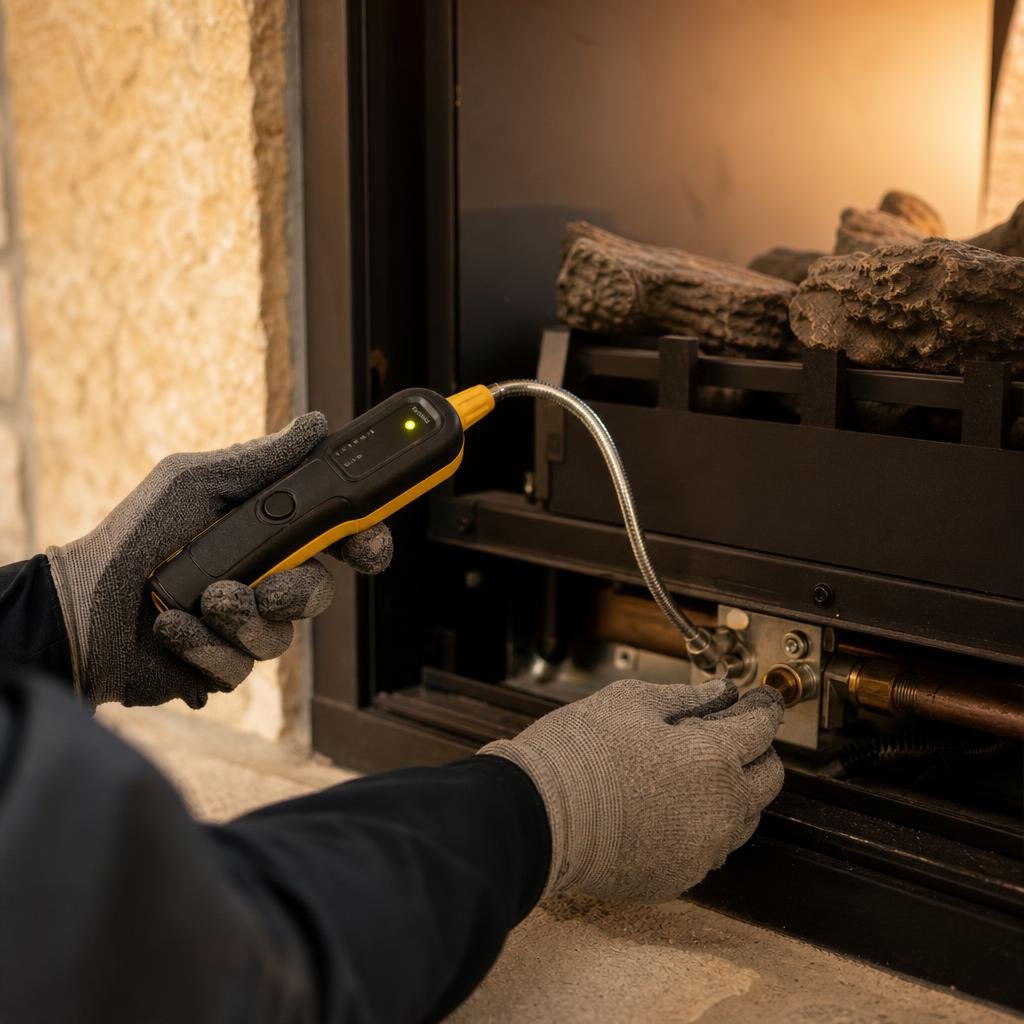
Gas fireplaces are convenient, but they're also gas-burning appliances inside your living space, and that's worth taking seriously once a year. A safety inspection is different from a repair visit or a glass-and-log cleaning — its whole purpose is to answer one question: is this unit safe to run? We test for gas leaks, confirm the venting and combustion air supply are doing their job, check for carbon monoxide, and verify the fireplace shuts off the way it's supposed to.
We recommend this inspection for every gas fireplace in Nashville and Middle Tennessee once a year, ideally right before heating season starts in the fall. It matters most for units that sit unused all summer, since a vent obstruction, a loosened fitting, or a settled connection can develop quietly over months without anyone noticing until the fireplace is fired back up.
What's Included
- Gas leak testing. We test every accessible connection and fitting along the gas line to the fireplace for leaks.
- Venting & combustion air check. We verify the venting is clear, correctly sized, and unobstructed, and that the unit is getting the combustion air it needs to burn cleanly.
- Carbon monoxide testing. We measure CO levels near the unit while it's running to confirm it's within a safe range.
- Shutoff verification. We confirm the unit shuts off completely and reliably from the wall switch, remote, or thermostat control.
Pair It With Your Annual Chimney Inspection
If your home also has a wood-burning fireplace or chimney, the timing lines up naturally: many Nashville homeowners schedule their gas fireplace safety inspection alongside their annual Level 1 chimney inspection in the same visit, before the season's first fire in either appliance. It's an efficient way to get every combustion appliance in the house checked at once, rather than tracking two separate service dates.
Schedule Your Gas Fireplace Safety Inspection
FAQs
We test every gas fitting and connection for leaks, verify the venting and combustion air supply are clear and correctly sized, check carbon monoxide levels near the unit, and confirm the fireplace shuts off completely and reliably. It's a focused safety check rather than a cosmetic cleaning, though we'll flag anything cosmetic we notice along the way.
We recommend a safety inspection once a year, ideally before the start of heating season in the fall. If your fireplace sat unused all summer, hasn't been serviced in over a year, or you've noticed any unusual smell or sound, it's worth scheduling one sooner rather than waiting.
A soapy-water bubble test at accessible fittings can catch an obvious leak, but it won't catch every failure point, and it doesn't test venting, combustion air, or carbon monoxide output. If you ever smell gas, leave the area and contact your gas utility or a professional immediately rather than investigating it yourself.