
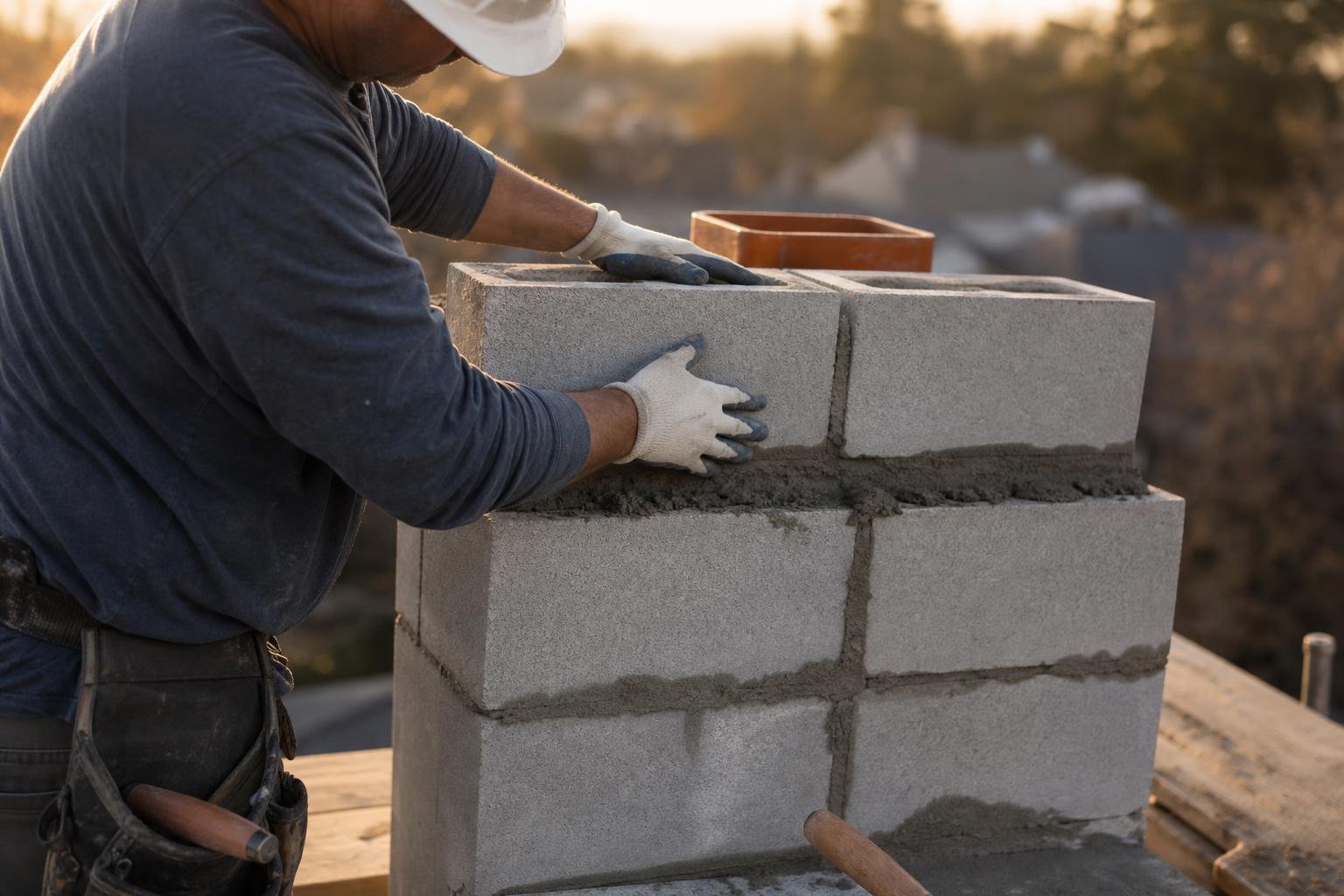
A full chimney rebuild is the largest masonry service we perform, and we don't recommend it lightly. It's reserved for chimneys where the damage has gone well past what repointing, a crown fix, or a spot repair can safely resolve — usually the result of years of deferred maintenance, a chimney that's begun leaning or separating from the house, or major fire damage that's compromised the structure. In those situations, patching individual problem areas doesn't actually fix anything; it just delays a bigger failure.
Instead, a full rebuild takes the chimney down to sound, stable masonry and reconstructs it from there, course by course, with brick matched as closely as possible to your home's existing color, size, and mortar tone. Most rebuilds start at the roofline, since that's where weather exposure typically does the most damage over the decades, but if our structural assessment finds the problem extends further down — through the chase or into the foundation — we'll rebuild as far down as necessary and explain exactly why before any demolition starts.
This is common work on older housing stock across your area neighborhoods like Woodbine, Madison, and Old Hickory, where chimneys built decades ago are reaching the end of their original masonry's service life, but it's also the right call any time a chimney fire or storm has caused sudden, severe structural damage regardless of the home's age.
What's Included in a Full Chimney Rebuild
- Structural assessment. A thorough inspection to determine exactly how far the damage extends and how far down the rebuild needs to go.
- Brick matching. Sourcing brick and mortar to match your home's existing color, size, and profile as closely as possible, including reclaimed or custom options when needed.
- Course-by-course rebuild. Removing compromised masonry down to sound brick and rebuilding it back up properly, one course at a time.
- Weatherproofing & finish. Sealing and finishing the new masonry to protect it from the day the work is done, plus a clean job site when we leave.
Why We Always Start With a Written Scope
A full rebuild is a significant investment, and we won't ask you to sign off on one without showing our work first. Before any demolition begins, we complete a structural assessment and put together a written scope that spells out exactly what's being rebuilt, how far down the work goes, what brick and mortar will be used, and a flat-fee estimate for the whole job. If the assessment turns up something less extensive than a full rebuild — say, the damage is actually limited to the crown or a section of repointing — we'll tell you that instead of upselling a bigger job than the chimney actually needs.
FAQs
A full rebuild is the right call when deterioration has spread too far for a repointing job or crown fix to solve — widespread cracked or spalling brick, a chimney that's visibly leaning or separating from the house, or major fire damage. If the underlying structure is compromised across most of the stack rather than isolated to a few joints, patching it piece by piece isn't a safe long-term fix.
Most full rebuilds start at the roofline and work up, since that's typically where weather exposure has done the most damage. But if our structural assessment finds the deterioration or movement extends lower — down through the chase or into the foundation — we'll rebuild as far down as the sound masonry actually starts, and we'll explain exactly why before any demolition begins.
Always. A full chimney rebuild is a significant investment, so we complete a structural assessment first, then provide a written scope of work and a flat-fee estimate that spells out exactly what will be rebuilt, what brick will be used, and what the finished result will look like, before any demolition starts.