
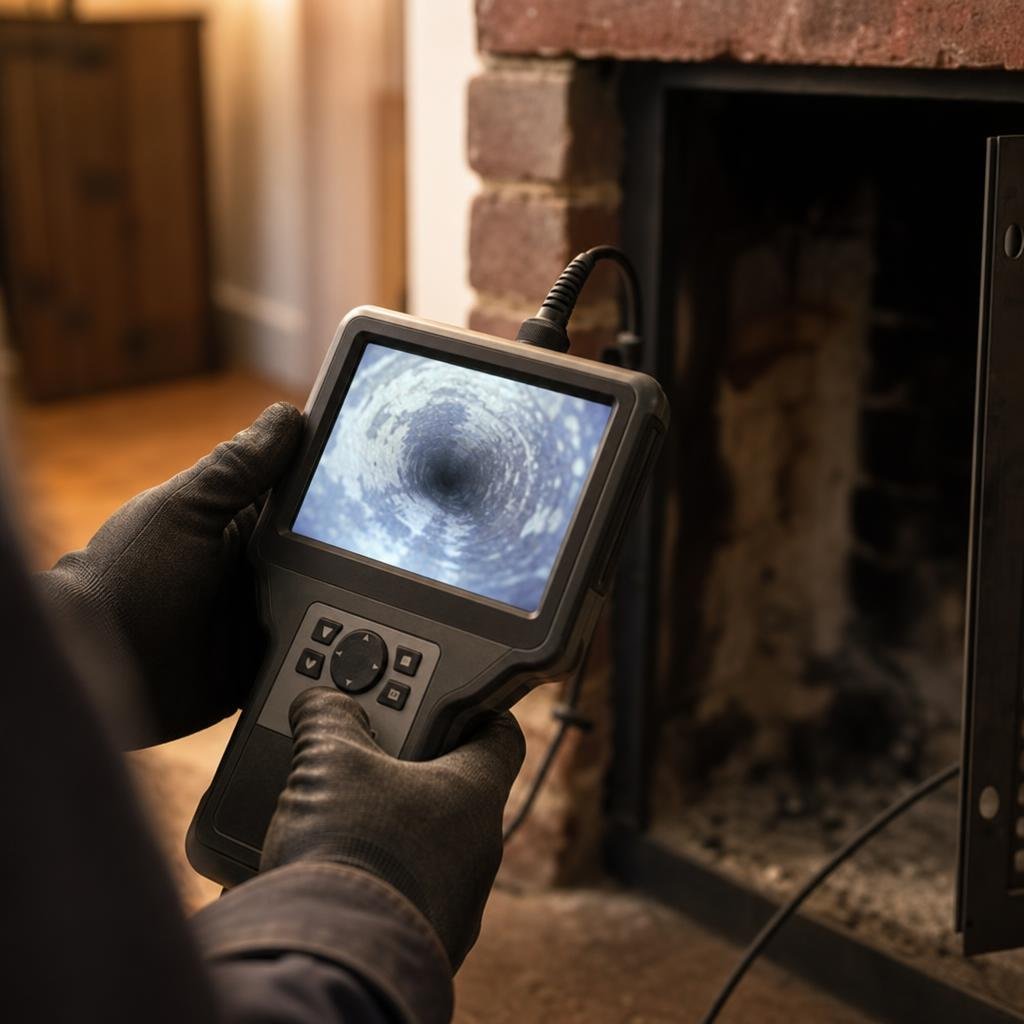
A Level 2 inspection covers everything a Level 1 does — the firebox, damper, and exterior masonry — and then goes further with a full video camera scan of the flue interior from top to bottom. That camera is the difference. A visual check from the ground and roofline can only tell you so much about what's happening inside the liner; a camera scope traveling the full length of the flue shows cracking, separated flue tiles, and creosote glazing that would otherwise stay hidden until they became a bigger problem.
This isn't the inspection most homeowners need every year. It's the one required when something specific about your chimney's situation has changed, and it comes up often enough around here that we keep camera equipment stocked and technicians trained on it year-round — whether you're closing on a home next week or dealing with the aftermath of a chimney fire.
When a Level 2 Inspection Is Required
- After a chimney fire. Even a small, contained fire can crack flue tiles or damage the liner in ways you can't see without a camera. Code requires a Level 2 before the chimney is used again.
- Buying or selling a home. Real estate transactions call for a documented, unbiased look at chimney condition before closing.
- Changing fuel type, appliance, or relining. Switching from wood to gas, installing a new insert, or relining the flue all change how the chimney performs and require a fresh camera-verified check.
- Following up on a Level 1 finding. If a routine inspection turns up something that needs a closer look — a suspicious crack, unusual creosote pattern, or a draft issue — a Level 2 gives us the full picture.
What Happens During the Visit
Along with the camera scan, a Level 2 inspection includes everything from a Level 1 — the firebox, damper, and exterior masonry — plus a check of accessible attic, basement, and crawlspace areas connected to the chimney system. Most visits run about an hour to 90 minutes. You'll get a written report of what the camera found, in plain language, along with a flat-fee estimate for any recommended repairs before we do anything beyond the inspection itself. If what we find is serious enough that it can't be fully evaluated without removing masonry or other components, we'll walk you through why a Level 3 inspection is the next step, and what that would involve.
FAQs
You need a Level 2 inspection if you've just had a chimney fire, you're buying or selling a home with a chimney, you're changing the fuel type or swapping in a new appliance, you're relining the flue, or your area experienced severe weather that could have affected the chimney. A Level 1 inspection is only appropriate for a chimney in ongoing, unchanged use.
A flexible camera is fed down the full length of the flue, giving our technician a close, well-lit view of the entire interior liner on a monitor in real time. It catches cracking, gaps in mortar joints, creosote glazing, and separation between flue tiles that a visual check from the top or bottom simply can't see.
Most Level 2 inspections run about an hour to 90 minutes, since they add the camera scan plus a check of accessible attic, basement, and crawlspace areas connected to the chimney. We give you a written, flat-fee price before the inspection begins so there's no surprise charge once the technician is on site.