
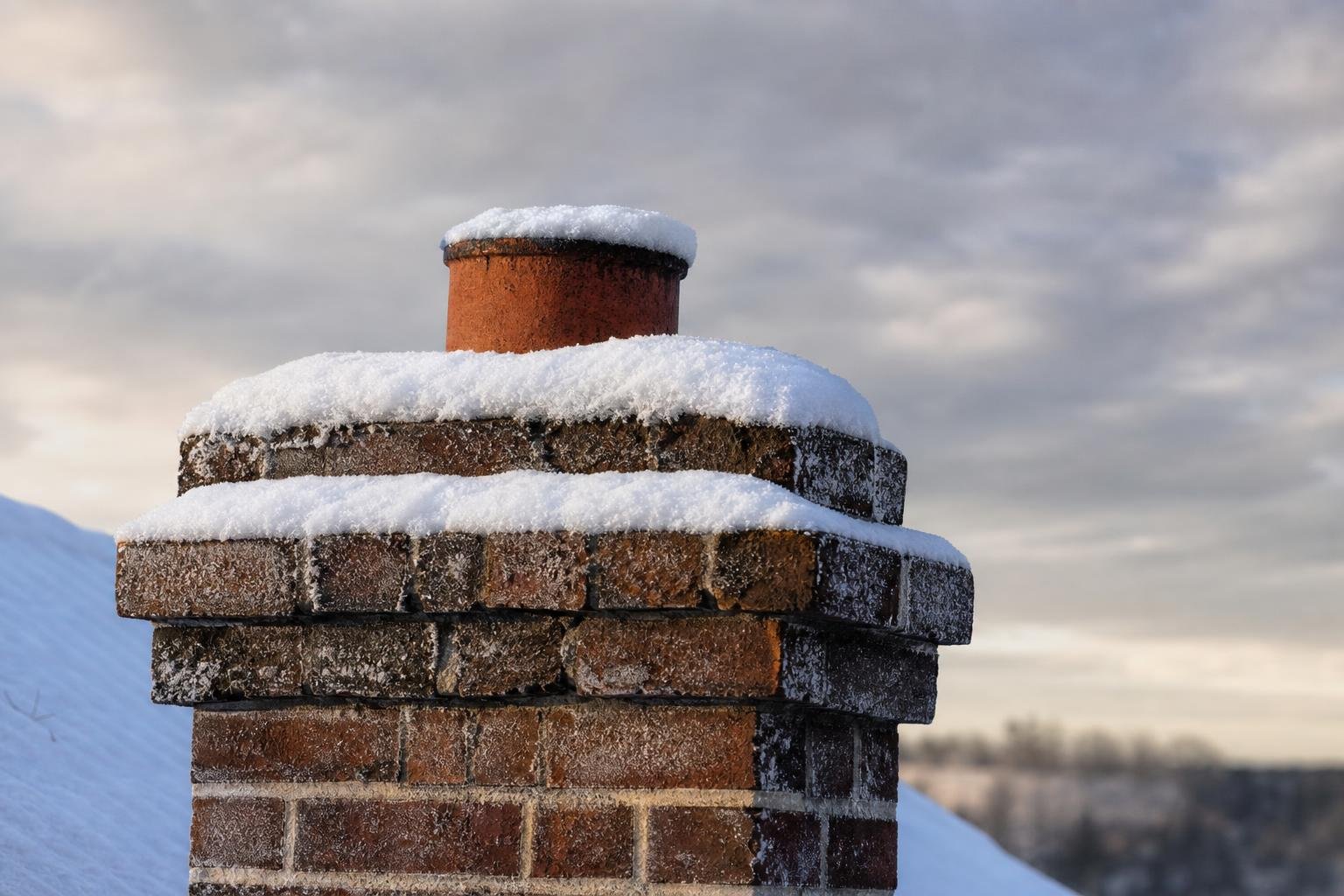
Quick AnswerThe most common cause is an older throat damper that doesn’t seal tightly even when closed, letting cold outside air sink straight down the flue. Check that the damper is actually shutting all the way, and consider a top-sealing damper if the draft keeps coming back.
Likely Causes
- Older throat damper that doesn’t seal tightly — the metal plate near the firebox warps slightly over time and leaves gaps even when “closed.”
- The chimney acting like an uninsulated duct — a masonry flue runs straight from your living room to the outside air with little to slow heat transfer.
- Negative pressure in a tightly sealed home — modern insulation and sealing can pull outside air in through the path of least resistance, often the chimney.
- No chimney cap, or a cap that doesn’t block wind — lets wind-driven downdrafts push cold air straight into the flue opening.
How Urgent Is This?
A cold draft down the chimney is an energy-efficiency and comfort issue, not a safety hazard, which is why it’s low urgency. It won’t damage your chimney or put your home at risk if you leave it alone for a while. That said, it can meaningfully raise heating bills all winter long, since it’s essentially a hole to the outside air sitting right in your living space.
What to Do Right Now
- Check that the damper is actually closing fully when the fireplace isn’t in use
- Consider a top-sealing damper, which closes at the top of the flue and seals far tighter than a throat damper
- Use a chimney balloon as a cheap, temporary fix while you decide on a permanent solution
- Have a technician confirm your cap and damper condition before committing to an upgrade
FAQs
Older throat dampers rarely seal tightly, even when fully closed — the metal plate warps slightly over time and leaves small gaps around the edges. Cold outside air finds those gaps and sinks down the flue since cold air is denser than the warm air in your house.
If the draft is noticeable enough that you’re closing off the room or feeling a chill near the fireplace, yes. A top-sealing damper closes at the very top of the flue with a tight rubber gasket, which blocks cold air far more effectively than a throat damper and also stops warm conditioned air from escaping up the chimney.
A chimney balloon (an inflatable pillow placed in the flue) does block airflow effectively and is a legitimate short-term fix. The catch is you have to remember to remove it before lighting a fire, which makes it better as a temporary measure than a permanent solution.