
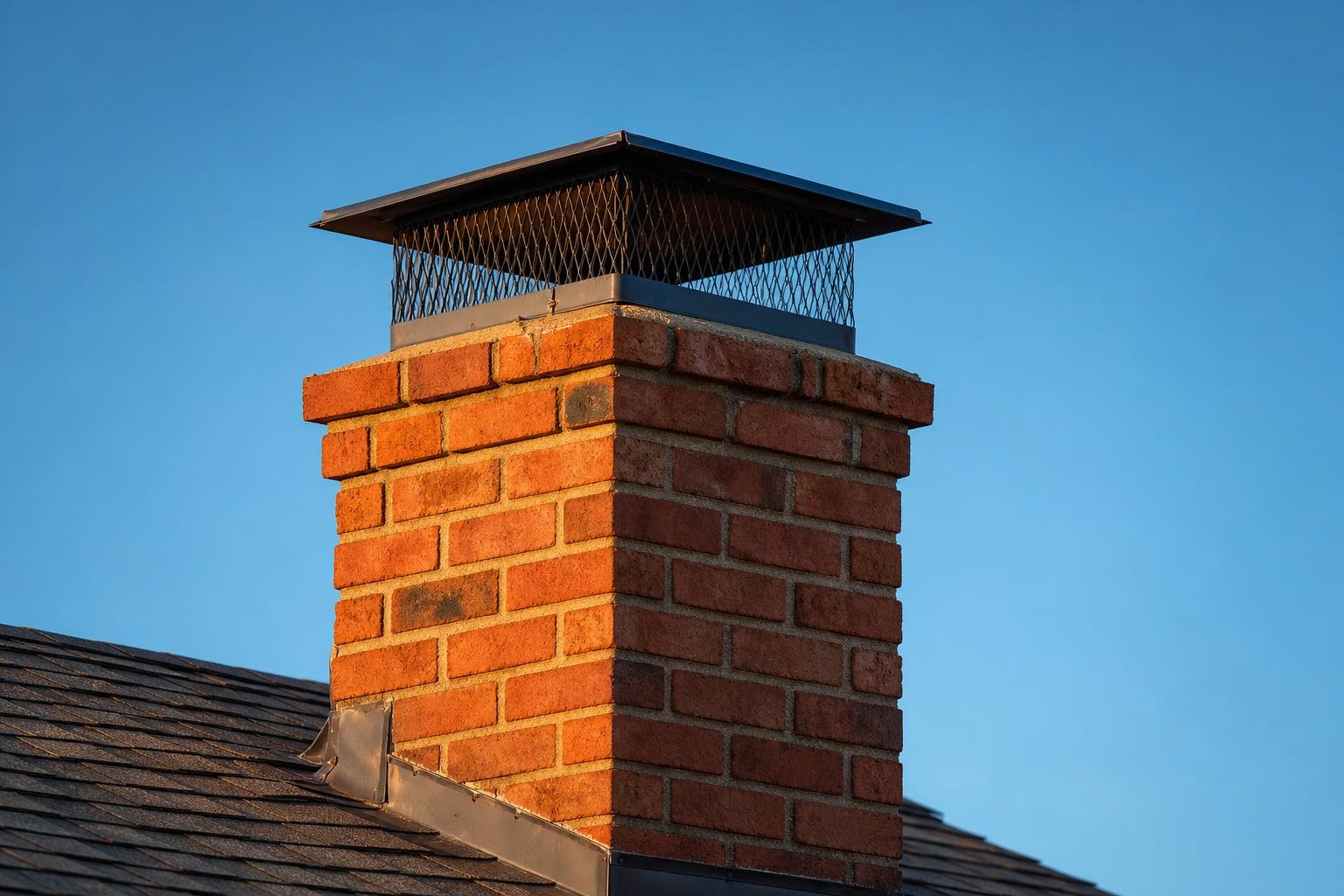
Quick AnswerAny chimney without a cap, or with a damaged or missing damper, needs one — caps and dampers are inexpensive compared to the water and animal damage they prevent. In Cincinnati that damage adds up faster than in milder climates, since any rain that gets past an open flue can freeze and expand inside the masonry during an Ohio Valley cold snap. Caps should be checked every year during your annual inspection, and most last well over a decade before mesh or springs need attention.
What’s Included
Cap and damper work covers the hardware that seals and protects the top and throat of your chimney system. Here’s what each piece involves:
- Chimney Cap Installation. We measure the exact outside dimensions of your flue or crown on-site and install a custom-fit, 304 or 430-grade stainless steel cap with welded mesh screening — not a generic big-box size that leaves gaps for rain, embers, and wildlife to slip through. A properly fitted cap is the single cheapest way to prevent the water intrusion and animal entry that cause most of the expensive chimney repairs we see, and in Cincinnati it’s also the cheapest way to keep freeze-thaw damage from starting in the first place.
- Damper Installation. We install both top-sealing dampers, which use a stainless steel plate and rubber gasket at the very top of the flue to create an airtight seal against drafts, and traditional throat dampers, which sit just above the firebox on a cast-iron or steel frame. We’ll walk you through which style fits your chimney, your budget, and how much energy loss you’re trying to solve for.
- Chase Cover Installation. The chase cover is the flat metal panel that caps a factory-built, framed chimney chase (common on newer homes). Thin galvanized covers rust through and warp within a few years, which lets water pool and drain straight down into the chase walls. We replace failed covers with heavier-gauge stainless steel or copper, custom-bent with a drip edge so water sheds off the sides instead of collecting.
- Spark Arrestor Installation. For homes near wooded lots or with wood-burning stoves that throw more embers, we install a tighter-mesh spark arrestor screen integrated into the cap itself, catching hot embers before they can reach a roof, deck, or dry brush — often required by local fire code in higher-risk areas.
Signs You Need This
- You can see daylight, sky, or rain falling straight down an open flue
- Scratching, chirping, or nesting sounds coming from inside the chimney
- A cold draft or musty outside air coming down the flue when the fireplace isn’t in use
- A visibly rusted, bent, or missing cap, chase cover, or damper plate
- A damper that won’t open, close, or seal fully tight
Our Process
Measure & Inspect
We measure your flue or crown and check the condition of any existing cap or damper hardware.
Written Estimate
You get a flat-fee, written quote before any purchase or work — no surprises on the invoice.
Custom Fabrication
Caps and chase covers are cut and formed to your exact dimensions, not a generic off-the-shelf size.
Install & Seal
We install, seal, and test the fit from the roof before we consider the job done.
FAQs
Chimney caps aren’t one-size-fits-all — they need to be measured to the exact outside dimensions of your flue or chimney crown. We take those measurements on-site and fabricate or select a custom-fit stainless steel cap, since a cap that’s even slightly undersized can let rain and animals right past it.
A top-sealing damper seals at the very top of the flue and doubles as a cap, which gives you a tighter seal against drafts and rain and is a popular upgrade when an old throat damper has failed. A traditional throat damper sits just above the firebox and is often the simpler, more affordable fix when the existing damper only needs replacing rather than upgrading. We’ll recommend whichever fits your chimney and budget after taking a look.
Most cap, damper, chase cover, or spark arrestor installations are completed in a single visit, typically one to three hours depending on roof access and whether any custom fabrication is needed. We’ll give you a firm time estimate along with your written quote before we start.