
Quick AnswerAny home with a cracked, spalling, or missing flue liner needs relining before the fireplace or appliance is used again — this isn’t optional maintenance, it’s a safety requirement. Liners typically last decades when undamaged, but Cincinnati’s Ohio Valley freeze-thaw winters accelerate cracking in clay tile liners more than milder climates do, so a video camera inspection is worth checking any time you buy a home, change fuel type, or have a chimney fire.
Why a Damaged Liner Is a Serious Hazard
The flue liner is what separates the extreme heat and combustion byproducts of a fire from the combustible wood framing and drywall that make up the rest of your house. When a liner cracks, crumbles, or is missing sections, that heat and those gases — including carbon monoxide and corrosive creosote condensate — can migrate directly into the surrounding masonry and, in the worst cases, into the wall cavities next to your chimney. That’s how house fires that start in a chimney actually spread, and it’s why a damaged liner is treated as an urgent life-safety issue rather than a cosmetic one. In Cincinnati, repeated freeze-thaw cycling over an Ohio Valley winter is one of the most common ways clay tile liners crack in the first place, even in chimneys that look fine from the outside. Relining is also required after certain repairs, after a chimney fire (which routinely damages tile liners even when the exterior looks fine), or whenever you change the fuel type or appliance connected to the flue, since different fuels need differently sized and rated liners.
What’s Included
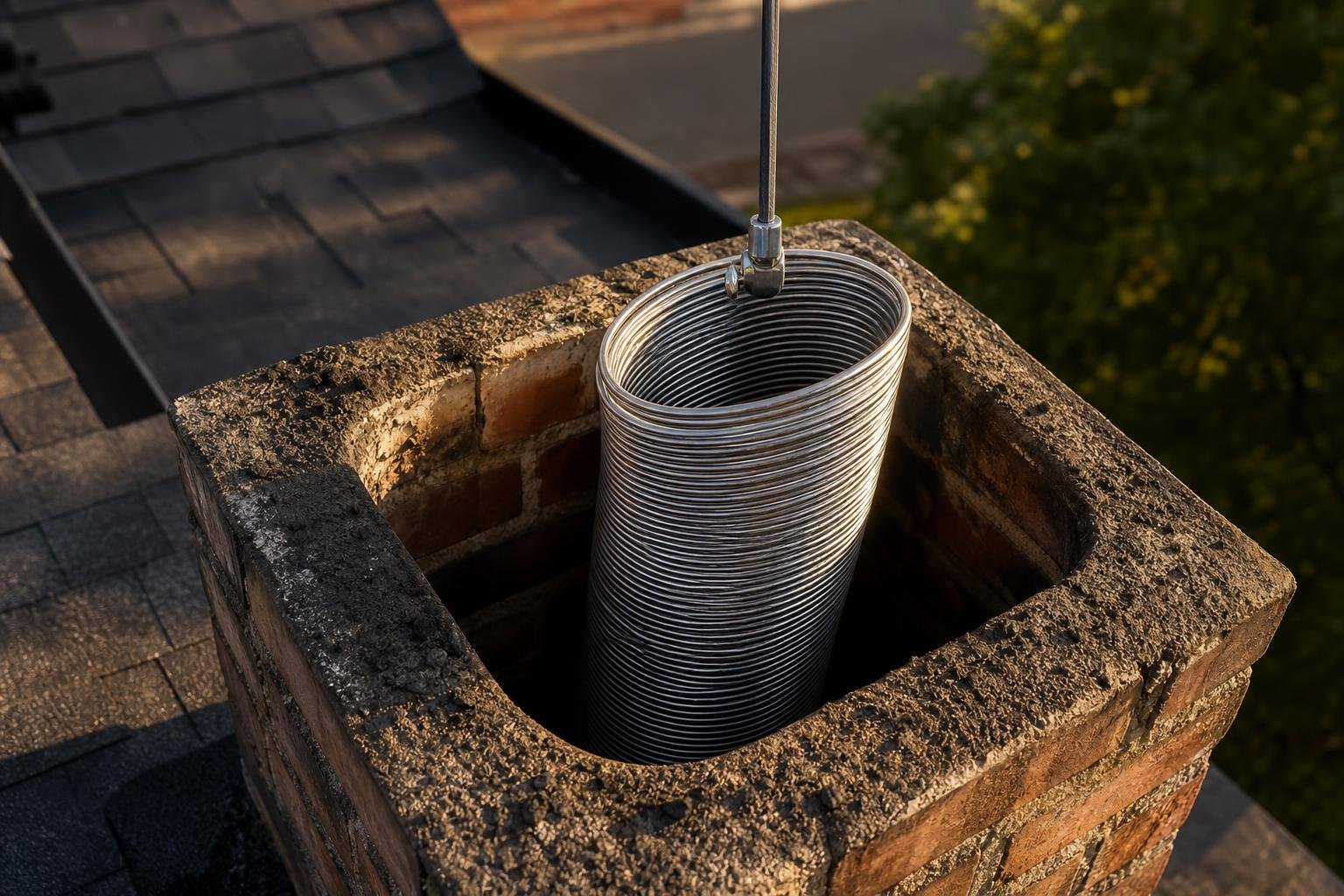
- Stainless Steel Liner. A flexible, corrugated stainless steel liner is fed down the full length of the flue and sized precisely to the connected appliance — undersized liners restrict draft, while oversized ones cool exhaust gases too fast and encourage creosote buildup. We install liners rated for wood, gas, or oil appliances, insulated where code requires it, giving you a smooth, continuous passage with no gaps for heat or gas to escape through.
- Cast-in-Place Liner. For flues with deteriorated or missing masonry that can’t simply be lined with a sleeve, we pump a lightweight, insulating cementitious mixture around a removable form to cast an entirely new, smooth interior surface directly inside the existing chimney. This approach also reinforces the surrounding masonry structure itself, which makes it the right call for older chimneys with widespread interior damage.
- Clay Tile Liner Repair. When only isolated tile sections are cracked or spalling rather than the whole flue, we can remove and replace individual clay tile sections instead of relining the entire chimney — a faster, lower-cost fix when a video inspection shows the damage is limited to one or two sections rather than throughout the run.
Signs You Need This
- Chunks of broken tile or flaking debris found in the firebox or at the base of the flue
- White staining (efflorescence) on the exterior chimney brick, a sign moisture is passing through
- A recent chimney fire, even a small one you put out quickly
- You’re switching from wood-burning to a gas insert or log set, which needs a differently sized liner
- A Level 2 video inspection (required before selling a home) turned up visible cracking or gaps
Our Process
Video Inspection
A camera scan pinpoints exactly which sections of the flue are damaged before we recommend anything.
Written Estimate
You get a flat-fee quote in writing that spells out the liner type and scope of work before we start.
Reline the Flue
We install, cast, or repair the liner to match your appliance and fuel type, sized to code.
Final Camera Check
A follow-up video scan confirms the new liner is smooth, sealed, and ready for safe use.
FAQs
You often can’t tell from the ground — liner damage typically shows up as cracked or missing clay tile sections, white staining on the exterior brick, or visible gaps during a video camera inspection. Because the damage is usually hidden inside the flue, a Level 2 inspection with a camera scan is the only reliable way to check it.
Most building codes require a proper liner for any chimney in active use, and a Level 2 inspection is specifically required after a chimney fire, when you sell a home, or when you change the fuel type or appliance connected to the flue — all of which commonly turn up liner damage that has to be corrected before the chimney can be used again.
A stainless steel liner installation is often completed in a single day. Cast-in-place relining, which involves pouring and curing a new masonry surface inside the flue, or extensive clay tile section repair, can take one to two days depending on the length and condition of the chimney.