
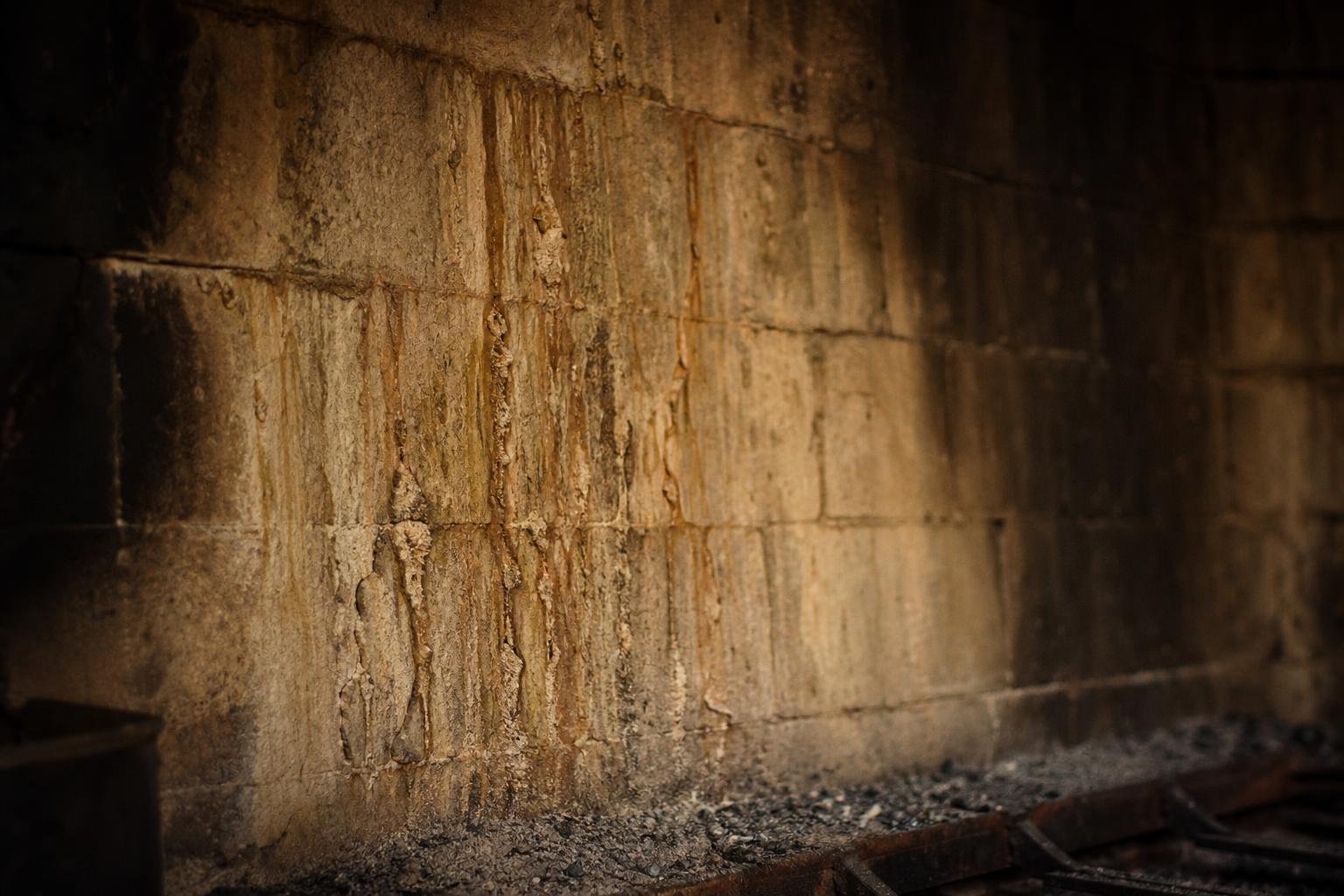
Quick AnswerThe most common cause of a leaking chimney is a missing or damaged chimney cap letting rain fall straight down the flue. Check whether your chimney has a cap at all, then get an inspection before the next rain so a professional can pinpoint the exact entry point.
Likely Causes
- Damaged or missing chimney cap — leaves the flue open so rain falls straight down onto the damper and into the firebox.
- Cracked chimney crown — lets water seep behind the flue liner and re-freeze each winter, widening the crack every season.
- Failed or rusted flashing — the metal seal where the chimney meets the roofline corrodes or pulls loose, opening a gap for runoff.
- Porous, un-waterproofed brick — absorbs rainwater like a sponge, especially on older masonry that has never been sealed.
- Cracked flue liner — lets water travel down inside the flue itself, sometimes showing up as a stain far from the actual entry point.
How Urgent Is This?
A chimney leak is rarely an emergency the moment you spot it, but it’s not something to leave alone either. Water is the single most destructive force to masonry: it drives freeze-thaw cracking in brick and mortar, rusts the damper and firebox components, and can eventually soak into ceiling drywall and framing near the chase. Left unaddressed through a Nashville winter, a small crack often turns into spalling brick or a sagging ceiling by spring, which costs far more to fix than the original leak.
What to Do Right Now
- Stop using the fireplace if you see active water pooling in the firebox or smell mildew
- Take photos of the stain or damp spot, and note whether it appears during or right after rain
- Look at the chimney top from the ground or a window for an obviously missing or crooked cap
- Call for an inspection so a technician can trace the leak to its actual source before it spreads
FAQs
Almost never. Most chimney leaks trace back to a single failed component — a cracked crown, damaged cap, or worn flashing — that can be repaired or replaced on its own. A full rebuild is only needed when water damage has gone unaddressed for years and compromised the masonry structurally.
Installing a new chimney cap is a reasonable DIY project if you’re comfortable on a roof. Crown repair, flashing replacement, and flue liner issues involve working at height with masonry or sheet metal and are best left to a professional, since a bad repair can trap water rather than shed it.
Small cracks and gaps often only let water through once wind-driven rain hits the chimney directly or rainfall is heavy enough to overwhelm a partial seal. A leak that only shows up in storms is still a real entry point — it just takes more water pressure to reveal itself.