
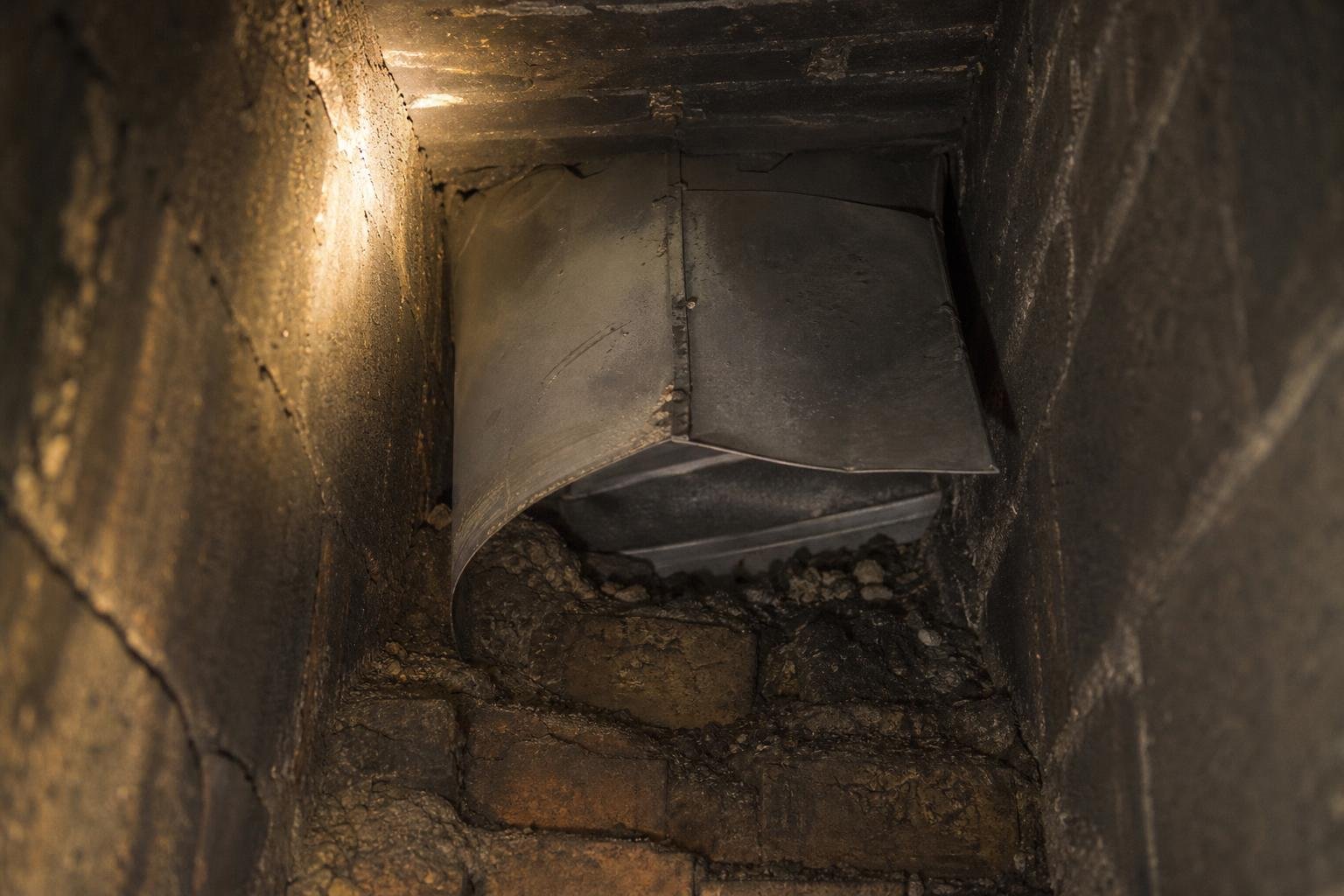
When a homeowner calls us about a leak "around the chimney," the culprit is very often not the chimney itself — it's the flashing. Flashing is the metal seal installed where the chimney passes through the roof, usually a combination of step flashing tucked under the shingles and a counter-flashing set into the mortar joints above it. Together they're supposed to shed water off the roof and away from that seam. It's a seam between two very different building systems, roofing and masonry, and seams like that are exactly where things go wrong over time.
We see flashing failures constantly across Nashville's older neighborhoods — Sylvan Park, Green Hills, East Nashville, Inglewood — where roofs have been replaced once or twice since the chimney was originally built, and the flashing wasn't always reinstalled to the same standard. A house and its chimney also settle at slightly different rates over the decades, which can pull the flashing apart at the seam even when nothing was installed incorrectly to begin with. Add Middle Tennessee's mix of summer storms and winter freeze-thaw, and a small gap in the flashing turns into a real leak fast.
What We Do to Fix It
- Diagnose the actual leak path. We trace water stains and roof-deck damage back to the source, since flashing leaks are frequently mistaken for cap or crown problems.
- Reseal or repair minor separations. Small gaps where sealant has dried out or a joint has opened slightly can often be resealed without removing the flashing.
- Full re-flash when the metal has failed. Corroded, undersized, or improperly installed flashing gets removed and replaced with new step and counter-flashing properly integrated into the roofing.
- Check the whole system, not just the leak point. We look at the crown and cap in the same visit, since a chimney leak can have more than one source at once.
Repair vs. Full Re-Flash: How We Decide
A minor gap or a spot where the sealant has cracked and dried out can usually be repaired in place, resealing the joint without disturbing the surrounding shingles. But once flashing has corroded through, was undersized for the chimney to begin with, or has pulled away from the masonry over a large enough area, patching it just delays the next leak. In those cases a full re-flash — removing the old metal and properly integrating new step and counter-flashing with the roofing — is the fix that actually holds. We'll show you what we're seeing and explain which category your chimney falls into before any work starts.
Get a Free Flashing Repair Estimate
FAQs
Flashing is the metal sealing system installed where the chimney passes through the roof. It's usually made up of overlapping pieces — step flashing along the sides and a counter-flashing that's set into the mortar joints — that work together to keep water from running down the chimney and into the roof deck. It's a roofing detail as much as a masonry one, which is part of why it gets overlooked.
Flashing fails from a combination of causes: the roof and chimney settle at slightly different rates over the years, which opens gaps at the seam; the metal itself corrodes or the sealant dries out and cracks; and in some cases the original installation was undersized or improperly integrated with the roofing in the first place. Any of these creates a path for water to get behind the metal and into the house.
No, and this is one of the most common misdiagnoses homeowners make. A leak that shows up as a stain on the ceiling near the chimney, or damp roof decking around the base of the stack, is very often coming from failed flashing at the roofline, not the cap or crown up top. We check all three during an inspection because the symptoms can look identical from inside the house.