
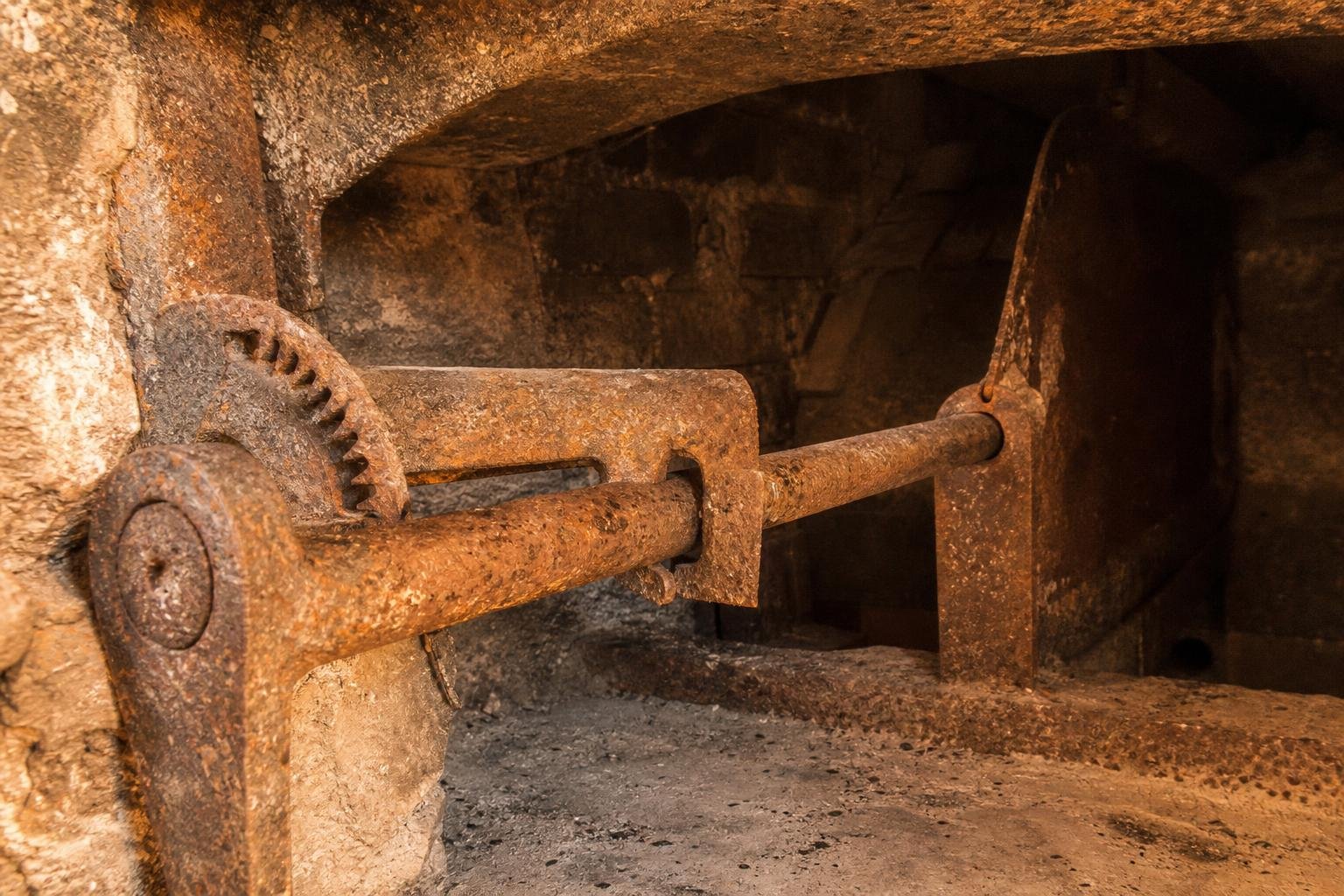
Quick AnswerRust on a damper or firebox almost always means water is reaching it — most often from a missing chimney cap or a cracked crown dripping down onto the metal. Check that the damper still opens, closes, and seals, and get the water source identified before your next fire.
Likely Causes
- Missing or damaged chimney cap — leaves the flue open so rain lands directly on the damper and firebox metal below.
- Cracked chimney crown — lets water seep down through the masonry and drip onto metal components below.
- Condensation from flue gases — common in factory-built metal fireboxes and in chimneys used for gas logs, where moisture condenses on the cooler metal surface.
- Normal age and wear on a steel damper — years of humidity and temperature swings eventually rust even well-protected dampers.
- A damper that won’t close fully — lets moisture-laden air sit against the metal continuously instead of sealing it off between fires.
How Urgent Is This?
Rust on a damper or firebox is a medium-urgency issue — it’s not an emergency, but it’s a clear signal that moisture is getting somewhere it shouldn’t. A rusted damper can warp or seize over time, which affects how well your chimney drafts and how tightly it seals when the fireplace isn’t in use. Left alone, the underlying water source that’s causing the rust will typically keep making the problem worse.
What to Do Right Now
- Check whether the damper still opens, closes, and seals properly
- Look above for the water source — usually a missing cap or a cracked crown
- Don’t force a badly rusted or seized damper open or shut
- Get it inspected before your next fire, since a warped or rusted damper can affect draft and safety
FAQs
Light surface rust can sometimes be cleaned and treated so the damper keeps working. Once rust has eaten through the metal or the plate is warped and won’t seat properly, replacement is the more reliable fix — a damper that doesn’t seal fully affects both draft and energy efficiency.
Surface rust on a firebox is usually a maintenance issue rather than an immediate danger, but it’s a sign that water is reaching metal it shouldn’t. Left unaddressed, corrosion can weaken panels or seams over time, so it’s worth having the water source identified and fixed.
Factory-built metal fireboxes and chimneys are especially prone to condensation, since flue gases cool faster inside metal than inside masonry. That condensation sits on the metal and causes rust over time, even without any water intrusion from outside or any fire-related damage.