
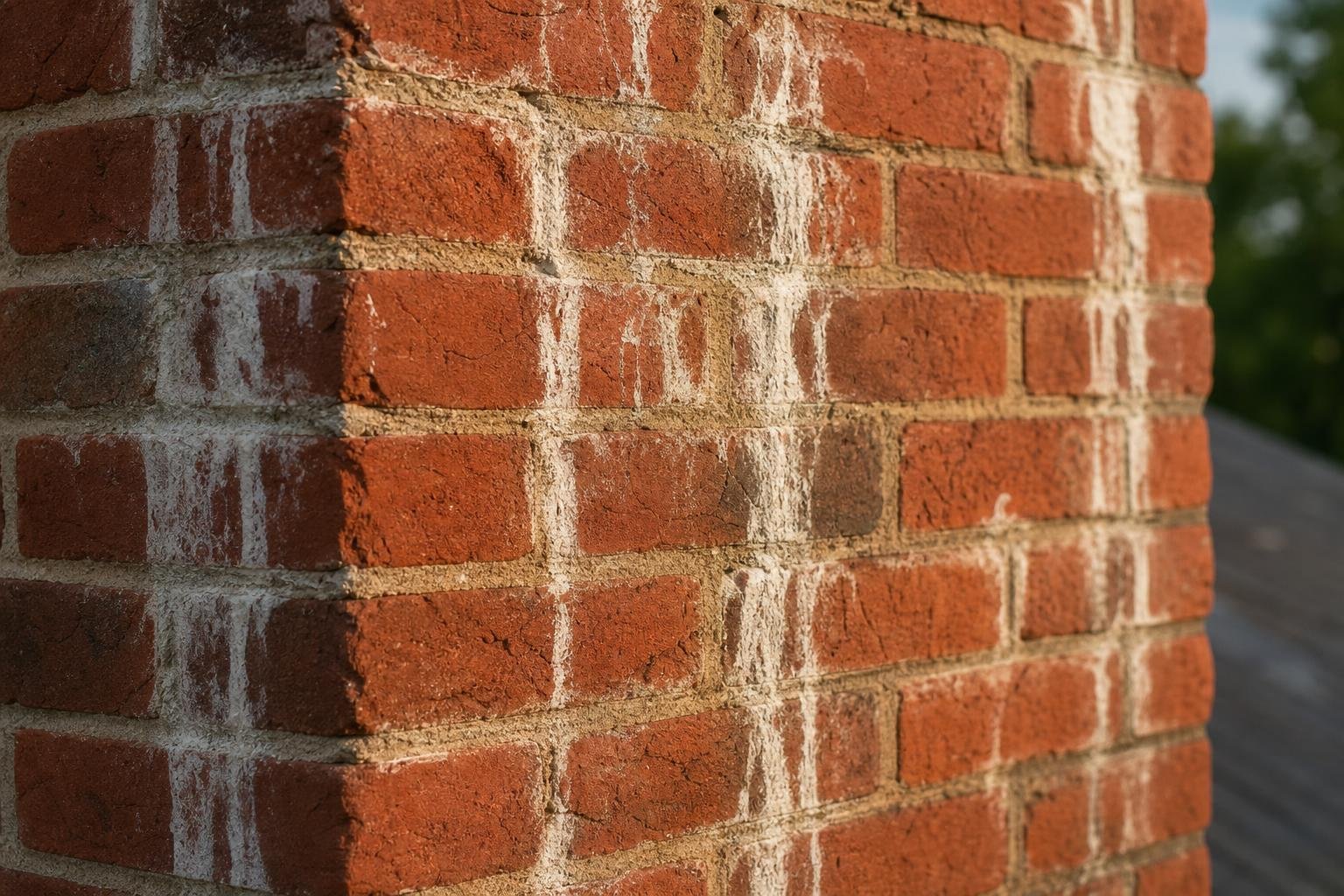
Quick AnswerWhite staining is almost always efflorescence — dissolved mineral salts left behind as water travels through brick and evaporates at the surface. Brushing it off is purely cosmetic; the real next step is figuring out where the extra moisture is coming from, especially if the staining keeps returning.
Likely Causes
- Normal efflorescence process — water moving through porous brick dissolves natural mineral salts and deposits them on the surface as it evaporates.
- Missing or worn water-repellent sealant — unsealed masonry absorbs far more rainwater, giving salts more moisture to travel with.
- Damaged cap, crown, or flashing — lets more water into the chimney structure than the brick would normally see, increasing how much staining shows up.
- New or recently repaired brick and mortar — hasn't fully cured yet, and the excess moisture released during curing is often temporary.
How Urgent Is This?
Efflorescence itself doesn't damage the brick — it's just visible proof that moisture is passing through. That makes it low urgency compared to cracked brick or an active leak. Still, it's worth paying attention to: if the staining is heavy, spreading, or keeps coming back after you clean it, it means more water is getting into the masonry than it should, and that's worth tracing back to its source before it contributes to bigger problems down the road.
What to Do Right Now
- Know that brushing off the surface staining is cosmetic only and won't fix the underlying cause
- Check for an obvious source of water intrusion, like a missing cap, cracked crown, or loose flashing
- Consider a breathable masonry waterproofing sealant to reduce how much water the brick absorbs
- Get it inspected if the staining is spreading or keeps recurring after cleaning
FAQs
No, efflorescence itself is just surface residue and doesn't damage the brick. But it's a visible signal that water is moving through your masonry, and repeated cycles of that moisture can eventually contribute to spalling or cracked brick if the source is never addressed.
Light efflorescence can often be brushed off with a dry stiff brush, and stubborn deposits are sometimes cleaned with a diluted masonry-safe cleaner. Just know this only removes what's already on the surface — if the underlying moisture source isn't fixed, the staining will return after the next rain.
A breathable, vapor-permeable masonry sealant significantly reduces how much water the brick absorbs, which usually reduces or stops new efflorescence. It works best paired with fixing any cap, crown, or flashing issue first — sealing over an active leak just traps water instead of blocking it.