
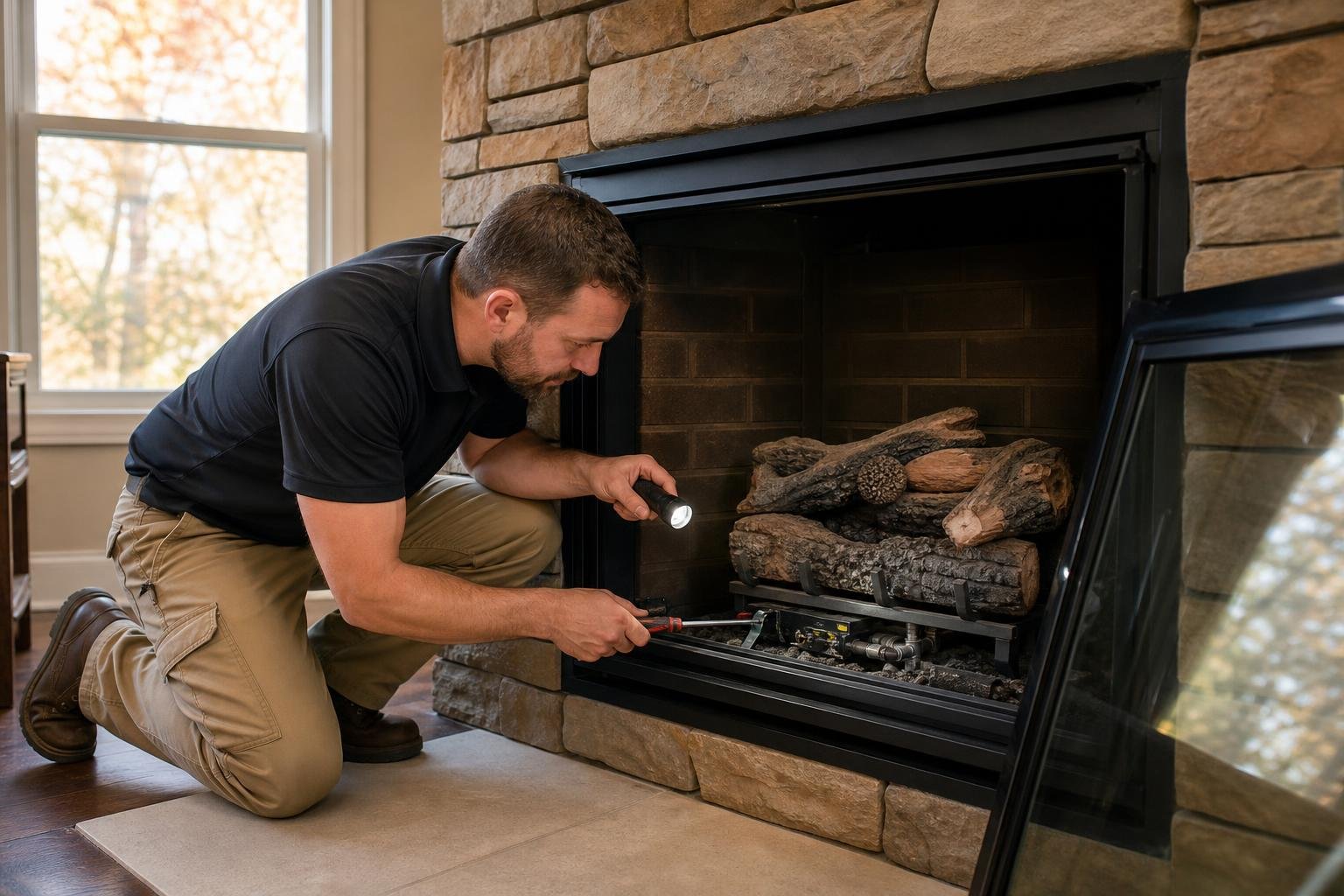
Not every gas fireplace visit is about a unit that won't light. A lot of the calls we get at every location are about the parts you can see every time you sit down in front of the fireplace — glass that's gone hazy or white, a ceramic log that's slipped out of place, or a flame pattern that doesn't look the way it used to. None of these are usually urgent safety issues, but they're worth addressing, both for appearance and because a shifted log can quietly affect how the burner performs.
This is the cosmetic and maintenance side of gas fireplace care, and it pairs naturally with a full inspection since we're already looking closely at the burner and firebox. Whether you have a builder-grade unit in a newer subdivision or an older ceramic-log insert in a historic home, the glass and log system works the same way and wears down in the same predictable spots.
What's Included
- Glass cleaning. We remove the white haze and mineral film that builds up on the inside of the glass panel over normal use, using a cleaner formulated not to etch the glass.
- Log & ember repositioning. Ceramic logs and glowing embers shift over time and years of heating cycles; we reset them to the manufacturer's original layout for the best flame pattern.
- Log & ember replacement. Cracked, crumbling, or badly discolored logs and embers are replaced so the flame burns evenly across the full log set.
- Burner port check. We inspect the burner for clogged or blocked ports, which is the most common reason for an uneven or sputtering flame pattern.
Why Cloudy Glass Is Worth Checking
That white haze on gas fireplace glass is mineral residue baked on by repeated heating and cooling cycles — it isn't soot from an unsafe burn, and it doesn't wipe off with a household glass cleaner once it's set in. On its own, cloudy glass is purely cosmetic. But because it usually means the unit hasn't had attention in a while, we treat a glass cleaning as a good moment to also check the burner ports and log position, since those tend to drift out of adjustment on the same timeline. It's a simple way to catch a developing flame-pattern issue before it becomes a bigger repair.
Get a Free Estimate for Glass & Log Maintenance
FAQs
That white haze is almost always mineral deposits left behind as the glass heats and cools during normal use, not dirt from the flame itself. It builds up gradually and won't wipe off with a regular household glass cleaner once it's baked on, which is why it needs a specific cleaning approach rather than routine glass cleaner.
Light dust can be wiped off a cool glass panel with a dry cloth. But the glass front is often held in place with clips or a locking mechanism tied to the gas unit's safety design, and the wrong cleaner can etch the glass permanently. We recommend having it cleaned during a professional visit, especially if it's been more than a year since the last one.
Ceramic logs and embers don't burn up the way real wood does, but they do shift out of position over years of use and can crack or crumble at the edges. Most sets last many years before needing replacement, but we check their position and condition at every service visit since a shifted log can block a burner port and cause an uneven flame.