
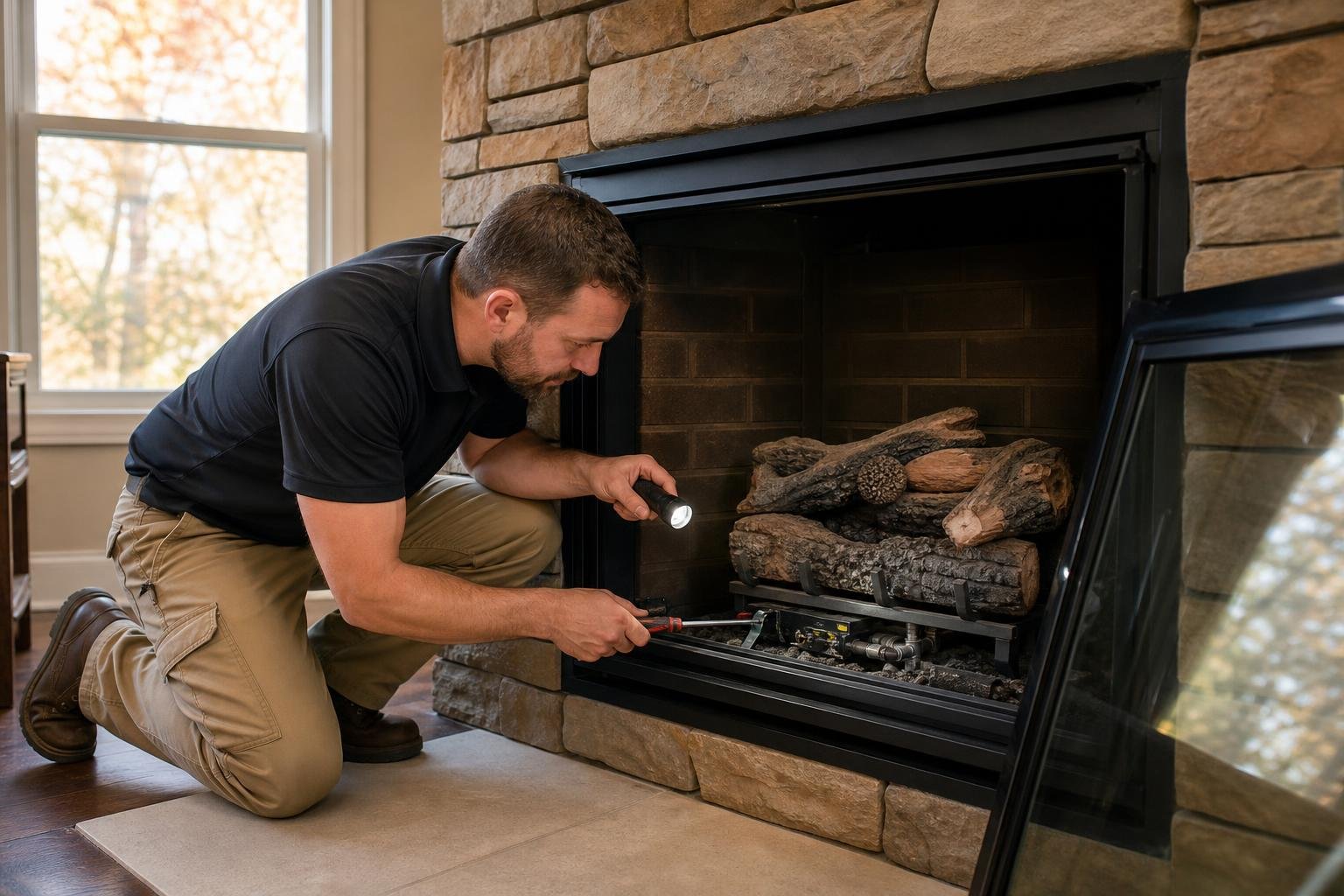
When a gas fireplace won’t light, or the flame catches for a second and then dies, the pilot and igniter assembly is almost always where the problem starts. It's a small, precise system — a tiny gas orifice, a spark or hot-surface igniter, and a flame sensor all have to work together in the right order — so a fault in any one part can leave the whole fireplace dead on a cold your area evening.
The good news is that pilot and igniter problems are also some of the most reliably fixable gas fireplace issues we see, whether you're in an older colonial with a built-in gas insert or a newer build with a direct-vent unit. The key is figuring out which specific component is failing, because a dirty orifice, a weak igniter, and a gas supply issue all look similar from the couch but need different fixes.
We want to be upfront about one thing: this is gas appliance work. Even though the symptom is just “it won’t light,” the pilot assembly sits directly on your home's gas line, so we always treat diagnosis and repair as a job for a trained technician — never a weekend project.
What's Included
- Pilot orifice cleaning. A clogged or partially blocked orifice restricts gas flow to the pilot, often producing a weak, lazy flame or no flame at all. We clean it and confirm proper flow.
- Igniter testing & replacement. We test the spark or hot-surface igniter's output and replace it if it's too weak to reliably light the pilot.
- Thermocouple check. If the pilot lights but goes out shortly after, we test the thermocouple — a worn one is one of the most frequent causes of that exact pattern.
- Gas supply verification. We confirm the shutoff valve is fully open and gas pressure at the unit is within spec before ruling out a supply-side issue.
Common Causes We See at every location Homes
A dirty thermocouple and a weak igniter cause the vast majority of “won’t light” and “won’t stay lit” calls we get, especially on units that haven't had a professional look in a year or more — dust and combustion byproducts build up on these small components over time. A clogged pilot orifice is the next most common cause, often on units in homes with wood-burning or gas logs that sit unused for long stretches over the summer. Less often, the issue traces back to the gas supply itself, which is why we always check pressure and valve position rather than assuming it's the pilot assembly by default. We'll tell you plainly which of these it is once we've tested the unit, along with the cost to fix it before we touch anything.
Get a Free Estimate for Pilot & Igniter Repair
FAQs
The most common causes are a dirty or misaligned pilot orifice, a weak or dirty igniter that isn't producing a strong enough spark, a worn thermocouple shutting the gas valve off as a safety response, or a gas supply issue at the shutoff valve. A technician can usually tell which one it is within a few minutes of testing.
No. An igniter creates the spark that lights the pilot in the first place, while a thermocouple is a separate safety sensor that keeps the gas valve open once the pilot is burning. A weak igniter usually means the pilot won't light at all, while a bad thermocouple usually means it lights but then goes out a few seconds later.
We don't recommend it. Pilot assemblies sit directly on the gas line, and misdiagnosing the problem can mean repeated attempts to relight a unit that has an underlying gas supply or venting issue. A trained technician can safely test the components and rule out anything more serious before doing any repair.