
If your pilot lights just fine but goes out again within a few seconds, or dies as soon as you release the control knob, the thermocouple is almost always the reason. It's a small brass rod that sits directly in the pilot flame and generates a tiny electrical signal — that signal is what tells the main gas control valve to stay open. No signal, no gas flow. It's a deliberately built-in safety feature, and it's also one of the most common wear items in any gas fireplace.
The gas control valve itself is the other half of this system. It's the component that actually regulates gas flow to both the pilot and the main burner, and it responds to the thermostat, wall switch, or remote. When a valve starts to fail, you might see an inconsistent flame at the main burner, a unit that won't shut off fully, or a pilot that won't stay lit even after a thermocouple replacement.
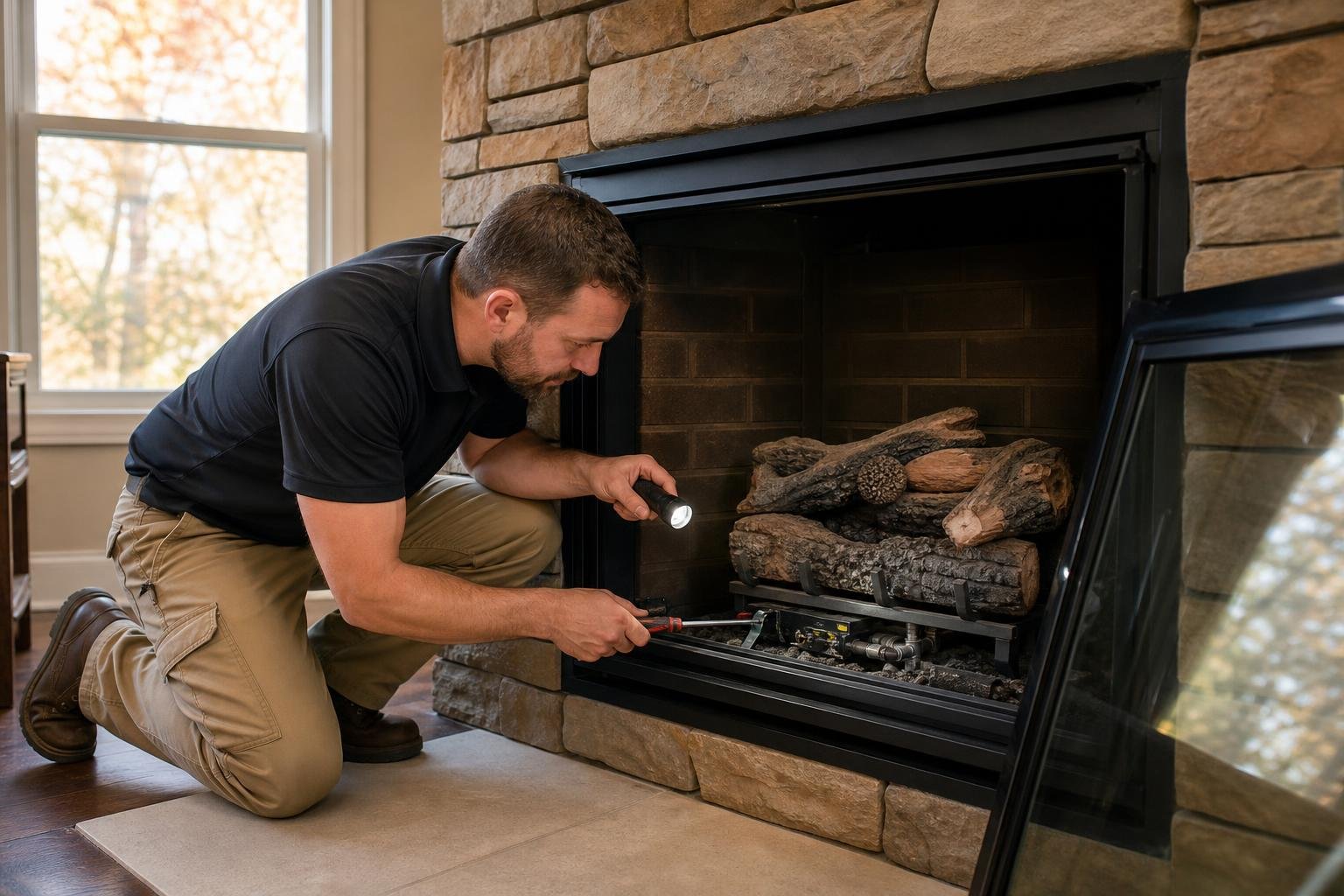
We service both of these components across every city we serve, from older wood-look inserts to newer direct-vent units. Because both parts sit directly on the gas line and interact with each other, we always test them together rather than swapping parts and hoping.
What's Included
- Thermocouple testing. We measure the millivolt signal the thermocouple produces while the pilot burns and compare it against the manufacturer's minimum threshold.
- Thermocouple replacement. A worn or damaged thermocouple is replaced with the correct length and type for your specific unit.
- Gas valve inspection. We check the control valve for proper regulation, response to the wall switch or remote, and full shutoff.
- Connection & fitting check. Every fitting the valve and thermocouple connect to is checked for a tight, leak-free seal before we finish.
Why This Isn't a DIY Repair
Thermocouples are inexpensive and widely sold, which can make this look like a simple part swap. In practice, the thermocouple has to be positioned at the exact right spot in the pilot flame, threaded into the gas valve with the correct torque, and re-tested to confirm it's producing enough voltage to hold the valve open reliably. A connection that looks fine but isn't seated correctly can cause the exact same intermittent symptoms as a bad thermocouple, or worse, an unreliable safety shutoff. This is precise, safety-critical work on your home's gas line, and we always recommend having it done by a trained technician rather than attempting it yourself.
Get a Free Estimate for Valve & Thermocouple Service
FAQs
A thermocouple is a small safety sensor that sits in the pilot flame. It generates a tiny electrical signal that tells the gas valve to stay open only while the pilot is actually lit. If the pilot goes out, the thermocouple cools and the valve shuts the gas off automatically. When a thermocouple wears out, it often can't hold that signal long enough, so the valve closes and the pilot goes dark a few seconds after lighting.
A worn thermocouple typically lets the pilot light and then die out within seconds to a minute. A failing gas valve is more likely to prevent the pilot from lighting at all, cause an inconsistent flame at the main burner, or fail to shut off completely. Because both parts work together, we test them as a pair rather than guessing which one is at fault.
We strongly advise against it. Even though a thermocouple is a small, inexpensive part, it's wired directly into the gas control valve, and an improperly seated connection can create a safety issue that's not obvious just by looking at it. This is precise, safety-critical work we always recommend leaving to a trained technician.