
Wood stoves have grown in popularity around your area for good reason — they burn more efficiently than an open masonry fireplace and put out steady, controllable heat. But that efficiency comes from a design that's meaningfully different from a fireplace, and it means the cleaning has to be different too. A wood stove vents through a smaller-diameter flue, often a factory-built insulated liner rather than a wide masonry chimney, and the firebox itself is a sealed metal or cast-iron unit with parts a fireplace simply doesn't have.
That's why wood stove cleaning is its own service rather than an extension of a standard fireplace sweep. The equipment needs to match the flue size, the technician needs to know how to safely access and reassemble the stove's internal components, and the inspection needs to account for wear points — gaskets, baffles, glass seals — that are unique to a stove installation. Get it wrong, and you can end up with a stove that leaks smoke into the room or doesn't seal properly when it's shut.
What's Included
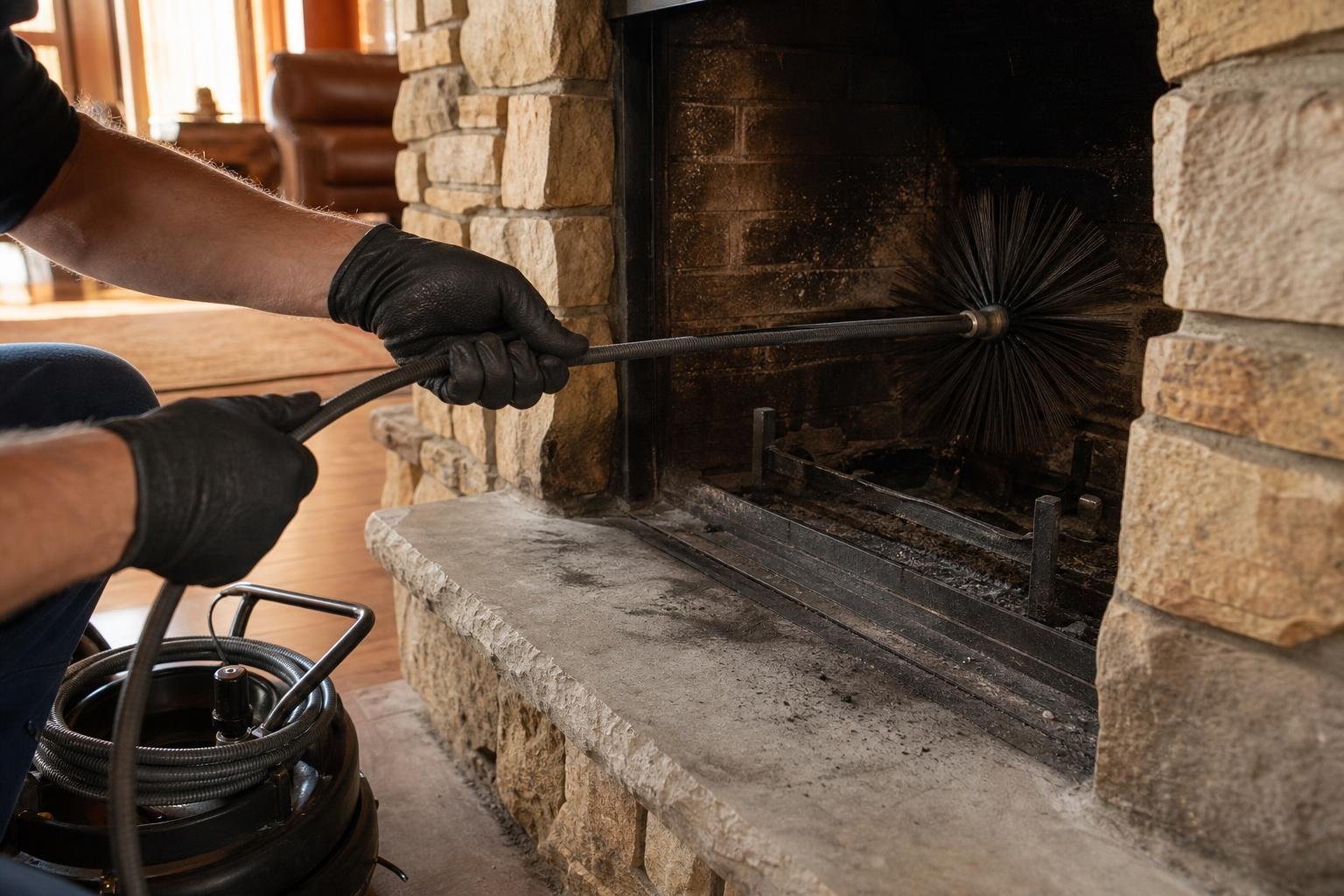
- Flue & liner sweep. Rotary cleaning sized to the stove's specific flue diameter, whether it's a factory-built insulated liner or a masonry flue with a stove insert.
- Baffle & interior cleaning. Removing and cleaning the internal baffle plate, which is prone to trapping ash and creosote deposits that reduce efficiency.
- Catalytic combustor check. Cleaning and condition inspection of the catalytic combustor on stoves equipped with one.
- Glass & gasket inspection. Clearing the glass door and checking door and flue-collar gaskets for wear that could let the stove leak or fail to seal.
Why Wood Stoves Need a Sweep Who Knows Stoves
Not every sweep is set up to work on stoves. The rotary brush size for a 6-inch stove liner is different from what's used on a wide masonry flue, and pulling a baffle or accessing a catalytic combustor without damaging it takes familiarity with how these units go together. Wood stoves are also especially prone to creosote buildup because the flue gases cool faster in a narrower, often exterior-run pipe — which makes a thorough, stove-specific cleaning even more important for fire safety, not just efficiency.
Schedule a Wood Stove Cleaning
FAQs
Wood stoves vent through a narrower, often insulated flue liner than an open masonry fireplace, and the stove body itself has internal parts — baffles, catalytic combustors on some models, gaskets, and glass — that a fireplace doesn't have. Cleaning it properly means using rotary equipment sized to the stove's flue diameter and knowing how to access and clean those internal components without damaging them.
At least once a year for stoves in regular seasonal use, and it's worth checking more often for a stove that gets heavy daily use through the winter. Wood stoves tend to build creosote faster than open fireplaces because of the tighter, cooler flue path, so an annual cleaning schedule shouldn't be stretched out.
Yes, on stoves equipped with one. A catalytic combustor needs its own careful cleaning and periodic inspection separate from the flue sweep, since a clogged or damaged combustor hurts both efficiency and safe operation. We check its condition as part of a full wood stove cleaning and let you know if it's nearing the end of its service life.