
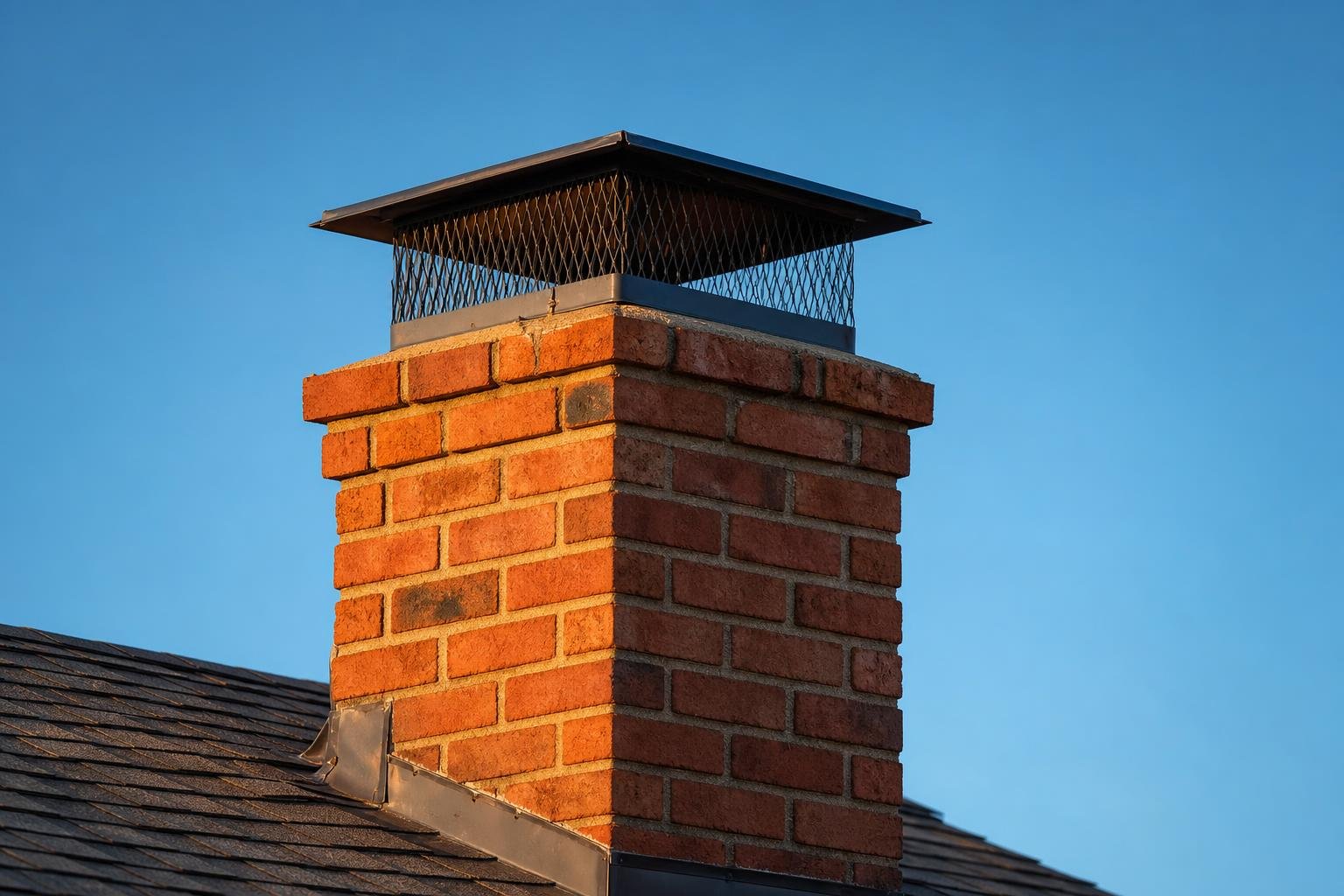
Quick AnswerYes — every flue on your chimney should have a cap. It keeps rain and snow out of the flue, blocks animals from nesting inside, stops sparks from landing on your roof, and cuts down on wind-driven smoke problems. If you can’t remember the last time anyone looked at yours, it’s worth a quick check.
What a Chimney Cap Actually Protects Against
A chimney cap looks simple — a small metal hood with mesh sides sitting on top of the flue — but it’s doing several jobs at once. Skip it, and each of those jobs falls to something in your chimney that wasn’t built to handle it.
- Keeps out rain and snow. An open flue funnels water straight down onto the smoke shelf, damper, and flue liner. Over time that moisture erodes clay liners, rusts metal dampers, and can even work its way into the surrounding masonry.
- Blocks animals from moving in. An open flue looks like a ready-made den to birds, squirrels, and raccoons. Nesting material is a fire hazard, and a trapped animal in the flue is a genuinely unpleasant (and expensive) problem to solve.
- Catches sparks and embers. The mesh sides act as a spark arrestor, keeping hot embers from a wood fire from drifting out and landing on your roof or nearby dry leaves.
- Reduces wind-driven downdrafts. The cap’s shape helps deflect gusts that would otherwise push straight down the flue and blow smoke back into the room.
Signs Your Chimney Is Missing a Cap
You don’t need to get on the roof to get a decent read on this. A few ground-level clues usually tell the story.
- You can see daylight up the flue when you look up from the firebox with the damper open.
- There are rust streaks or water stains on the damper or the inside walls of the firebox.
- Twigs, leaves, or nesting debris show up in the firebox or on the smoke shelf without explanation.
- You hear scratching, chirping, or scurrying sounds coming from the flue.
- A zoomed-in photo from the ground, or a look from a nearby second-story window, shows an open flue top with nothing on it.
What a Damaged Cap Looks Like
A cap doesn’t have to be completely absent to fail at its job. Crushed or rusted-through caps are one of the more common findings we run into during a routine sweep and inspection. Wind, hail, tree limbs, and simple age all take a toll on the mesh screen and the metal hood, and a bent or torn cap lets in nearly as much weather and wildlife as no cap at all. If the last person who touched your roof was a storm, it’s worth having someone confirm the cap is still doing its job rather than assuming it is because it’s technically still up there.
Single-Flue Caps vs. Chase Caps
Single-Flue Caps
These fit over one individual flue and are the standard choice for most masonry chimneys with a single fireplace or appliance vented through it. They’re typically round or square, sized to the flue tile beneath them, and can be swapped out relatively easily if damaged.
Multi-Flue and Chase Caps
If your chimney vents more than one appliance — say, a fireplace and a furnace flue side by side — a single large chase cover (often called a chase cap) can cover the entire top of the chase in one piece instead of capping each flue separately. These are common on prefabricated, metal-flue chimneys with a wide chase enclosure, and they need to fit tightly and be sealed properly, since a poor fit invites the same water intrusion a missing cap would.
Get a Free Inspection with Your Winter Sweep
FAQs
Often, yes. From the ground or a nearby second-story window, look at the top of the flue for a small hood-like structure with mesh sides. Binoculars or a zoomed-in phone photo usually settle it. If you can’t tell, a technician can confirm it in minutes during a routine inspection.
A properly sized cap can reduce wind-driven downdrafts that push smoke back into the room, but it isn’t a fix for every smoking issue. Damper problems, flue sizing, and creosote buildup can all cause smoking independent of the cap, so an inspection is the best way to pin down the actual cause.
Yes. Even though gas appliances don’t produce the creosote a wood fire does, an uncapped gas flue is still open to rain, debris, and nesting animals, all of which can block venting and create a carbon monoxide hazard.