
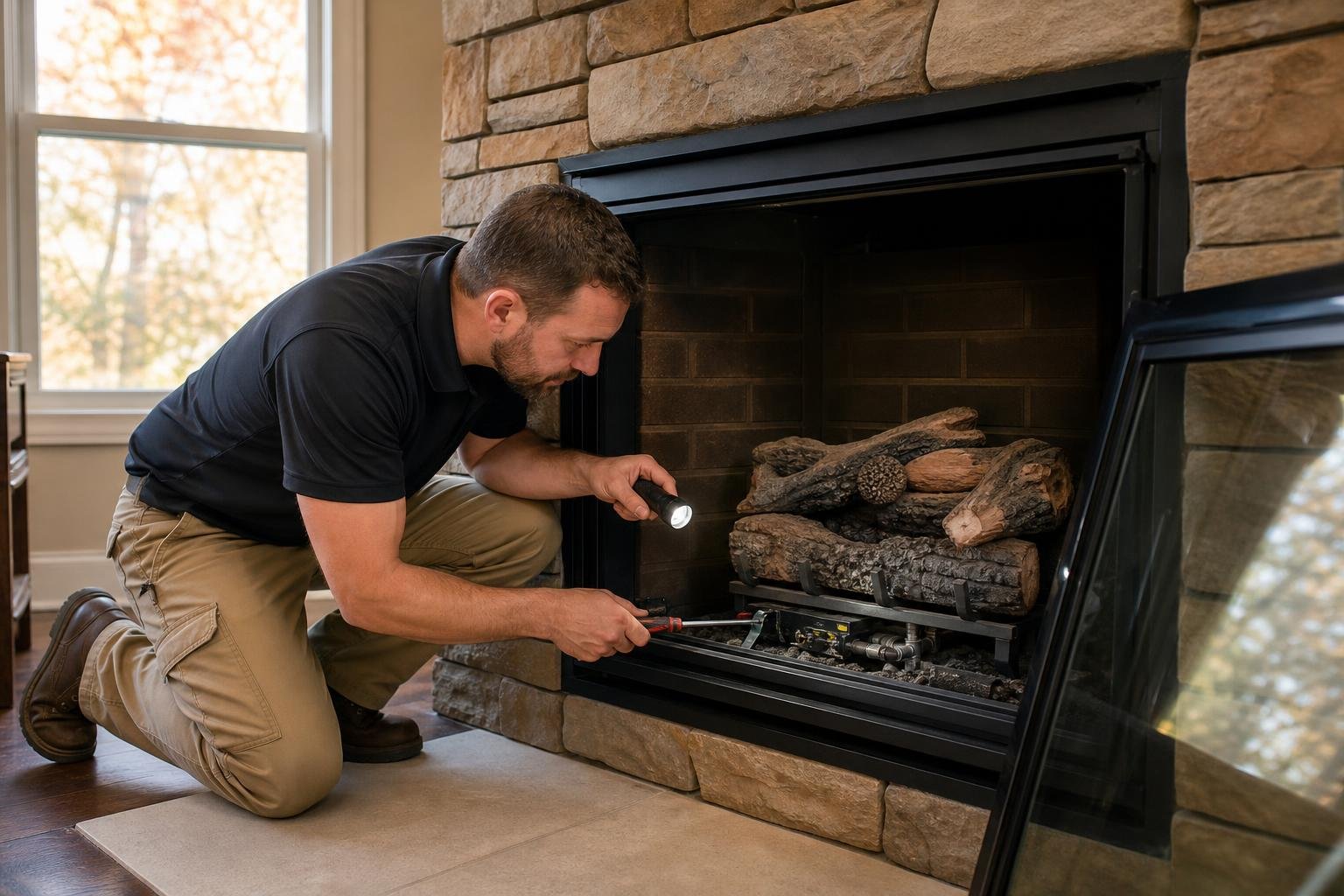
Quick AnswerIf your gas fireplace won’t light, won’t stay lit, or hasn’t been serviced in over a year, it’s time for a professional visit. Most no-light issues trace back to a dirty pilot assembly or a worn thermocouple, and both a diagnosis and a written repair estimate happen in the same appointment.
What’s Included
Gas fireplaces don’t build creosote like a wood-burning flue, but the gas valve, venting, and ignition components still need regular attention to run safely and reliably. Here’s what our gas fireplace visits cover:
- Pilot & Igniter Troubleshooting. We clean and realign the pilot assembly, test the electronic igniter or standing pilot, and verify the flame sensor is reading correctly — the source of most “won’t light” and “won’t stay lit” service calls.
- Gas Valve & Thermocouple Service. A worn thermocouple or thermopile shuts off gas flow as a built-in safety response, even when everything else works fine. We test and replace these components along with checking the main gas valve for proper operation and leak-free fittings.
- Glass & Log Maintenance. We clean built-up soot film from the glass front, reposition or replace worn ceramic logs and embers so the flame pattern burns evenly, and inspect the door gasket seal.
- Annual Safety Inspection & CO Check. We verify venting is clear and correctly sized, test for gas leaks at every fitting, and confirm the unit isn’t producing elevated carbon monoxide — the same annual-service standard industry guidelines recommend for every gas appliance.
Signs You Need This
- The pilot won’t light, or lights but goes out shortly after
- You smell gas, notice soot on the glass, or see an uneven, sputtering flame
- It’s been more than a year since your last professional service
- The wall switch or remote no longer responds reliably
- A carbon monoxide detector near the room has recently alarmed or is due for testing
Our Process
Diagnose
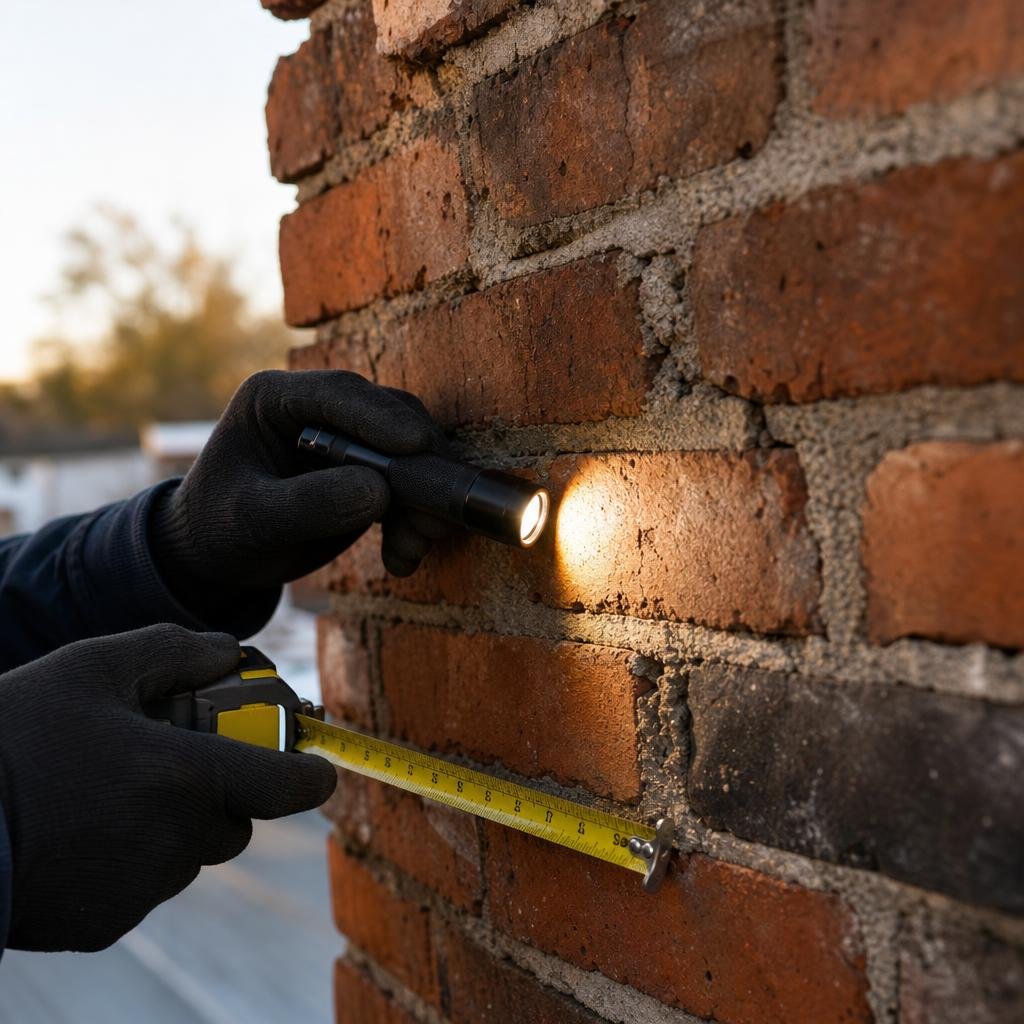
We test the pilot, igniter, gas valve, and venting to pinpoint exactly what’s failing.
Written Estimate
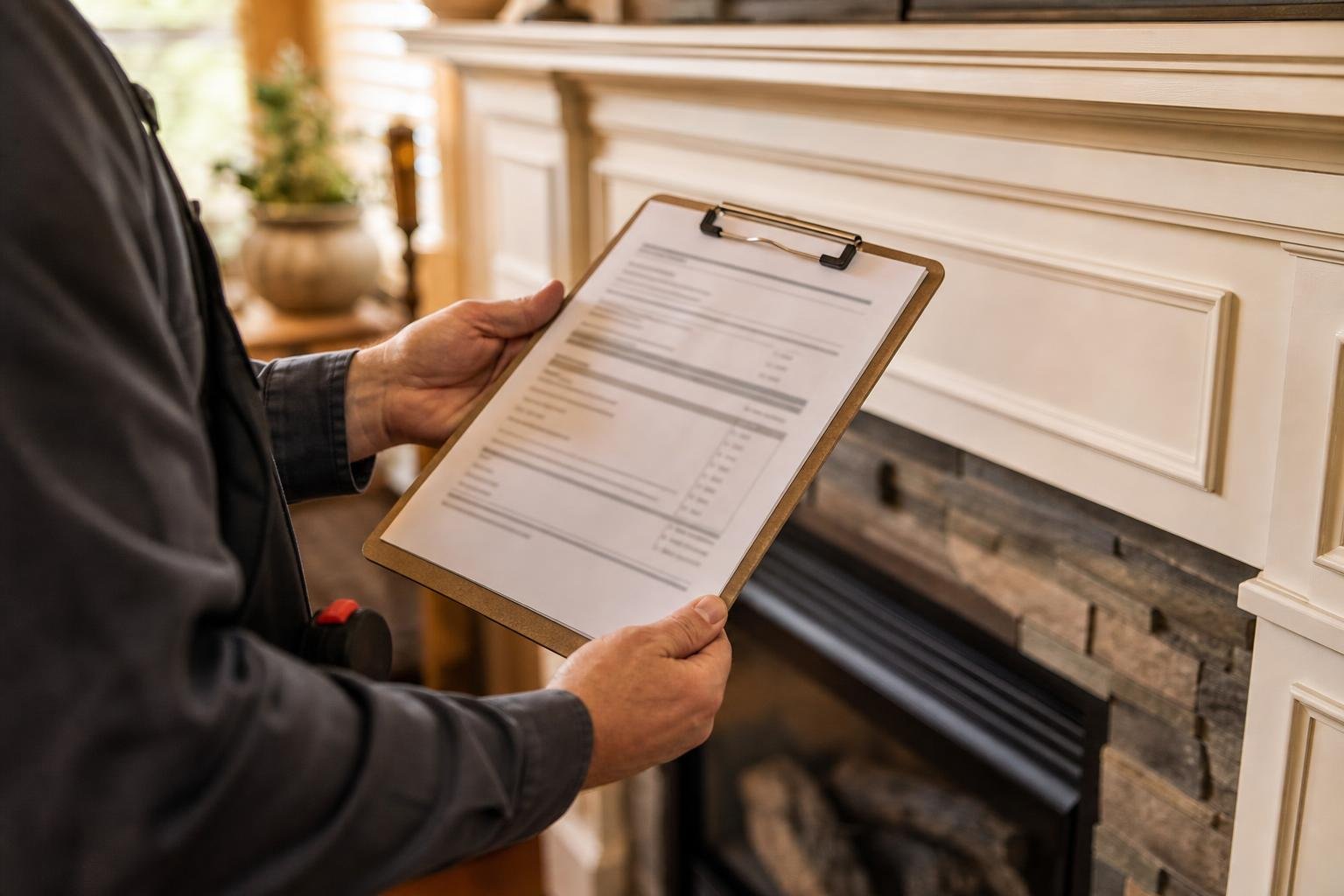
You get a flat-fee, written quote before any parts are ordered or repairs begin.
Repair & Service
We repair or replace the failed component and clean the glass, logs, and burner assembly.
Safety Test
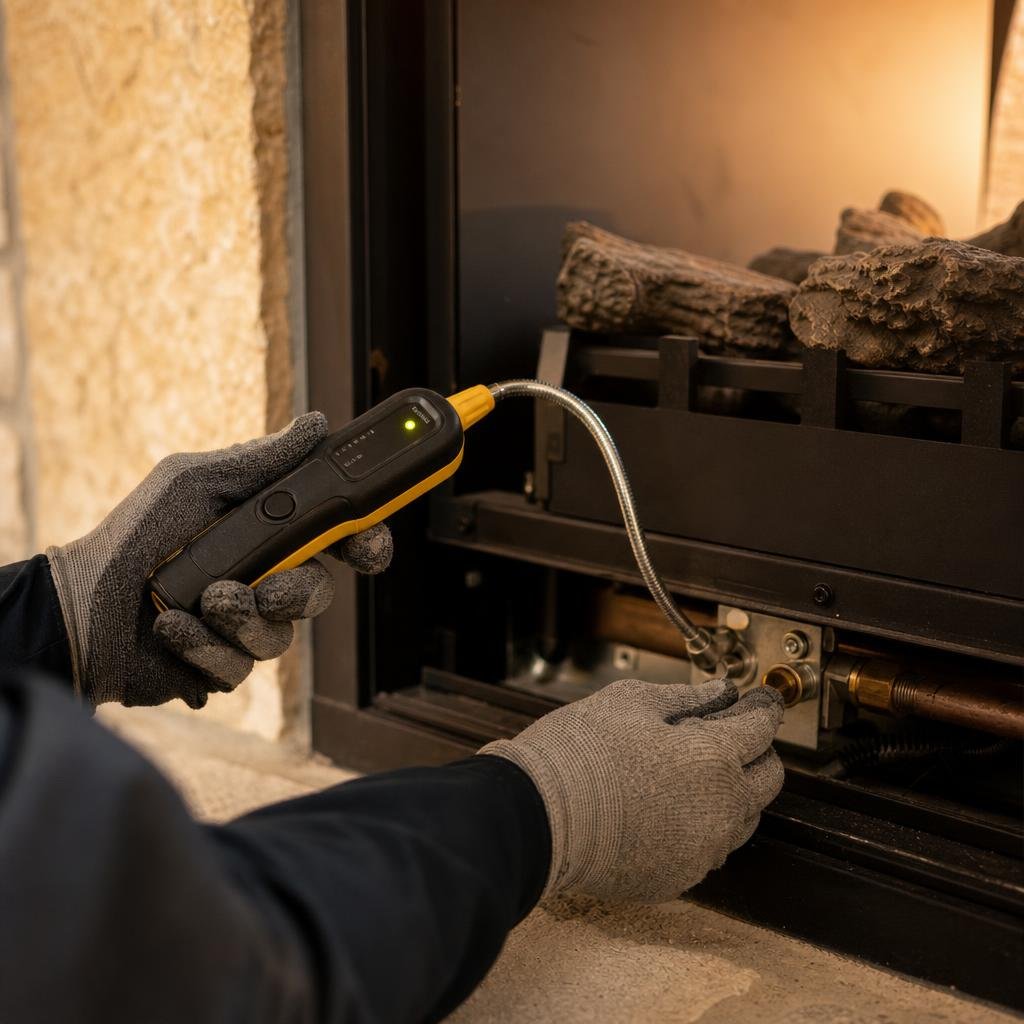
We re-test ignition, gas pressure, and venting before we leave — no cold start next time you use it.
FAQs
Look for a local technician who is trained on both venting and gas appliance safety, not just a general handyman. We’re a professionally trained, family-owned crew based in Cleveland and service gas fireplaces and inserts throughout Parma, Lakewood, Strongsville, Euclid, and the rest of Greater Cleveland.
The most common causes are a dirty or misaligned pilot assembly, a worn thermocouple or thermopile that shuts the gas valve as a safety measure, a tripped switch on the wall control, or a closed gas supply valve. Some causes are a five-minute fix; a failing gas valve or control module needs professional replacement.
A simple pilot or thermocouple repair is often the least expensive fix, while gas valve, igniter module, or blower motor replacement costs more depending on parts. We diagnose the issue during the visit and give you a flat-fee written estimate before any repair work begins, so you know the cost up front.
Yes. Manufacturers recommend annual gas fireplace service to check the venting, test the gas valve and safety shutoffs, clean the burner and pilot assembly, and verify there’s no carbon monoxide leakage — even though gas units don’t build creosote the way wood-burning chimneys do.