
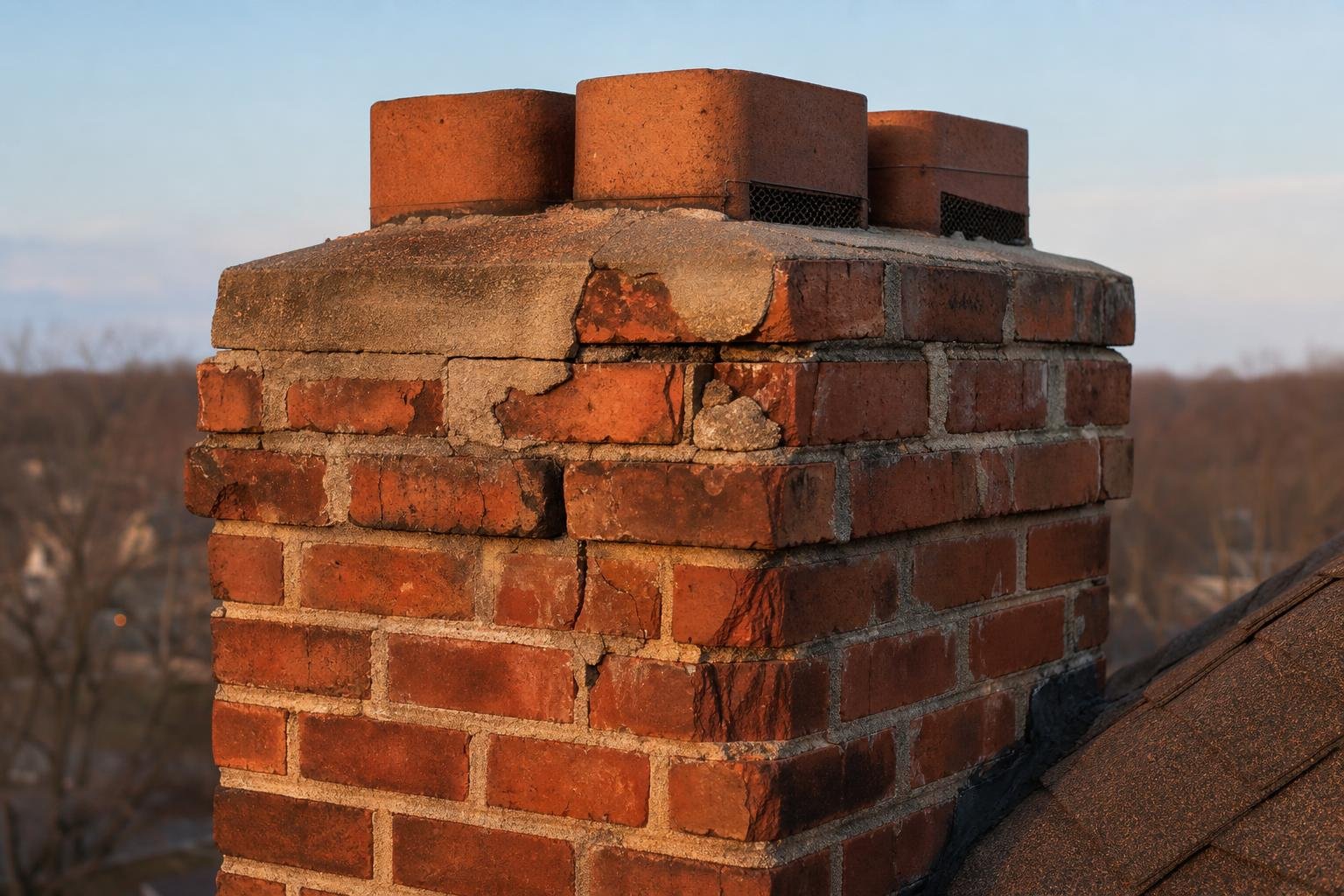
Quick AnswerThe seven biggest red flags are white staining on the brick, a cracked crown, spalling bricks, a rusted damper, a leaning or separating structure, cracked flue tile, and a persistent smoky odor. Cosmetic signs like staining can often wait for a scheduled visit, but a leaning chimney or cracked flue tile is a safety issue that needs prompt attention.
1. White Staining on the Brick (Efflorescence)
That chalky white residue on the outside of your chimney is called efflorescence, and it forms when water moves through masonry and deposits dissolved minerals on the surface as it evaporates. On its own, efflorescence is cosmetic. But it’s also a clear signal that water is getting into your brick where it shouldn’t — usually because the mortar joints have worn down or the crown or flashing isn’t sealing properly anymore. Left unaddressed for a few seasons, that same moisture intrusion is what eventually leads to spalling and mortar failure.
2. A Crumbling or Cracked Chimney Crown
The crown is the concrete or mortar cap that covers the very top of the masonry, sloped to shed water away from the flue. It takes the brunt of Ohio’s freeze-thaw cycles, and once small cracks form, water gets in, freezes, expands, and widens those cracks every winter. A cracked crown is a step above cosmetic — it's an active entry point for water into the rest of the chimney structure, and it tends to accelerate other damage on this list the longer it goes unrepaired.
3. Spalling Bricks
Spalling is when the face of a brick flakes, pops, or crumbles off, usually leaving a pitted or rough patch where a smooth brick face used to be. It’s caused by water soaking into the brick and then freezing, and the resulting expansion literally pushes the outer layer of the brick apart. Scattered spalling on a few bricks is a repair-it-soon issue; widespread spalling across many bricks can compromise the structural integrity of the stack and should be looked at promptly.
4. Rusted Damper or Firebox Components
Rust on the damper or firebox metal is almost always a moisture problem, since metal doesn’t rust from heat alone. A damper that’s rusted enough to stick or seal poorly is both an efficiency issue and, in some cases, a safety issue if it won’t close properly when the fireplace isn’t in use. This one ranges from a simple damper replacement to a sign of a bigger water intrusion problem elsewhere in the system, depending on how far along it is.
5. A Leaning or Separating Chimney
If your chimney appears to be leaning away from the house, or you can see a visible gap opening up where the chimney meets the exterior wall, that’s a structural issue, not a cosmetic one. It typically means the chimney’s foundation has settled unevenly relative to the house, and it should be evaluated by a professional promptly — this is one of the few chimney issues that can pose a genuine safety risk to the structure itself.
- White staining (efflorescence) — cosmetic, but a warning sign of moisture intrusion
- Cracked chimney crown — an active entry point for water damage
- Spalling bricks — ranges from cosmetic to structural depending on how widespread it is
- Rusted damper or firebox — a moisture signal that can also become a safety issue
- Leaning or separating structure — structural, needs prompt professional evaluation
- Cracked flue tile — safety-critical, can allow heat and gases into surrounding structure
- Persistent smoky odor — often points to creosote buildup or a draft problem worth checking
Noticing one or more of these signs on your own chimney? A professional inspection will tell you exactly what’s going on and how urgent it really is.
6. Cracked or Damaged Flue Tile
Flue tiles line the inside of the chimney and are usually only visible during a sweep or a camera inspection, but they’re one of the most important safety components in the whole system. Cracks let heat and combustion byproducts reach the surrounding masonry and framing more directly than the flue is designed to allow. This is squarely a safety-critical issue rather than a cosmetic one, and it’s a big part of why an annual sweep includes a full internal inspection, not just cleaning.
7. A Persistent Smoky or Musty Odor
A strong chimney smell that lingers even when you haven’t had a fire in days, especially in humid weather, often points to creosote residue coating the flue, though it can also signal moisture sitting in the system. It’s usually not an emergency, but it’s worth having checked at your next sweep since it typically means there’s more buildup or moisture present than there should be.
FAQs
Efflorescence itself is just a cosmetic mineral deposit, not a structural problem. But it’s a reliable sign that water is getting into your brick, and left unaddressed for years that same moisture can lead to spalling, mortar breakdown, and eventually more serious structural damage.
Cost depends on the size of the crown and how much repair it needs, ranging from a resurfacing coat on minor cracks to a full crown rebuild on severely deteriorated ones. A technician can only give you an accurate number after seeing the damage in person, which is why we always provide a written estimate before any repair work begins.
It depends on the type of damage. Cosmetic issues like minor efflorescence can usually wait, but anything involving cracked flue tile, a leaning structure, or active water intrusion tends to get worse with every freeze-thaw cycle, so waiting through winter often turns a moderate repair into a much larger one by spring.