
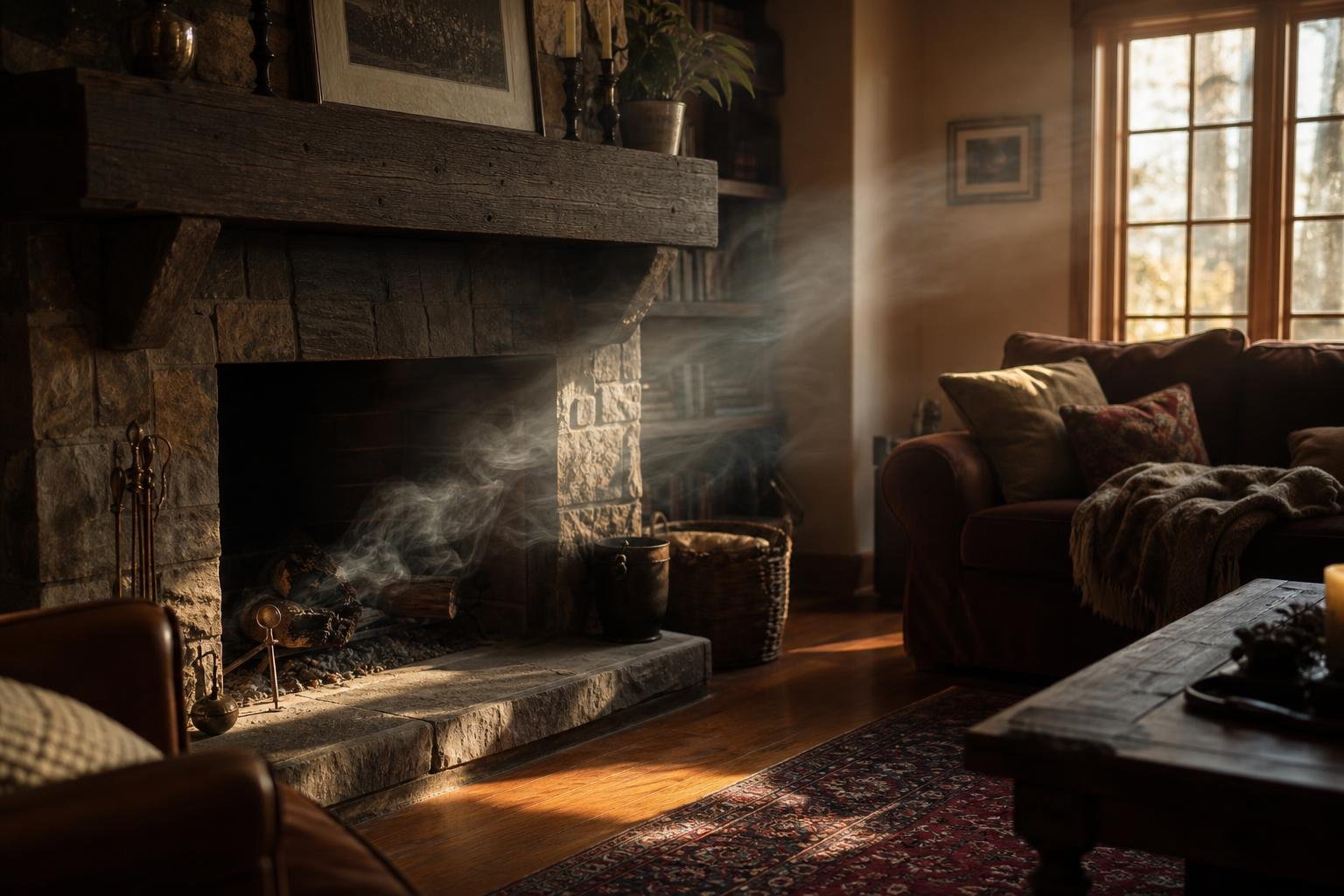
Quick AnswerMost smoking fireplaces come down to a closed or partly-closed damper, a cold flue that hasn’t started drawing yet, or a flue that’s narrowed by creosote or blocked by debris. Check the damper first, then try warming the flue before you light a fire — if smoking continues or shows up suddenly after years of clean burns, it’s time for an inspection.
Start With the Damper
It sounds obvious, but a damper that isn’t fully open is the single most common reason smoke ends up in the room instead of going up the flue. Some dampers have a lever that can shift partway closed over time, and rotary top-mount dampers can stick if they haven’t been opened in a while. Reach up and confirm the damper is open all the way before you troubleshoot anything else — it takes ten seconds and rules out the easiest fix first.
The Cold Flue Problem
Chimneys work by convection: warm air inside the flue rises and pulls fresh air and smoke up with it. When the flue is cold — typical on the first fire of the season, or in an unused fireplace on a cold day — the column of air inside can actually be heavier than the room air, so smoke rolls back into the house instead of rising. This is especially common in tightly sealed modern homes, where there’s less natural air movement to help establish a draft in the first place.
The fix is a simple trick chimney professionals have used for generations: roll up a sheet of newspaper, light one end, and hold it up near the open damper for thirty seconds to a minute before you build your fire. That short burst of heat warms the air in the flue enough to reverse a stalled or backward draft and get it moving in the right direction. If your fireplace only smokes for the first few minutes of a cold start and then clears up, this is very likely what’s going on, and it’s not a sign of damage.
Negative Pressure in the House
Modern homes are built airtight for energy efficiency, which is great for your utility bill but can work against your fireplace. Bathroom fans, a running clothes dryer, a kitchen range hood, or even a furnace blower can all pull air out of the house fast enough to create negative pressure. Your chimney then becomes the path of least resistance for air to flow back in — downward, carrying smoke with it. If smoking gets noticeably worse when the exhaust fan or dryer is running, try cracking a nearby window while the fire gets established; that gives the house another way to equalize pressure besides your flue.
Flue Size and Chimney Height Issues
Every firebox is designed to be paired with a flue of a specific size. A flue that’s too large for the firebox cools the rising exhaust too quickly, slowing the draft, while a flue that’s too small restricts airflow outright. Height matters too: building codes generally call for the chimney top to extend well above the roofline and any nearby obstructions, and a flue that’s too short relative to the roof peak or nearby trees can sit in a zone of wind turbulence that pushes air back down instead of letting it escape. These are structural, design-level issues rather than day-to-day maintenance problems, and they usually call for a chimney cap upgrade, a flue liner change, or in some cases a chimney extension.
Buildup Inside the Flue
Soot and creosote naturally accumulate on flue walls every time you burn wood, and over a season or more, that layer can narrow the passage enough to restrict airflow noticeably. A bird’s nest, leaves, or other debris can do the same thing, sometimes overnight. This is one of the more common reasons a fireplace that has always worked fine suddenly starts smoking — something has physically changed inside the flue, and it needs to be cleared out before the chimney can draft properly again.
Burning Wet or Unseasoned Wood
Firewood that hasn’t been properly dried produces more smoke and steam relative to heat, which cools the flue gases and weakens the draft. It also accelerates creosote buildup, compounding the problem over time. Well-seasoned hardwood that’s been split and dried for six months to a year burns hotter, cleaner, and produces a stronger, more reliable draft.
- Check that the damper is fully open before troubleshooting anything else
- Warm a cold flue with a rolled, lit newspaper before building your fire
- Crack a window if exhaust fans or the dryer seem to be pulling smoke back down
- Only burn wood that’s been seasoned for at least six months
- Get the flue inspected if smoking is new, sudden, or getting worse over time
If any of this sounds familiar and the quick fixes don’t clear it up, a professional inspection will tell you exactly what’s going on inside your flue.
New Problem or Old Design Quirk?
It helps to separate two very different situations. If your fireplace has smoked a little for as long as you’ve owned the house, that’s often a flue-to-firebox size mismatch or a chimney height issue baked into the original construction — annoying, but usually manageable with a smoke guard, a damper adjustment, or minor venting changes. If smoking is new, sudden, or has gotten noticeably worse recently, that’s a different story: something has changed, whether it’s creosote buildup, a blockage, a cracked flue liner, or storm damage, and it’s worth having a professional take a look before you burn again.
FAQs
Wind moving across your roofline can create turbulence around the chimney top, especially if the flue is short relative to the roof peak or sits near tall trees. That turbulence can push air back down the flue instead of letting it rise, forcing smoke into the room in gusty conditions even when the same fireplace burns clean on a calm day.
A brief puff of smoke in the first minute or two, especially in cold weather, is common and usually just means the flue hasn’t warmed up yet. If the smoking clears up quickly once the fire gets going and doesn’t return, it’s typically not a sign of a problem.
Simple fixes like fully opening the damper or warming a cold flue before lighting are safe to try yourself. But if smoking is new, worsening, or happens even with the damper fully open, that usually points to blockage, creosote buildup, or structural damage that needs a professional inspection to diagnose safely.