
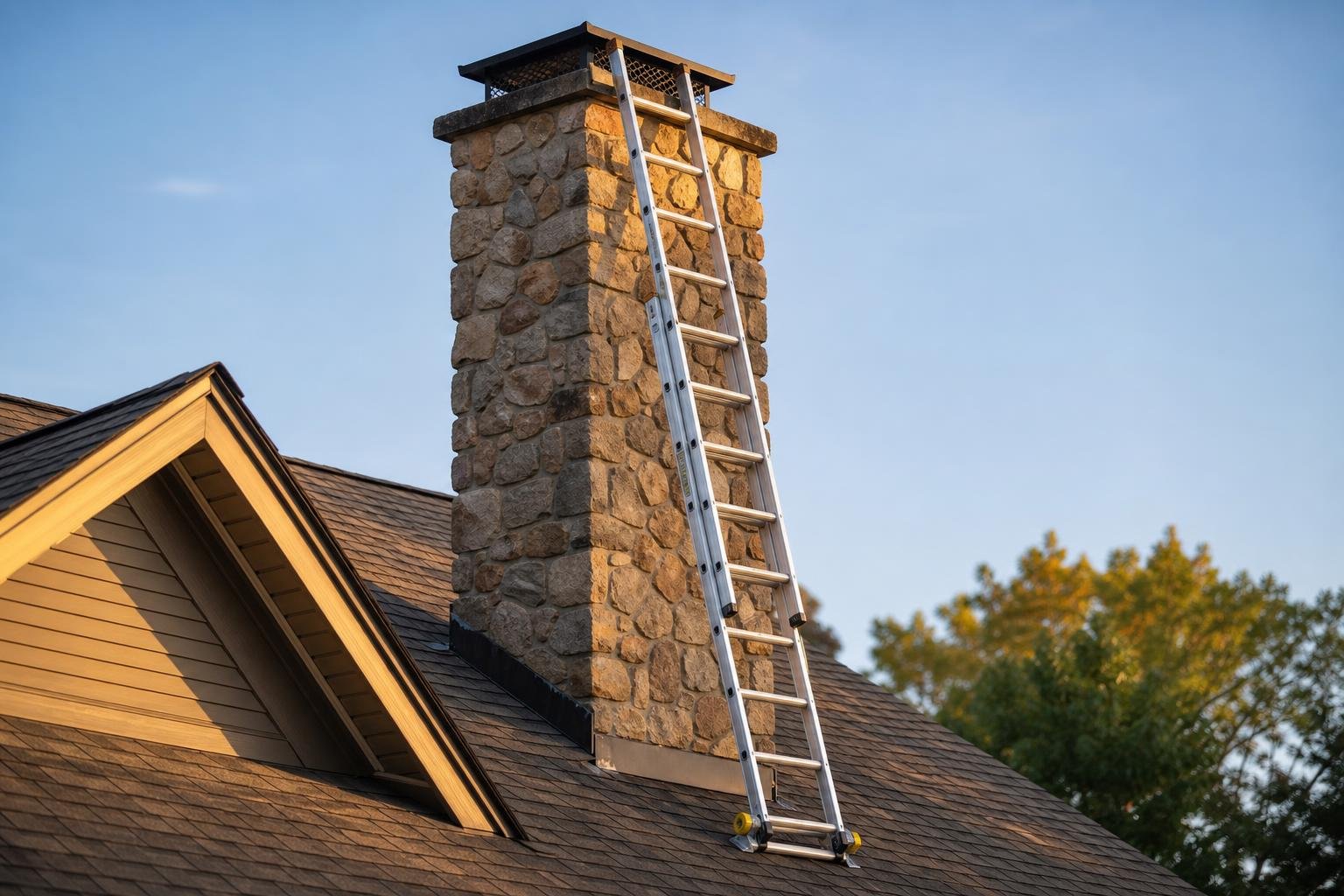
A Level 3 inspection is the deepest level of chimney evaluation there is, and it's not something most homeowners will ever need. It never happens as a standalone service — it's always the next step after a Level 1 or Level 2 inspection finds something that raises a real concern but can't be fully confirmed from the outside or with a camera alone. Think of it less as "a bigger inspection" and more as "the only way left to see what's actually going on."
That usually means removing sections of masonry, drywall, or interior chimney components to physically access a concealed area. It's more invasive by necessity, not by default, and we treat it that way: nothing gets removed until you understand exactly why, and until you've approved a written scope of work.
When a Level 3 Inspection Comes Into Play
- Suspected hidden structural damage after a chimney fire. If a Level 2 camera scan or the fire itself suggests damage behind a wall or chase that the camera can't reach, a Level 3 is how we confirm it.
- A concealed area a Level 1 or 2 can't reach. Some potential hazards sit behind finished walls, in chases, or in spaces that visual and camera inspections simply cannot see into.
- A prior inspection specifically recommends it. We don't jump straight to a Level 3. It's always a documented follow-up to something a Level 1 or Level 2 already found.
What to Expect: Always a Written Scope First
Because a Level 3 inspection can involve removing masonry, siding, or interior finishes, we don't treat it like a routine visit. Before any component is removed, we explain exactly what the earlier inspection found, why it can't be evaluated any other way, and what specifically we're proposing to open up. You get a written scope and estimate covering that access work, and if it turns up a repair need beyond the inspection itself, that gets its own separate estimate too — nothing gets bundled in or assumed. If the underlying issue turns out to need masonry work, our chimney repair team picks up from there with the same documentation in hand.
Talk to Us About a Level 3 Inspection
FAQs
A Level 3 inspection is only performed after a Level 1 or Level 2 inspection turns up evidence of a hazard that can't be fully evaluated without removing masonry, drywall, or other chimney components to reach a concealed area. It's most common after a serious chimney fire when there's reason to suspect hidden structural damage.
No. We always walk you through what we found in the Level 1 or 2 inspection, explain why a closer look is needed, and provide a written scope and estimate before removing any masonry or chimney components. Nothing invasive happens without your sign-off first.
No, it's rare. The vast majority of Cleveland homeowners will only ever need a Level 1 or, occasionally, a Level 2 inspection. Level 3 is reserved for specific cases where a prior inspection found something serious enough that it genuinely can't be confirmed any other way.