
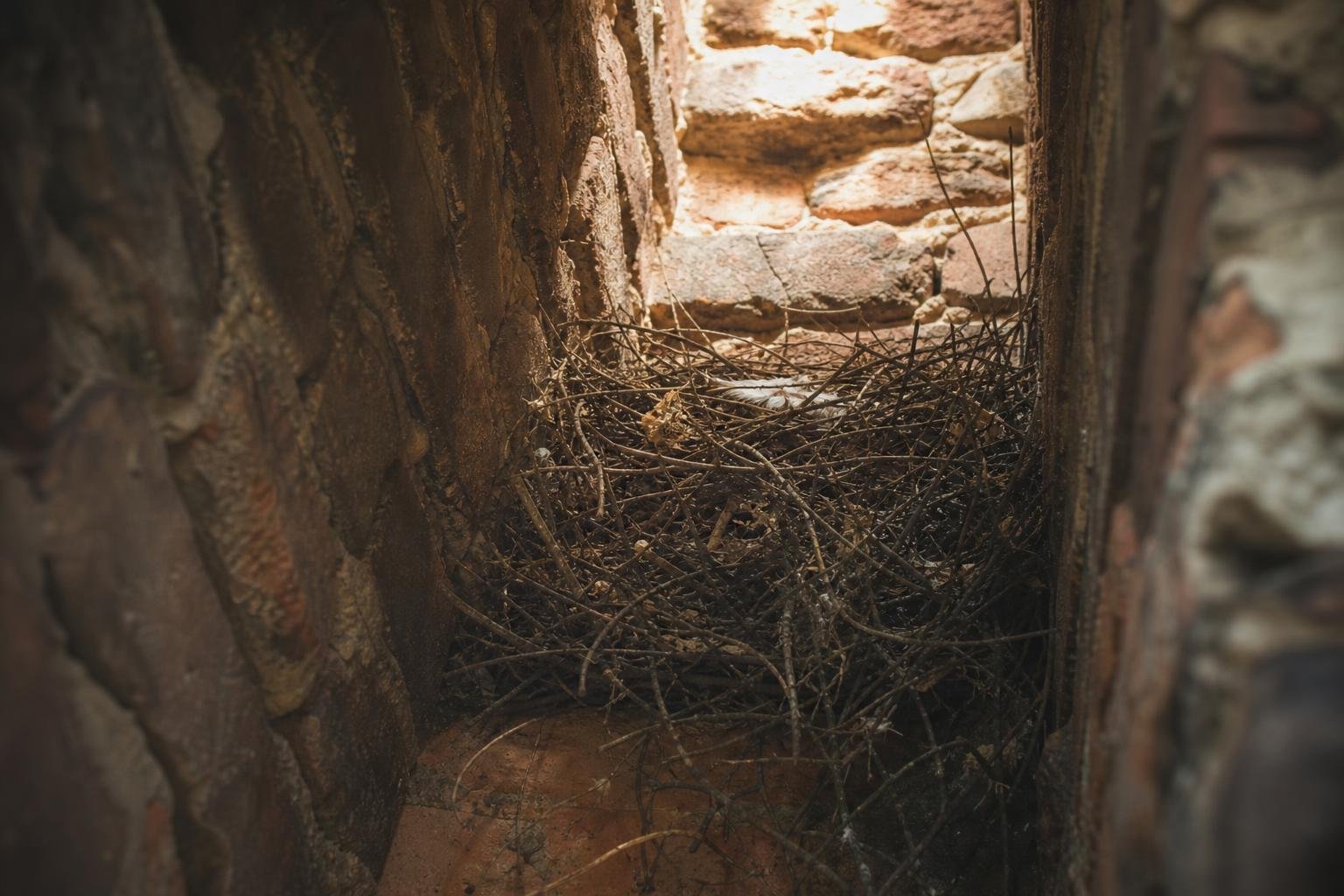
Quick AnswerA missing or damaged chimney cap is almost always how the animal got in, and birds or squirrels are the most likely culprits. Don’t light a fire and don’t attempt removal yourself — call a professional for safe, humane removal followed by a proper cap installation.
Likely Causes
- Missing or damaged chimney cap — the near-universal root cause; an open or broken flue top is an easy entry point for wildlife.
- Chimney swifts and other birds — a flue looks like a hollow tree to a nesting bird, and it’s one of the most common animals found in chimneys.
- Squirrels — they can access an uncapped flue easily and often use it as a nesting spot for young.
- Raccoons, especially in spring — mother raccoons look for a dark, sheltered den to raise young, and an uncapped chimney fits the bill.
- Legally protected species — most native birds are protected under federal law, so removal has to be done carefully and legally, never by fire or chemicals.
How Urgent Is This?
This is a high-urgency situation. An animal in the flue can block airflow and create a fire and carbon monoxide hazard if a fire is lit, and nesting material is itself highly flammable. There’s also the welfare of the animal to consider, along with the legal restrictions around handling protected species. This isn’t something to leave alone or wait out — it calls for prompt, professional attention.
What to Do Right Now
- Never light a fire if you suspect an animal is present — smoke and heat can trap or kill it and won’t reliably force it out
- Don’t attempt DIY removal — it can injure the animal, you, or push it deeper into the flue
- Call a professional for safe, humane removal that follows wildlife protection laws
- Have a proper chimney cap installed afterward so the problem doesn’t come right back
FAQs
No, and you shouldn’t try it. Smoke and heat don’t reliably drive an animal out, they can trap, injure, or kill it in the flue, which creates a blockage and odor problem far worse than the original one. Many species are also legally protected, and forcing an animal out with fire can violate wildlife protection laws.
Often no. Most native birds, including chimney swifts, are protected under federal law, which makes it illegal to remove an active nest or disturb the birds without the right permits and timing. A professional familiar with wildlife regulations knows how to handle removal legally and humanely.
Install a properly fitted chimney cap with mesh screening once the animal has been safely removed. A missing or damaged cap is the near-universal reason animals get into a flue in the first place, so it’s the single most effective way to prevent it from happening again.