
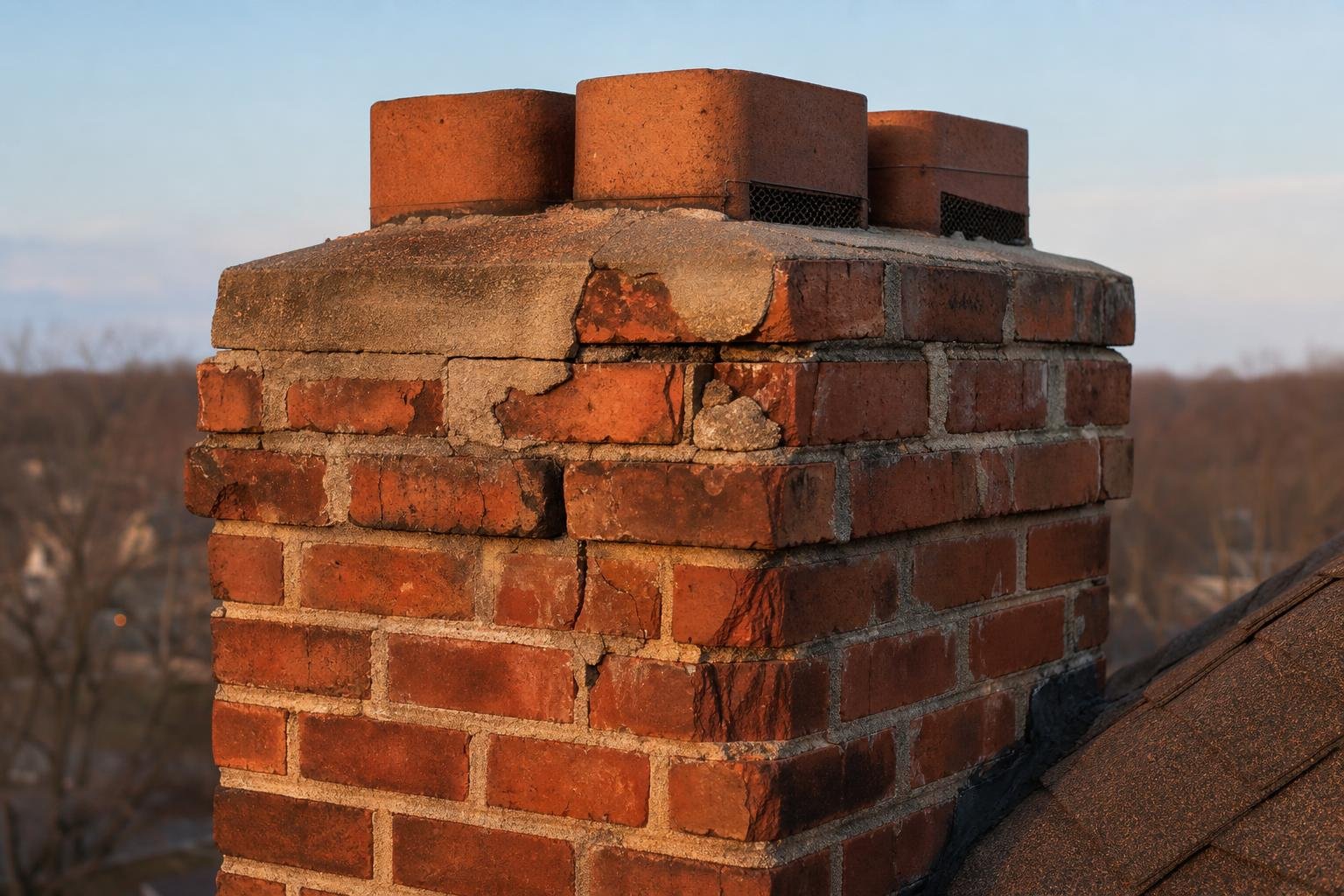
Homeowners almost always call us about the "chimney cap," but a surprising number of the water problems we get called out for actually start one layer down, at the crown. The crown is the concrete or mortar slab that covers the entire top of the masonry stack, sloped to shed rainwater away from the flue and off the sides of the brick. It's not glamorous, and it's easy to forget it's up there at all — until it cracks, and every drop of rain that hits your roofline starts finding its way straight into the chimney.
Cleveland's climate is hard on crowns specifically. We get real summer heat, real winter cold snaps, and a lot of days in between where masonry goes through a full freeze-thaw cycle. Water gets into a hairline crack, freezes overnight, expands, and widens the crack a little more. Do that for a season or two on an older home in a neighborhood like East Cleveland, Inglewood, or Donelson, and a crack that started as cosmetic becomes a real path for water into the flue liner, the smoke chamber, or even the ceiling below.
We inspect the crown as part of every chimney visit for exactly this reason. Catching a crack while it's still small is the difference between a low-cost sealant and a full rebuild.
How We Approach Crown Damage
- Sealant for hairline cracks. Caught early, a flexible, waterproof crown coating bridges small cracks and keeps water from penetrating further.
- Resurfacing patch for moderate damage. When cracking has progressed or the surface is starting to spall, we apply a bonded overlay that restores the crown's slope and seals the surface.
- Full crown rebuild for severe cases. If the crown is significantly cracked, crumbling, or separating from the masonry, we remove it and pour a new, properly sloped crown built to actually shed water.
- Honest recommendation, no upsell. We tell you which of the three your chimney actually needs based on what we see, not the most expensive option on the list.
Crown, Cap, or Both? Why It Matters to Get This Right
The crown and the cap do two different jobs, and confusing them leads to a lot of homeowners paying for a new cap when the actual leak is coming from the crown underneath it — or vice versa. The cap is the small metal cover directly over the flue opening; its job is to keep rain and animals out of the flue itself. The crown is the entire concrete slab spanning the top of the chimney, and its job is to keep water off the masonry as a whole. A chimney can have a brand-new cap and still take on serious water damage through a cracked crown, which is why we always check both together rather than assuming one problem explains the leak.
Get a Free Crown Repair Estimate
FAQs
No, and mixing the two up is one of the most common points of confusion we run into. The crown is the concrete or mortar slab that covers the entire top of the masonry stack and sheds water away from the brick. The cap is the smaller metal cover that sits directly over the flue opening to keep out rain and animals. A chimney can have a perfectly good cap and still be taking on water through a cracked crown.
It depends on how far the damage has progressed. Hairline cracks caught early can usually be sealed with a flexible, waterproof crown coating. Moderate cracking or minor spalling often calls for a resurfacing patch over the existing crown. Once the crown is significantly cracked, crumbling, or pulling away from the masonry, patching won't hold and a full crown rebuild is the honest recommendation.
Water finds the crack and works its way straight into the masonry below. Over a Greater Cleveland winter, that water freezes and expands, widening the crack and accelerating brick and mortar damage. What starts as a small, inexpensive crown repair can turn into spalling brick, a damaged flue liner, or interior water stains if it's left through a few freeze-thaw cycles.