
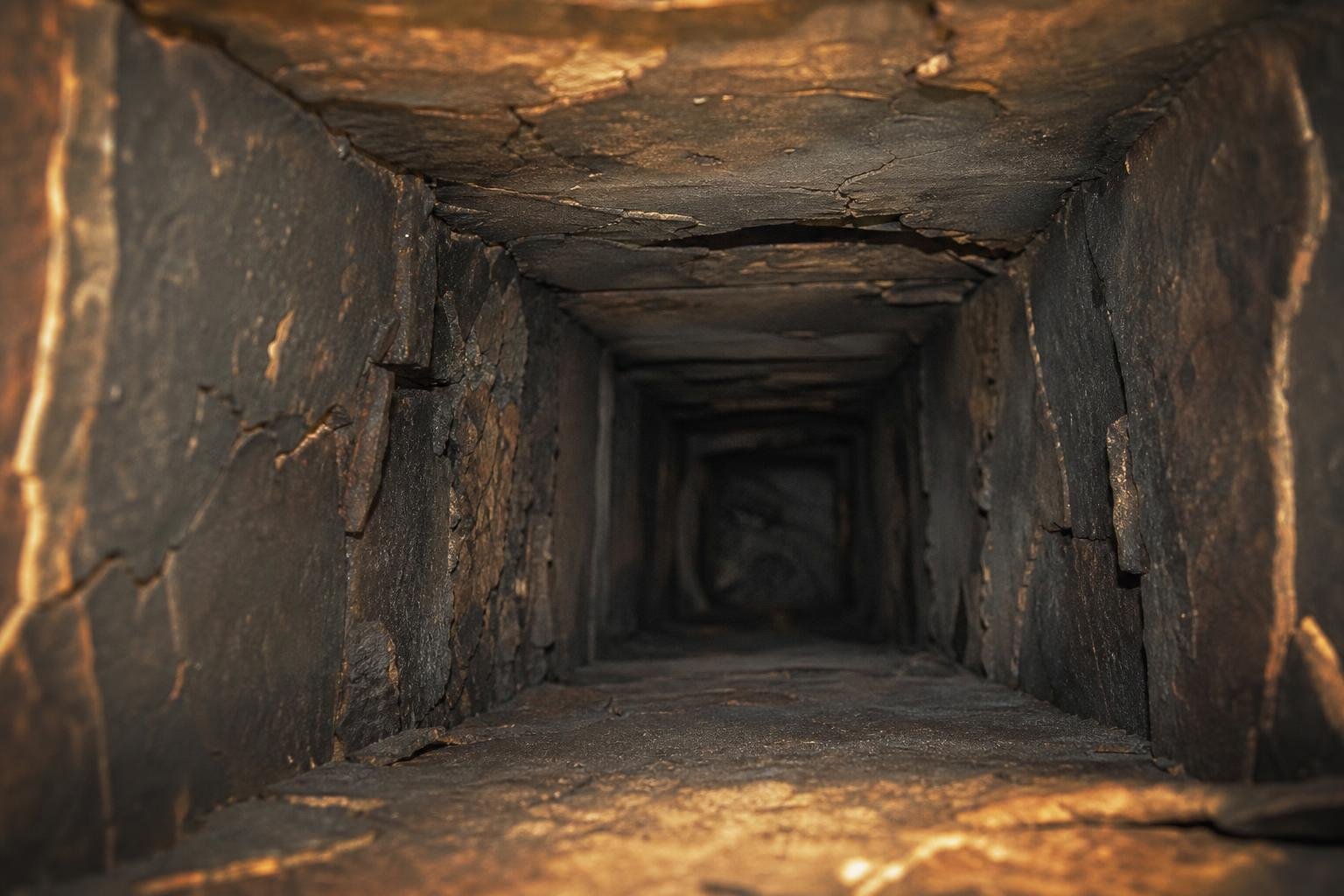
Clay tile has been the standard flue liner material for most of the last century, and a lot of Cleveland's older housing stock — from the bungalows in East Cleveland to the mid-century homes throughout Green Hills, Inglewood, and the older parts of Donelson — still has its original tile liner installed. Clay tile can last a long time when it's undamaged, but it isn't indestructible, and once it cracks, the safety margin between the fire inside your flue and the wood framing around your chimney starts to shrink.
Tile damage almost never announces itself from the outside. It shows up as chunks of broken tile in the firebox, as staining on the exterior brick from moisture working its way through a crack, or simply as an unknown until a video camera goes down the flue. Because you usually can't see the problem coming, and because tile deteriorates gradually over decades of freeze-thaw cycles and use, a routine inspection is often how homeowners first learn their liner needs attention at all.
What's Included
- Level 2 video inspection. A camera scan of the full flue length to locate exactly which tile sections are cracked, chipped, or missing.
- Honest damage assessment. We show you the footage and explain, in plain terms, how severe the cracking is and where it's located.
- Sealing or patching for minor cracks. When damage is limited to a small section, we can seal or patch the tile without a full reline.
- Reline recommendation when warranted. If damage is extensive, we'll tell you plainly that a stainless steel or cast-in-place reline is the safer, longer-lasting fix.
Repair vs. Full Reline: How We Decide
This is the honest decision point at the center of every tile liner job, and we don't sugarcoat it either direction. A minor, isolated crack found early can sometimes be sealed or the individual tile section replaced, which is faster and less expensive than relining the whole chimney. But once cracking runs through multiple sections, tile is missing outright, or the flue has been through a chimney fire — which routinely damages tile even when the exterior brick shows no obvious sign of it — trying to patch tile in place doesn't restore a reliable seal against heat and combustion gases. At that point, a full stainless steel or cast-in-place liner is the recommendation, because it replaces the entire compromised surface rather than leaving weak points behind it. We'll always base the recommendation on what the camera actually shows, not on which job is bigger.
FAQs
Age is the biggest factor — clay tile liners in Cleveland's older homes are often original to the house and decades past their expected service life. Repeated freeze-thaw cycles let moisture work into hairline cracks and widen them over time, and a chimney fire can crack or shatter multiple tile sections in a single event even when the exterior brick looks completely fine afterward.
Sometimes, if a video inspection shows the damage is limited to minor cracking in one or two sections rather than running through the flue. In that case, sealing or patching the affected tile can be a faster, lower-cost fix. But if the cracking is extensive, if sections are missing or badly broken, or if the flue was exposed to a chimney fire, patching tile in place isn't a reliable long-term fix and a full stainless steel or cast-in-place reline is the safer call.
Effectively yes, because you can't accurately assess tile damage without seeing inside the flue. A Level 2 inspection uses a video camera to scan the full length of the liner, which is how we find out exactly which sections are cracked, how severe the damage is, and whether a targeted repair or a complete reline is the right recommendation.