
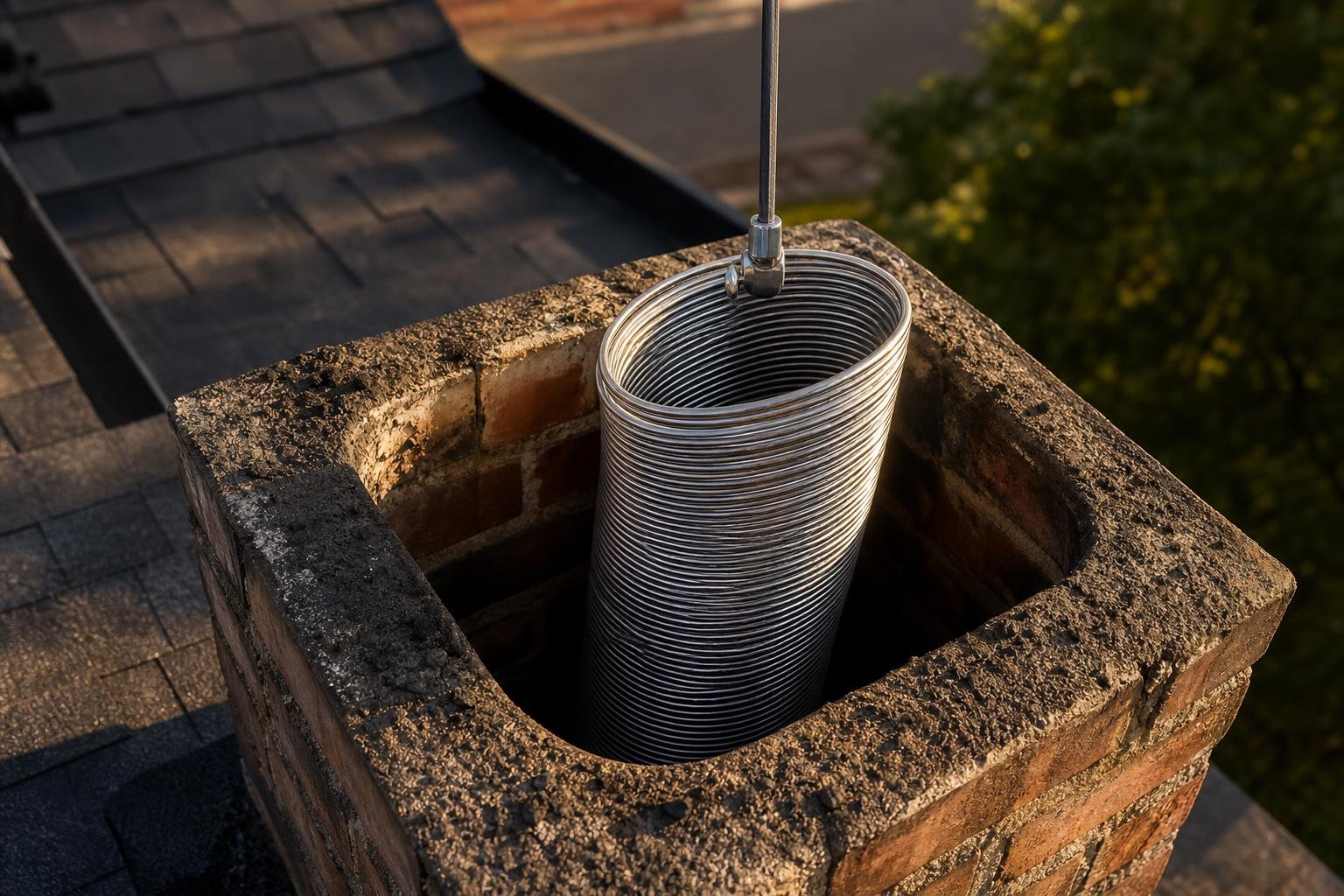
When a chimney needs relining, a stainless steel liner is the solution we recommend most often for homes across Cleveland and Greater Cleveland — and for good reason. It's a flexible or rigid tube of corrugated stainless steel, fed down the full length of the flue and connected directly to the fireplace, wood stove, or furnace it serves. Done correctly, it creates a smooth, continuous, gas-tight passage from the appliance to the chimney cap, and most manufacturers back the material itself with a lifetime warranty.
We install stainless steel liners for a few common situations we see over and over in Cleveland's housing stock: a video inspection turns up cracked or missing clay tile sections in the original flue, a homeowner is upgrading to a new gas insert or high-efficiency furnace that needs a differently sized liner than the old wood-burning setup, or an older home — often one of the many pre-1960s houses around East Cleveland, Inglewood, and the older streets near downtown — turns out to have no proper liner installed at all. In every case, the goal is the same: a liner that's rated for your fuel type and correctly sized to your specific appliance.
What's Included
- Appliance sizing. We calculate the correct liner diameter for your specific fireplace, insert, wood stove, or furnace before ordering material.
- Flexible or rigid liner. Flexible liner for most flues with bends or offsets; rigid liner where the flue run is straight and accessible.
- Insulation wrap. Applied where code requires it, so exhaust gases stay warm enough to draft properly and creosote buildup slows down.
- Sealed top and bottom. A proper cap termination and appliance connection so there are no gaps for heat or gas to escape through.
- Warranty registration. We register the manufacturer's lifetime warranty on your behalf so you have documentation on file.
Why Sizing Matters More Than the Liner Itself
Almost every liner problem we're called out to fix later traces back to sizing, not the material. A liner that's too large for the connected appliance lets exhaust gases cool and slow down as they rise, which encourages creosote to condense on the walls of the flue instead of venting out. One that's too small restricts draft, which can push smoke and combustion gases back into the living space instead of up the chimney. That's why we measure the appliance and calculate the required diameter before we ever order the liner — it's a five-minute step that determines whether the whole installation actually performs the way it's supposed to for the next several decades.
Get a Written Quote for Your Liner
FAQs
It comes down to how widespread the damage is. If a video inspection shows cracking or gaps running through most of the flue, or there's no liner in the chimney at all, a full stainless steel liner is the right fix. If the damage is isolated to one or two clay tile sections, a targeted tile repair may be enough — we'll walk you through exactly what the camera found before recommending either option.
Most manufacturers back their stainless steel liners with a lifetime warranty, but that warranty depends on correct installation — proper sizing, insulation where code requires it, and a sealed connection at both ends. We register the warranty on your behalf so you have it on file if you ever need it.
It has to be sized specifically to the appliance and fuel type connected to it. An undersized liner restricts draft and can push smoke back into the house; an oversized one cools exhaust gases too quickly, which encourages creosote buildup. We calculate the correct diameter before ordering material, not after.