
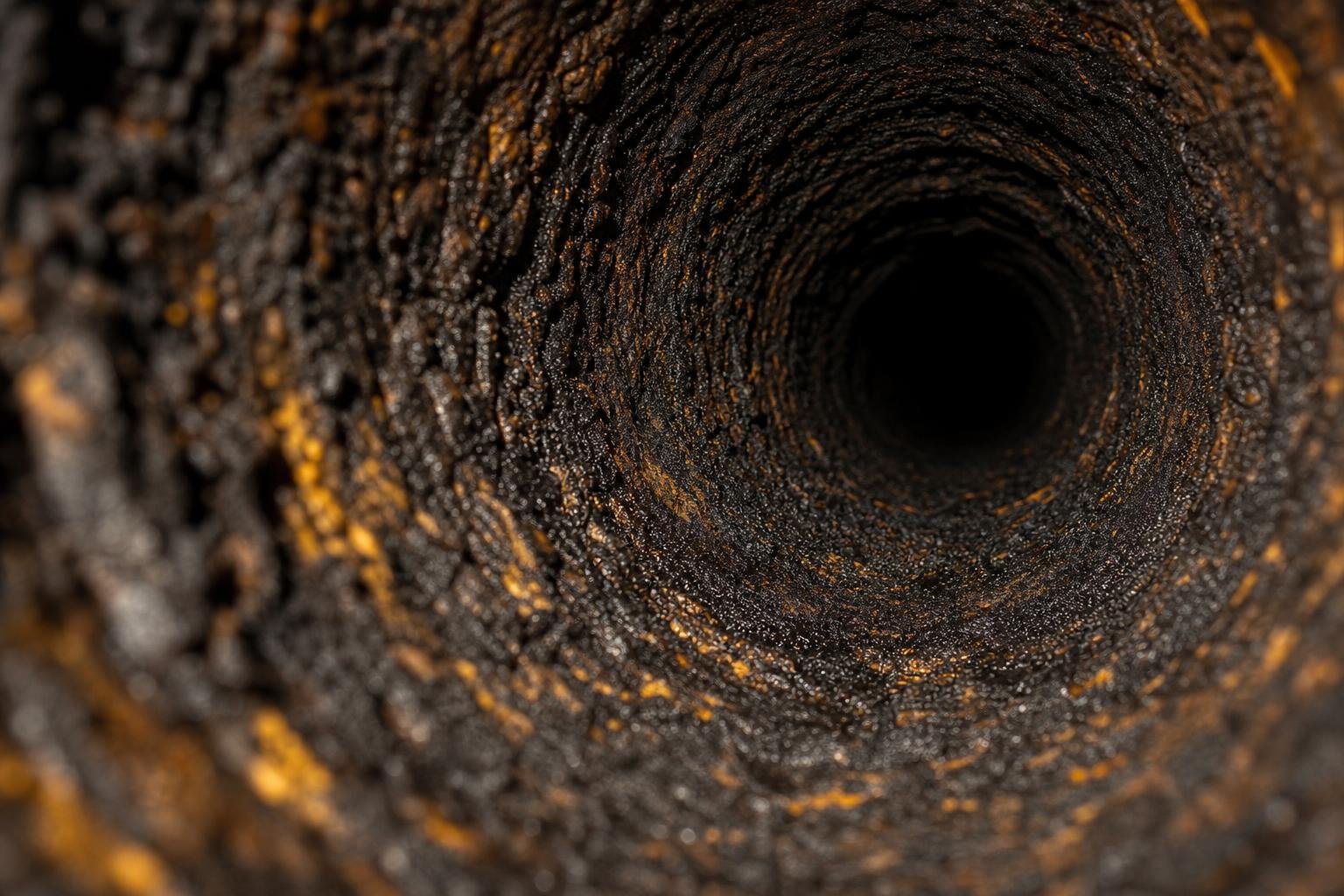
Every wood-burning fireplace or stove produces creosote — it's an unavoidable byproduct of combustion condensing on the cooler walls of the flue. The question isn't whether it's there, it's how much has built up and how firmly it's bonded to the liner. That distinction matters because it changes both the fire risk and the method needed to remove it safely.
We see the full range of creosote buildup across Cleveland homes, from chimneys swept every year that only need a routine brushing to flues that have gone several seasons without attention and developed a heavier, harder-to-remove glaze. Rather than treating every job the same way, we start by identifying which stage of buildup we're dealing with, then use the method that actually clears it — not just brush and hope.
The Stages of Creosote Buildup
- Stage 1 — light, flaky soot. The most common type, easily removed with a standard rotary chimney brush during a routine sweep.
- Stage 2 — harder, tar-like deposits. More stubborn and often requires firmer brushing or specialty rotary tools to fully clear.
- Stage 3 — glazed, melted-looking creosote. Shiny, hardened, and bonded to the flue wall — the most flammable stage and the type most linked to chimney fires.
- Post-removal inspection. Once the flue is clear, we check the liner underneath for any damage the buildup may have been hiding.
When a Standard Sweep Isn't Enough
A routine rotary sweep handles Stage 1 and most Stage 2 creosote without issue — that's the normal, expected outcome of an annual cleaning. Glazed Stage 3 creosote is a different problem. It's bonded too firmly to brush away on its own, so it typically needs a chemical creosote-removal treatment applied first to break down the glaze, followed by mechanical cleaning to finish the job. We'll always tell you honestly which situation you're in rather than charging for extra treatment you don't need — and if we do find heavy glazing, we'll explain why the added step matters for your safety, not just to upsell a service.
Schedule a Creosote Inspection
FAQs
Stage 1 is light, flaky soot that brushes out easily with a standard rotary sweep. Stage 2 is a harder, tar-like buildup that takes more aggressive brushing and sometimes specialty tools. Stage 3 is glazed, shiny, almost melted-looking creosote that has bonded to the flue wall and is highly flammable — it usually requires chemical creosote-removal treatment combined with mechanical work, and is the type most associated with chimney fires.
A standard rotary sweep handles Stage 1 and most Stage 2 creosote effectively. Heavy, glazed Stage 3 creosote is bonded too firmly for brushing alone and typically needs a chemical creosote remover applied first to break down the glaze, followed by mechanical cleaning to fully clear the flue.
Creosote is flammable, and it's the leading contributing factor in chimney fires according to fire safety data cited by NFPA. Even moderate buildup narrows the flue and restricts airflow, which pushes smoke and combustion byproducts back into the home. It's not a cosmetic issue — it's a fire and safety hazard that gets more dangerous the longer it's left alone.